Overview
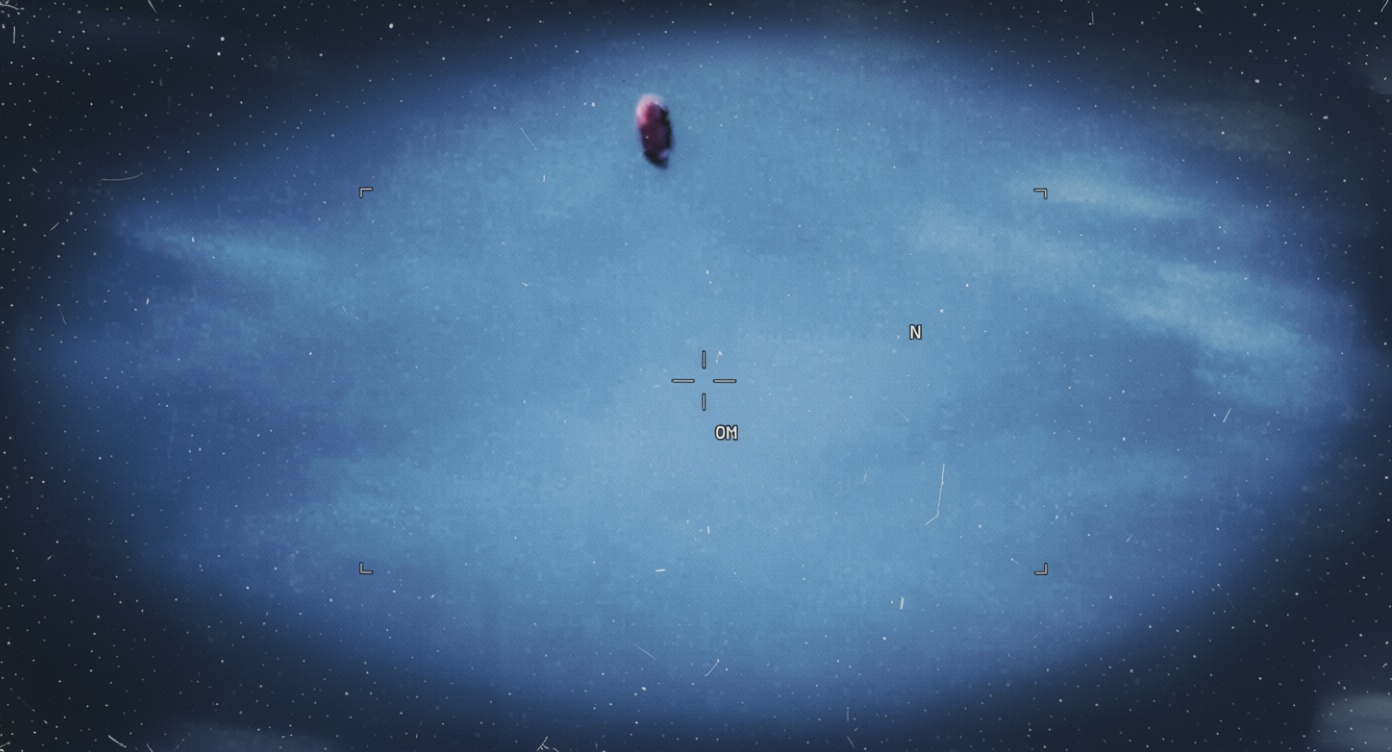
A video examining footage from NASA’s 1984 STS-51-A mission focuses on a small, light-colored mark that appears to move across the frame during the recovery of two malfunctioning communications satellites. The object is described in the video’s title as a possible “water droplet,” although the available material does not establish that it was actually liquid water or an object in space.
STS-51-A, launched aboard the Space Shuttle Discovery in November 1984, involved the retrieval of the Palapa B2 and Westar 6 satellites. Astronaut Joseph Allen used a Manned Maneuvering Unit, or MMU, to maneuver outside the shuttle and assist with the recovery operation. The footage shows the astronaut approaching a large cylindrical satellite, with Earth visible in the background.
The Visual Anomalies
The video highlights two related features: a small bright mark referred to as the “droplet” and a faint line or “streak” appearing nearby. According to the analysis, both features seem to move across the image independently of the Earth, the satellite and other prominent background elements.
At approximately 00:18, an on-screen annotation identifies what the creator calls a “shadow” near the astronaut. The video argues that this apparent shadow does not track the streak in the expected way, suggesting that the two features may not be located on the same physical surface. However, the excerpt provides no independent measurements, camera data or mission documentation confirming the objects’ distance from the camera.
Competing Interpretations
The video presents the visual effect as potentially mysterious but ultimately favors a conventional explanation. Its primary theory is that the droplet and streak are reflections of lights, equipment or other objects inside the shuttle, captured through one of the spacecraft’s windows.
Under this interpretation, the apparent motion would result from changes in the camera angle, the astronaut’s movement or the geometry of the shuttle’s multi-pane windows. Reflections on separate panes can appear to shift relative to one another, creating the impression that a mark is moving independently in open space. Glare, exposure changes and the limited resolution of archival film can further exaggerate these effects.
The Missing Capture Moment
Another point raised in the video concerns the recovery itself. The creator notes that the crew appears not to have recorded the precise moment when the satellite was captured, with the available footage missing the event by several seconds. That gap is presented as a noteworthy limitation, but it does not by itself establish a connection between the missing footage and the visual artifacts.
The absence of a definitive frame also makes it difficult to determine whether the droplet-like mark was present throughout the sequence or appeared only under particular lighting and viewing conditions.
Assessment and Sources
Based on the information presented, the footage does not provide conclusive evidence of an unidentified object or unusual phenomenon. The reflection explanation is consistent with the video’s own observations and with known challenges associated with filming through spacecraft windows, especially in bright orbital conditions.
The analysis recommends consulting higher-quality versions of the mission recordings, including material available through the Internet Archive, because compression and lower-resolution copies on some official or online platforms may obscure fine details. Ultimately, the STS-51-A sequence illustrates how reflections, window geometry and archival image limitations can produce UFO-like appearances in otherwise well-documented spaceflight footage.