Overview
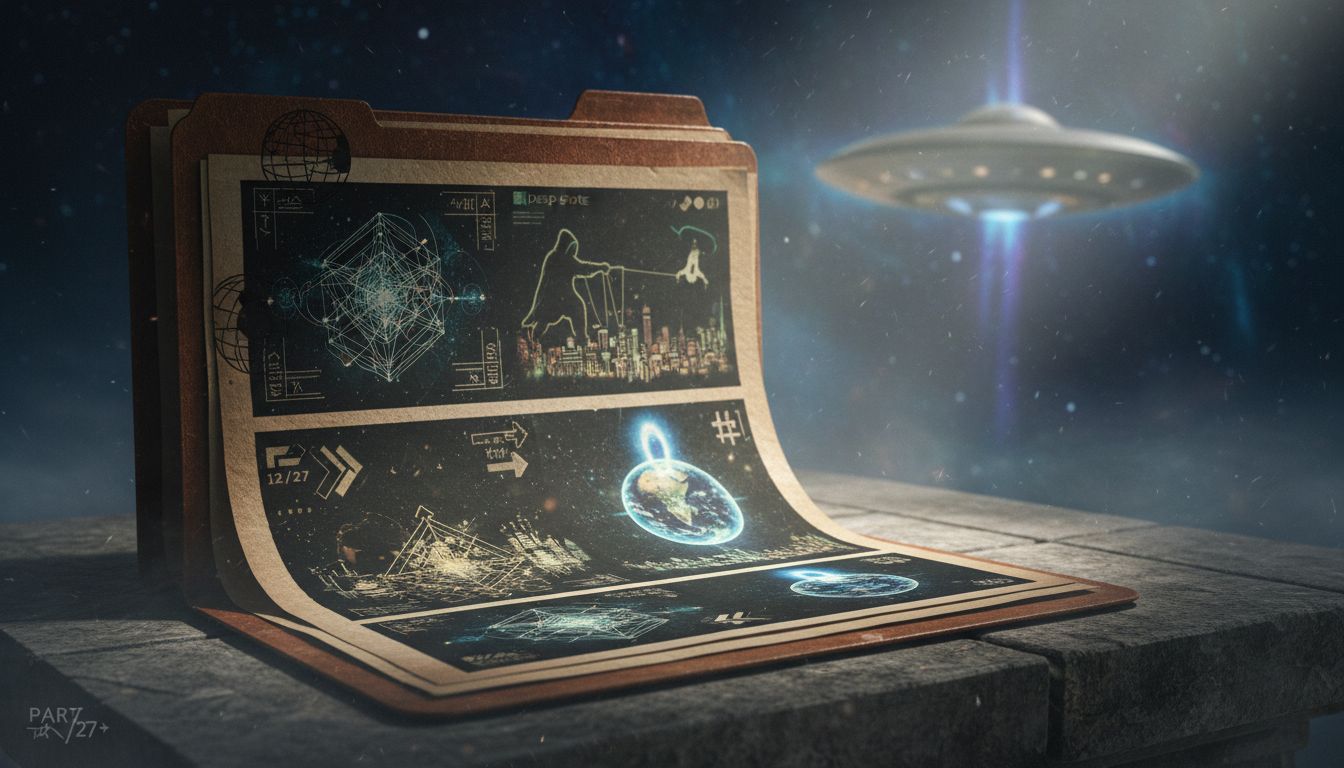
A two‑minute video released on December 27 2025 by the United Network’s Global Intelligence Agency (GIA) claims that the “final remnants of the Matrix” are collapsing, ushering in a “reality shift” toward what it calls a “New Earth.” Titled 27‑DEC‑25 GLOBAL INTELLIGENCE AGENCY REPORT, the clip is part two of a series dubbed The Matrix Decoded. The report describes a deep‑state apparatus caught in “repeating loops” and suggests an imminent “New Year’s Eve reset” that could alter human consciousness, DNA, and societal structures.
The video, posted on the United Network platform (https://unitednetwork.earth/programs/27-dec-25-gia-report-edit-broadband-high-2d5320), is presented as a “field messenger report” and includes auto‑generated English subtitles. While the GIA’s exact credentials remain unclear, the organization has previously produced a series of reports on covert influence networks and alleged information control mechanisms.
Key Details from the Report
According to the narration, the “Matrix” refers to a multilayered system of covert governance, digital surveillance, and psych‑social conditioning that has guided global events for decades. The report asserts that the system’s “power source”—a combination of “secret systems” and “deep‑state loops”—is losing coherence as external pressures mount.
- Collapse of Influence: The GIA states that “the final remnants of the Matrix collapse” and that the deep‑state “remains trapped in repeating loops,” implying a loss of coordinated control.
- Reality Shift: The term “reality shift” is used to describe a transition in collective perception, allegedly affecting “consciousness, DNA, and governance.”
- New Earth Agenda: The report hints at a forthcoming “New Earth” paradigm, suggesting a coordinated effort to restructure societal frameworks after the “reset” at the end of the year.
The video does not provide empirical data, citing instead a narrative description of systemic decay and an upcoming transformation. No peer‑reviewed studies or official government documents are referenced.
Context and Historical Background
The concept of a “Matrix” as a metaphor for hidden control structures has circulated in fringe and alternative‑media circles for years, often linked to theories about elite technocratic governance. The GIA’s series appears to build on earlier releases, such as the 2024 Matrix Decoded Part One, which outlined how digital infrastructure and financial networks could be leveraged to shape public opinion.
In mainstream discourse, similar concerns have been raised about algorithmic bias, data monopolies, and the influence of “deep‑state” actors—terms that typically describe entrenched bureaucratic interests rather than a monolithic conspiratorial entity. The GIA’s language aligns with a growing narrative that blends legitimate criticism of surveillance capitalism with more speculative claims about consciousness alteration.
Reactions from Experts
Scholars in political science and cyber‑security have responded cautiously. Dr. Lena Ortiz, a professor of information studies at the University of California, noted, “While there is undeniable evidence of coordinated disinformation campaigns, the leap from documented cyber‑operations to a wholesale ‘Matrix collapse’ lacks verifiable support.”
Legal analyst Michael Greene added, “The GIA’s report is framed as investigative journalism, yet it provides no source material that can be independently corroborated. Readers should treat the claims as hypotheses rather than established facts.”
Conversely, some community organizers within the “New Earth” movement have welcomed the report, interpreting the “reset” as validation of their calls for systemic change. A spokesperson for the group posted on social media, “The GIA’s acknowledgment of the Matrix’s breakdown energizes our push for transparent governance and planetary stewardship.”
Outlook and Next Steps
The GIA indicates that further installments of The Matrix Decoded will be released in early 2026, promising “deeper insight into the mechanisms that shaped DNA and consciousness.” No official timetable has been announced, and the organization has not disclosed funding sources or affiliations.
For now, the report remains a piece of speculative media that reflects ongoing anxieties about power, technology, and the future of human societies. As the year draws to a close, observers will be watching both mainstream institutions and alternative outlets for any concrete evidence that supports—or refutes—the GIA’s dramatic assertions. Until such data emerges, the story serves as a reminder of the fine line between investigative reporting and conjecture in the digital age.