Overview
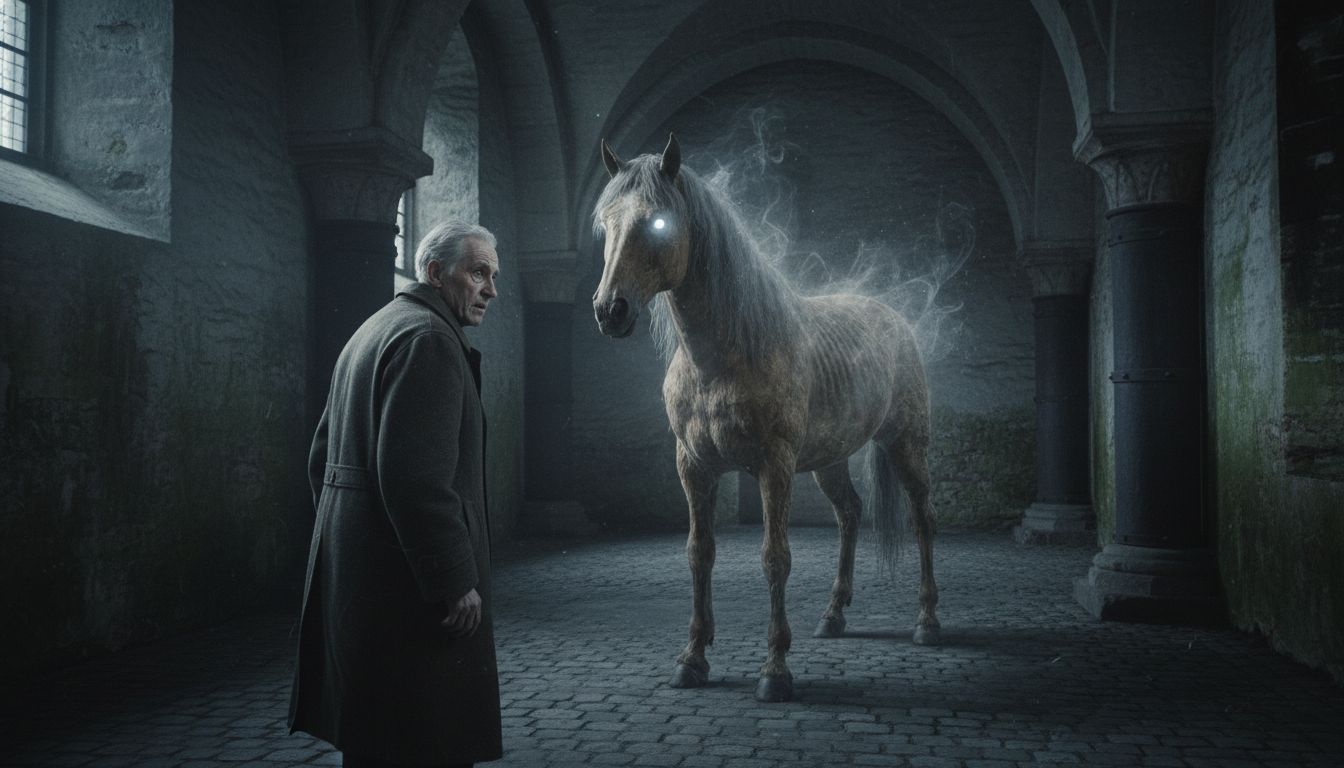
A centuries-old Danish legend says a three-legged spirit horse known as the Helhest roams the grounds of St. Canute’s Cathedral in Odense. According to folklore, encountering the creature is a warning that death is near—either for the witness or for someone connected to them. The story, revisited in an article published by Moon Mausoleum on October 29, 2026, reflects the way pre-Christian beliefs and Christian traditions became intertwined in Denmark’s historic churches and burial grounds.
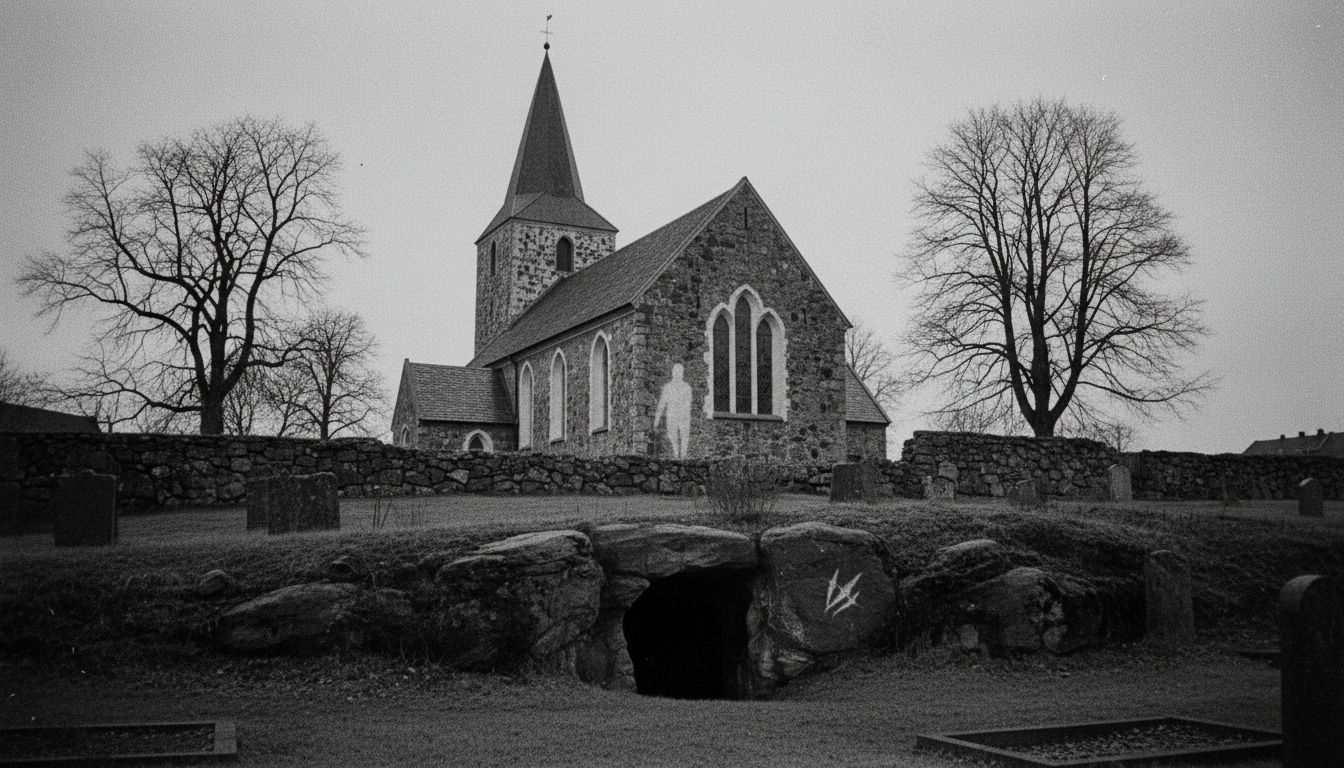
The legend is associated with Odense’s St. Canute’s Cathedral, also called Odense Domkirke or Sankt Knuds Kirke. The cathedral stands on Abbey Hill, a site with a Christian history extending back roughly 900 years. Odense itself has older religious associations: its name is linked to the pre-Christian worship of Odin, suggesting that the city’s sacred landscape predates the present cathedral by many centuries.
A Cathedral With Medieval Foundations
The earliest known church on the current site was a travertine structure reportedly under construction in 1095, according to Aelnoth of Canterbury, a Benedictine monk associated with the nearby St. Alban’s Priory. Remains of that earlier building can still be viewed in the crypt. The present cathedral took approximately two centuries to complete and was dedicated on April 30, 1499. Its single tower, built above the western entrance, was completed in 1586.
The church is named for Canute IV of Denmark, commonly known as Canute the Holy. His association with Odense helped establish the cathedral as an important religious and historical site. It is within this setting—surrounded by medieval architecture, crypts and former burial grounds—that the Helhest story has continued to circulate.
The Helhest Tradition
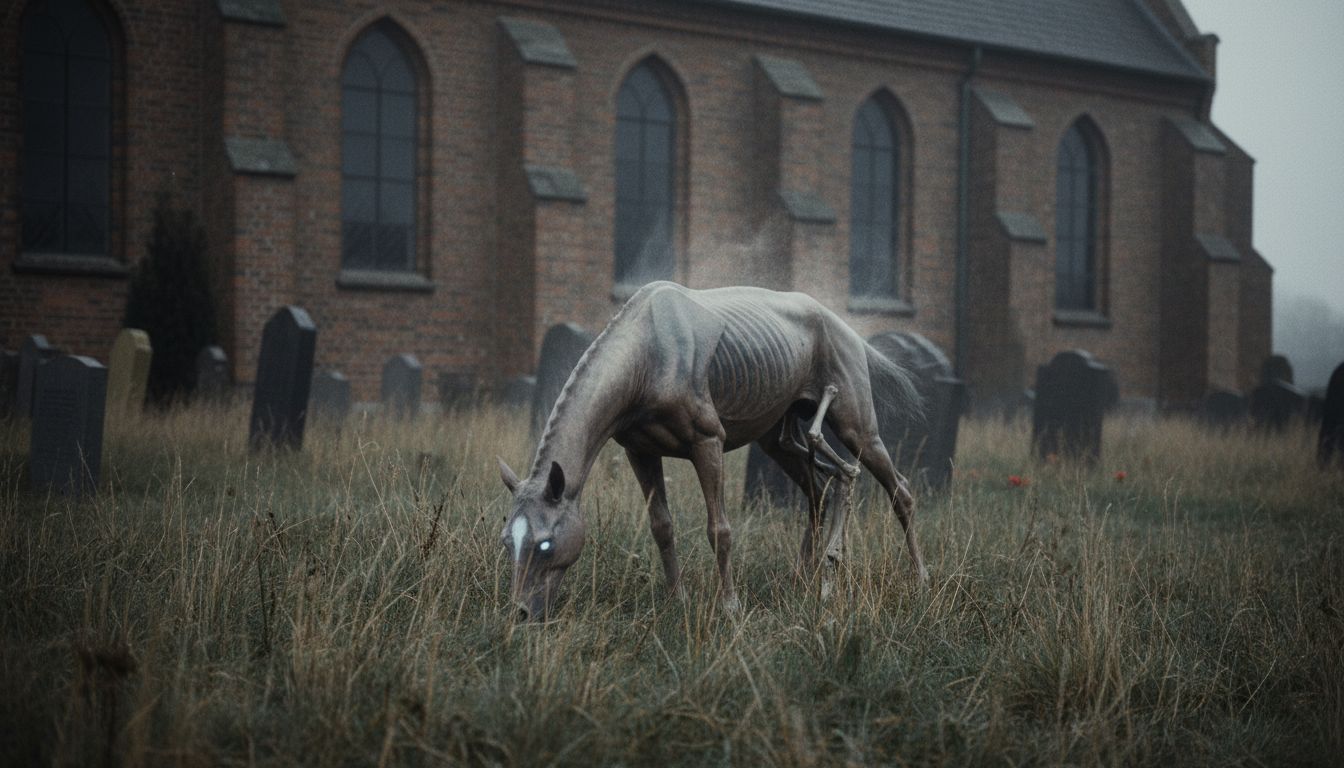
In Norse mythology, a Helhest, or “horse of Hel,” was associated with Hel, the goddess who presided over the realm of the dead. In later Danish folklore, the figure became a ghostly horse, often described as having only three legs. Stories commonly placed the creature near churches, cemeteries and old graveyards, where it served as an omen of death.
One explanation for the three-legged apparition holds that a horse was buried alive in a churchyard before human burials began. This sacrifice was supposedly intended to protect or sanctify the cemetery. While there is no evidence presented in the source that such a ritual took place at St. Canute’s Cathedral, the belief may help explain why the Helhest became connected with churchyards and burial places.
A Recorded Account From Odense
The first known written mention of a Helhest in Odense dates to 1673, when the creature was referenced by Jens Hansen Odense. The tradition itself was believed to be much older, with possible roots reaching back to Viking-era mythology and oral storytelling.
Danish folklorist Evald Tang Kristensen recorded a local account that stated: “In St. Knud’s parish in Odense, a three-legged horse will walk in the cemetery at night like a ghost. In another parish, a sheep with a lamb will walk.” The passage illustrates how supernatural animals were once used to explain—and perhaps dramatize—the uneasy boundary between the living community and the dead.
Folklore, Not Verified Paranormal Evidence
No contemporary evidence has established that a supernatural horse appears at the cathedral. Instead, the Helhest remains a folkloric figure, preserved through written accounts, local tradition and the enduring atmosphere of one of Denmark’s oldest religious sites. Its story also demonstrates how Christian buildings often inherited older supernatural narratives, with pagan imagery adapted to later beliefs about sin, death and the afterlife.
For visitors, the legend adds a macabre dimension to St. Canute’s Cathedral’s architectural and historical significance. Whether understood as a surviving fragment of pre-Christian mythology or as a ghost story shaped by centuries of retelling, the Helhest continues to represent Odense’s long cultural memory—and the persistent human fascination with omens from the world of the dead.