Overview
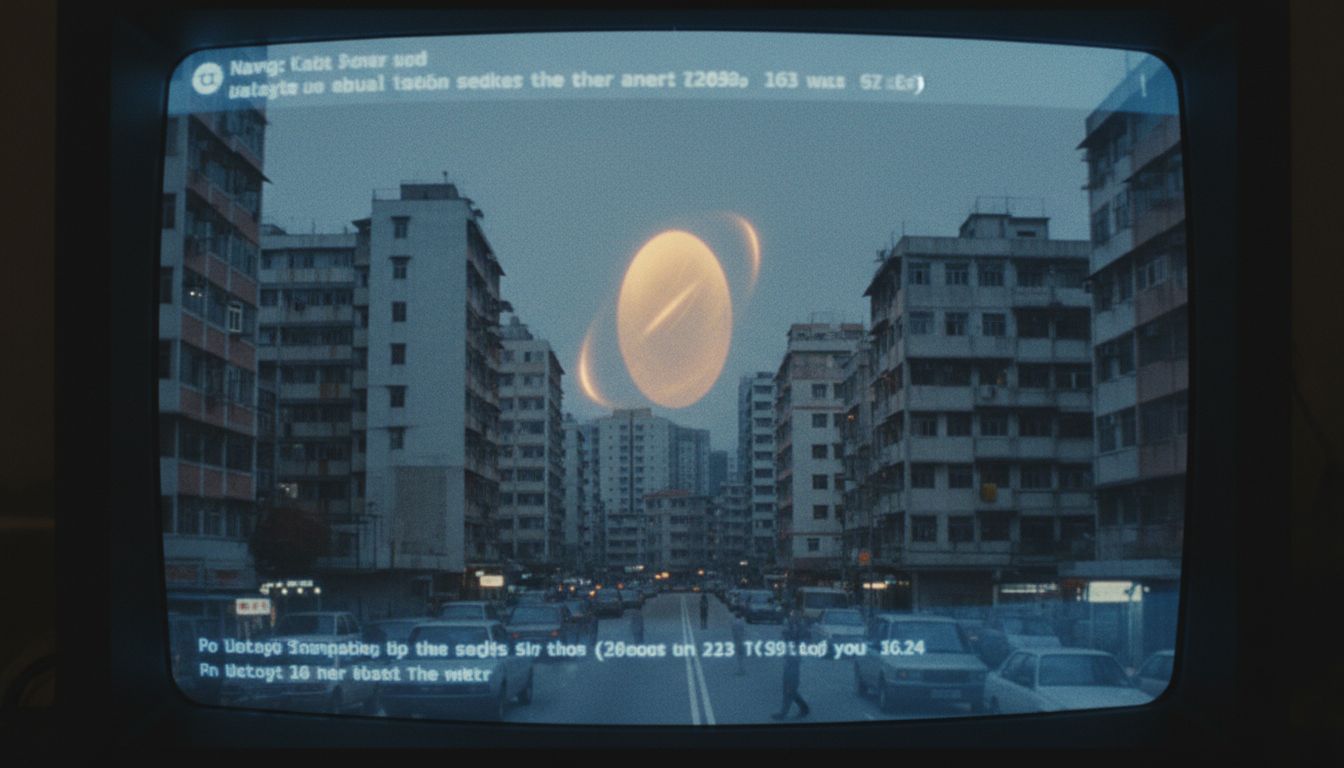
A video shared in a Reddit post is drawing attention for its reported resemblance to the U.S. Navy’s “Gimbal” unidentified aerial phenomena (UAP) footage. The recording is said to have been made in Hong Kong in 1995, more than two decades before the Navy clip became widely known. In the footage, a bright object appears to hover nearly motionless before disappearing from view. Viewers have focused particularly on an apparent rotation or tilting motion that they believe resembles the “gimbal” effect seen in the military video.
The post does not, however, establish who recorded the footage, the precise location, the camera system used, or the circumstances surrounding the observation. No independent verification, original recording file, chain of custody, or corroborating witness accounts were provided in the material reviewed. As a result, the video’s date, location and interpretation remain unconfirmed.
What the Footage Appears to Show
According to the description accompanying the Reddit post, the luminous object remains stationary relative to the camera for a period of time and then disappears. Its apparent form is difficult to determine from the available information, and the recording does not by itself establish the object’s distance, size or movement through the atmosphere.
The perceived rotation may be a feature of the object itself, but it could also result from camera movement, optical stabilization, focus changes, exposure effects or the behavior of a bright source against a dark background. Without access to the highest-quality original file and associated metadata, it is not possible to determine whether the object physically rotated, whether the camera changed orientation, or whether the image was affected by lens or sensor artifacts.
Comparison With the Navy’s Gimbal Video
The comparison is based on the object’s apparent change in orientation. The Navy’s Gimbal video, preserved and publicly available through Wikimedia Commons under the description “The First Official UAP Footage from the USG for Public Release,” shows an airborne object recorded by a military aircraft’s infrared targeting system. The clip became widely known after its publication in reporting in 2017 and was later officially acknowledged and released by the U.S. Department of Defense in 2020.
In the Navy footage, the object appears to rotate while moving across the field of view. That behavior prompted the informal “gimbal” label, although the term does not identify the object’s nature. Analysts have proposed explanations involving glare, infrared imaging characteristics, camera orientation and parallax, while others have argued that the footage remains unresolved. The video itself does not provide evidence that the Hong Kong recording depicts the same type of phenomenon.
Verification Remains the Central Question
The age claimed for the Hong Kong recording is significant because it would place the footage well before the Navy video entered public discussion. Yet an earlier date alone does not demonstrate a connection between the two cases. Establishing provenance would require more information, including the original tape or digital transfer, contemporaneous documentation, testimony from the person who made the recording, and a technical examination for editing or duplication.
For now, the footage is best treated as an unverified historical UAP claim, not confirmed evidence of an unusual aircraft or technology. Its resemblance to the Navy’s Gimbal clip may justify further investigation, but visual similarity by itself cannot establish common origin, extraordinary performance or an extraterrestrial explanation.