Overview
A new ScienceBlog report says a group of researchers is trying to move the long-running DMT “entities” debate out of the realm of anecdote and into the lab. For decades, the standard scientific explanation has been straightforward: the beings described by users of the powerful psychedelic are hallucinations, vivid products of an altered brain. But the new collaboration, involving the Trace Institute and the nonprofit Noonautics, wants to test whether those experiences could instead reflect contact with something more unusual — perhaps higher-dimensional conscious agents that humans normally cannot perceive.
The project is closely associated with Donald Hoffman, a University of California, Irvine psychologist known for arguing that perception is more like a user interface than a direct view of reality, and Andrew Gallimore, a neurobiologist at the Okinawa Institute of Science and Technology who helped develop the technique that could make the work possible. Their preprint, Traces of the Other, does not claim to prove that DMT beings are real. Instead, it proposes a framework precise enough to ask whether that idea can be falsified.
What people report on DMT
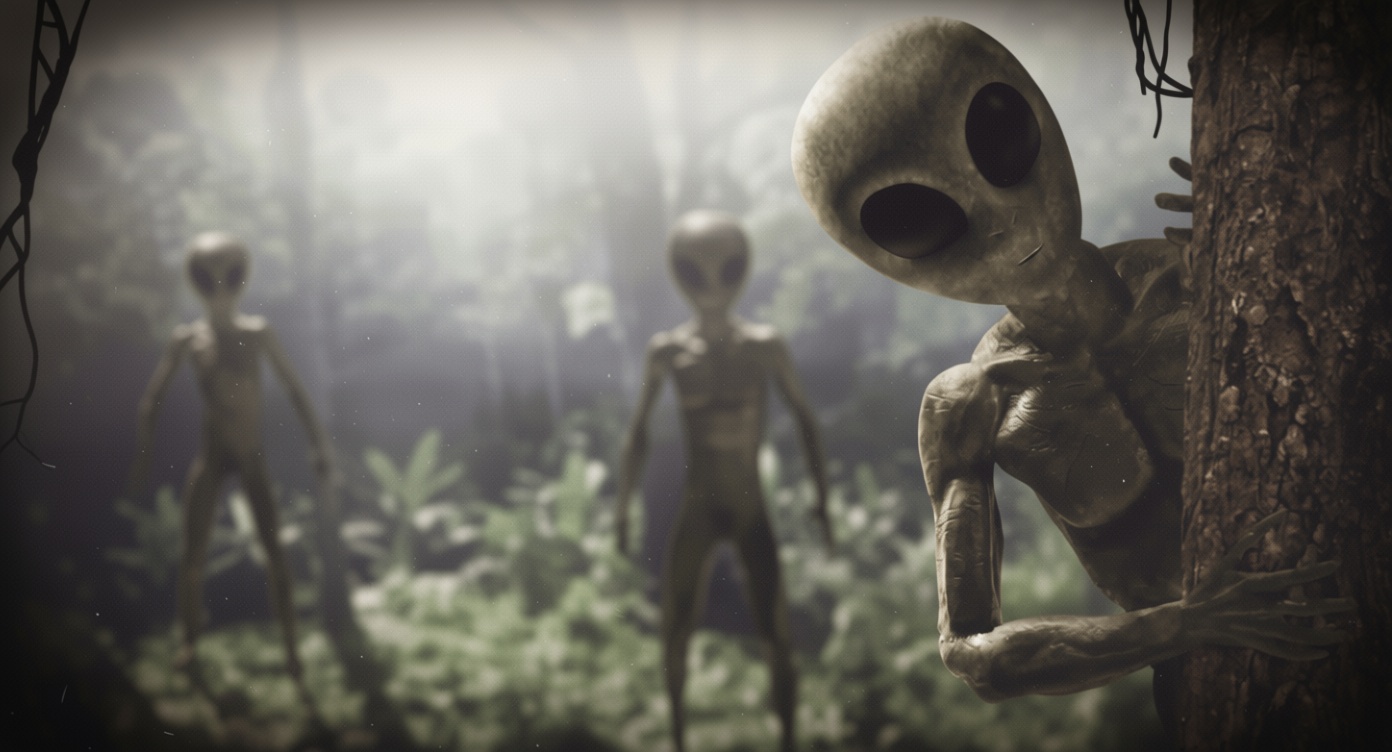
The article notes that about 45 percent of people who smoke a sufficient dose of DMT report a strikingly similar sequence: a tunnel or portal, sometimes a “waiting room,” and then encounters with entities. These beings are described in a wide range of forms — machine elves, insectoid creatures, jesters, deities, and other apparently autonomous presences that seem to manipulate or manufacture complex objects in front of the witness. One striking feature, the article says, is that humans almost never appear in these scenes.
That pattern is part of what makes DMT reports so puzzling to researchers. If the experience were simply the brain spinning up random imagery, skeptics argue, one might expect it to draw heavily from familiar human and animal forms, as dreams and psychotic episodes often do. Instead, the DMT state frequently produces worlds populated by entities that seem alien, structured, and oddly consistent across users.
A theory built around “conscious realism”
The researchers’ proposed explanation rests on a philosophy called conscious realism, which rejects the assumption that ordinary physical objects exist independently of mind. In this view, reality is composed of interacting conscious agents, while space, time, and objects are more like icons on a desktop — useful representations rather than the underlying code of existence. The article says the mathematics becomes highly complex, describing experience in terms of transitions through a space of possible states governed by a “qualia kernel.”
In Traces of the Other, Hoffman, Gallimore, and co-author Niffe Hermansson argue that DMT may not simply add hallucinated content to normal consciousness. Instead, they suggest it could push the mind out of the stable “Consensus Reality Space” that humans usually inhabit, exposing it to regions where normally hidden influences become perceptible as coherent, meaningful beings. The authors stress that this remains a hypothesis, not a conclusion, and that the hallucination model is still the most parsimonious explanation.
How the hypothesis could be tested
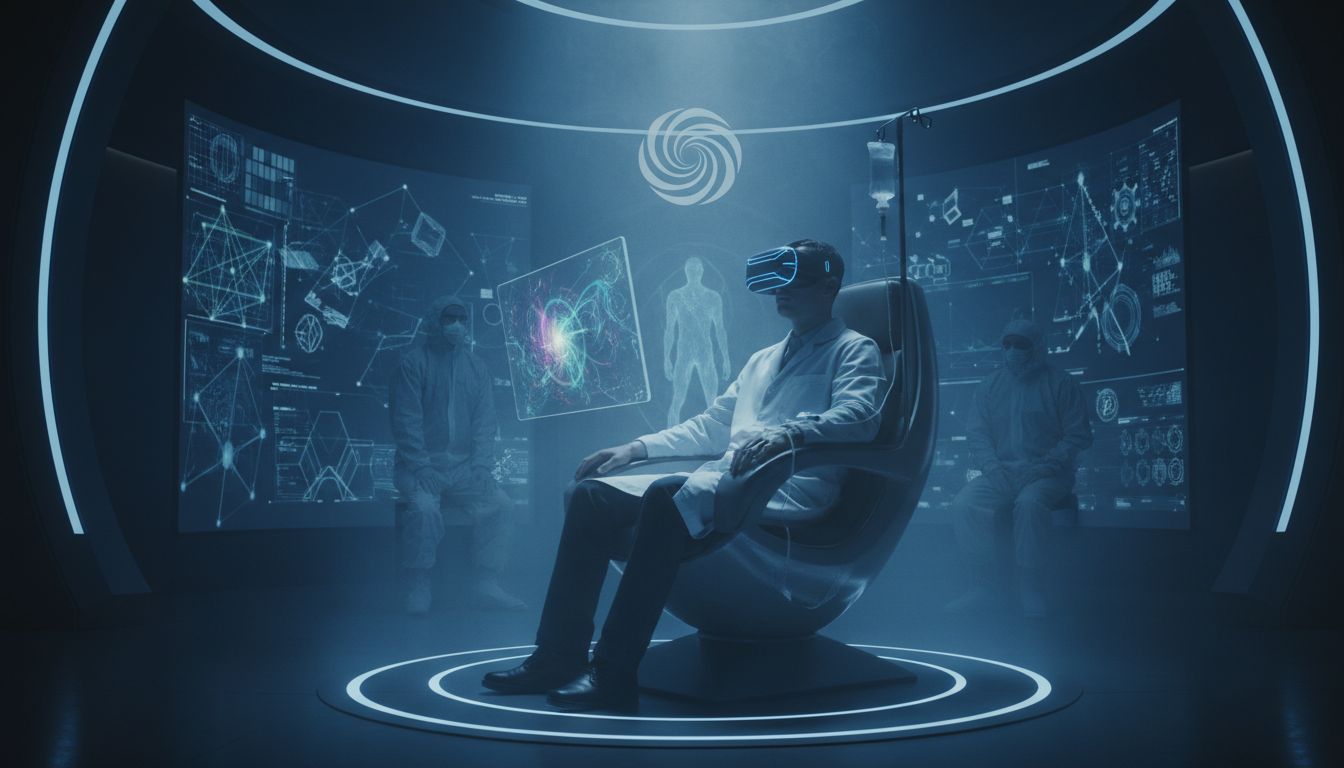
What makes the project notable is its emphasis on controlled intravenous DMT infusions, which would allow researchers to study the experience more systematically than is possible with smoked DMT. The goal, according to the article, is not to prove exotic claims by default, but to design experiments that could reveal whether the reported beings behave like private mental imagery or whether they show signs of something more structured and independent.
The article also places the discussion within a broader cultural conversation about non-human intelligence, a topic that is not limited to psychedelic research. Religious and philosophical reflections — including concerns about angels, demons, and spiritual entities — continue to shape how some people interpret unusual consciousness states. For now, though, the DMT question remains firmly in the realm of experimental speculation: a provocative idea, a testable framework, and a reminder that science is still trying to understand what consciousness can do when its usual boundaries dissolve.