Overview
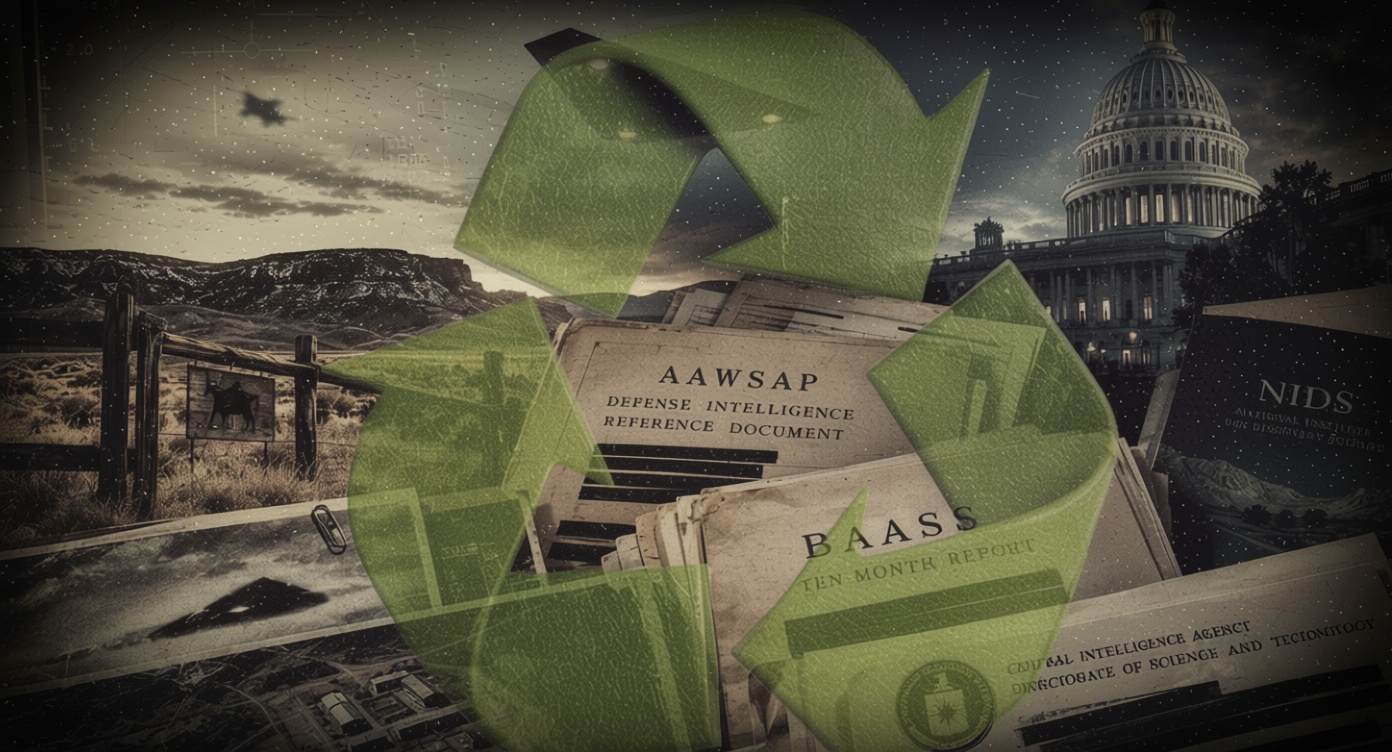
A Reddit discussion has raised a central question about modern U.S. ufology: How diverse and independent are the sources that shape the field’s information, claims and theories? The issue is particularly relevant as reports about unidentified anomalous phenomena circulate across social media, podcasts, specialist websites, documentary projects and public hearings. When the same small group of witnesses, researchers, documents or interpretations appears repeatedly across those channels, apparent confirmation may reflect repetition rather than genuinely independent evidence.
The discussion references an article published by the Brazilian outlet Vigília, titled, in translation, “Circular ufology: how a group of researchers became self-referential in revelations about UFOs.” The supplied source identifies the article’s URL but does not provide its text, and the final page was inaccessible in the material reviewed. As a result, the specific arguments, evidence and conclusions presented by Vigília cannot be independently summarized here. The available information establishes only that the article addresses concerns about a potentially self-referential research network and its influence on UFO disclosures.
The Question of Source Independence
In journalism and academic research, independent corroboration generally means that information comes from sources without a shared origin, coordination or strong dependence on one another. In ufology, that standard can be difficult to apply. A witness statement may be repeated by a podcast, then cited in an online article and later discussed as though it had been confirmed by multiple outlets. However, if all of those accounts ultimately rely on the same interview, leaked document or unnamed source, the information may represent one evidentiary stream presented through several platforms.
This concern does not automatically invalidate a claim. A source may still provide important testimony, documentation or leads even if it is widely repeated. But analysts need to distinguish between the number of times a claim appears and the number of genuinely separate pieces of evidence supporting it. The distinction is especially important when theories develop around alleged government programs, recovered materials, secret witnesses or unexplained aerial incidents.
How Narratives Become Self-Reinforcing
A close-knit research community can offer advantages, including specialized knowledge, access to witnesses and the ability to preserve information that might otherwise be overlooked. At the same time, limited source diversity can create an echo chamber. Researchers may cite one another, rely on the same intermediaries or adopt shared assumptions about secrecy and disclosure. Over time, a theory can gain authority from familiarity within the community rather than from new, independently verifiable evidence.
The supplied Reddit summary does not include comments, supporting documents or competing interpretations. It therefore does not establish whether the concerns raised are accurate, nor does it identify the researchers or institutions allegedly involved. Any assessment of the issue would require tracing claims back to their earliest available sources, checking whether documents can be authenticated, and separating direct observations from speculation and commentary.
Why Verification Matters
The debate reflects a broader challenge facing contemporary UAP reporting. Public interest has increased, but transparency about sourcing has not always kept pace. Credible investigation depends on clear attribution, access to primary records, disclosure of conflicts and meaningful attempts to test alternative explanations. Until those standards are applied, repeated claims should be treated as leads rather than proof.
At present, the available material supports a question—not a definitive finding—that some narratives in U.S. ufology may be shaped by a relatively interconnected group of sources. More evidence would be needed to determine whether that network represents productive collaboration, unhealthy self-reference or a mixture of both.