Overview
Dan Farah’s new Amazon Prime documentary, “The Age of Disclosure,” has sparked a wave of commentary among scholars, former officials, and UFO‑research veterans. The film revisits declassified briefings, recent congressional hearings, and a series of high‑level meetings that have kept the UAP (Unidentified Aerial Phenomena) issue out of the public eye for decades. While the documentary presents compelling archival footage and first‑hand accounts, the reactions it has elicited reveal deep concerns about the political, economic, and societal ramifications of any official acknowledgment of extraterrestrial technology during the current presidential term.
Key Reactions from Insiders
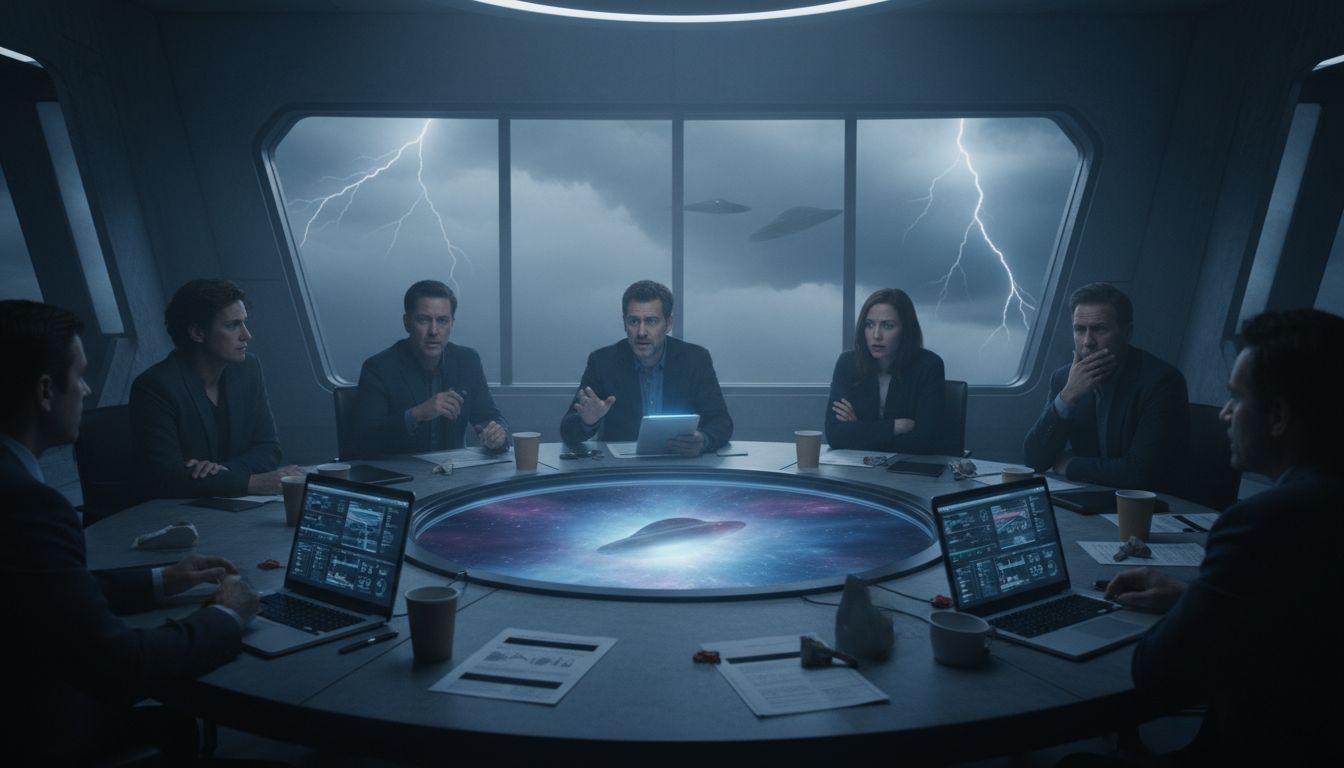
Former UAP Task Force director Jay Stratton recounts a 2020 briefing with Treasury Secretary Steve Mnuchin, in which the cabinet member asked, “What are the economic impacts of the president going to the microphone and telling the world we’re not alone?” Stratton’s recollection, featured prominently in the film, underscores a long‑standing habit of senior officials weighing disclosure against market stability. Physicist and former AATIP scientific advisor Hal Puthoff expands on this, noting that a similar “closed‑door” panel under the Bush administration produced 64 reasons why a public announcement would be “a really bad idea.”
Veteran researchers Billy Cox, James Carrion, and Kevin Randle also weigh in, emphasizing that premature disclosure could fracture public trust and fuel extremist narratives. “We have to ask whether the public is ready for the truth, or whether the truth will force the public to be ready,” Cox said in a post‑screening interview. Their perspectives, while varied, converge on the need for a methodical, bipartisan approach before any formal statement is made.
Historical and Scholarly Context
The documentary references scholarly work on sovereignty and state secrecy, drawing on political scientist Dr. Elena Mendoza’s analysis of “Sovereign Transparency in the Age of Technological Anomalies.” Mendoza argues that modern nation‑states have historically managed disruptive information through controlled leaks and incremental declassification, a pattern mirrored in the Pentagon’s 2020 UAP report. Historical analogues—such as the 1970s “Project Blue Book” revelations—demonstrate that gradual disclosure can mitigate panic while still advancing scientific inquiry.
The film also revisits the 2017 New York Times exposé of the Pentagon’s $22 million UFO research program, highlighting how that coverage forced the Defense Department to confront “unacceptable gaps in America’s domain awareness,” a phrase echoed by Stratton in the documentary. Former Deputy Assistant Secretary of Defense for Intelligence Chris Mellon is quoted urging legislators to “reclaim full legal authority over the federal budget” to ensure accountability, a sentiment that resonates with current calls for congressional oversight.
Political Implications for the Current Administration
President Donald Trump’s July 2025 comment—“The ballroom won’t interfere with the current building…”—has been interpreted by analysts as a veiled reference to the potential construction of a new “Disclosure Center” that would house classified UAP data. Critics argue that any such move could be seen as politicizing the issue, especially given the upcoming mid‑term elections.
Economic advisors warn that an abrupt admission could destabilize markets, particularly sectors tied to aerospace, defense, and emerging technologies. Mnuchin’s earlier concerns about “impacts on the president’s microphone” reflect a broader anxiety within the Treasury and Federal Reserve about inflationary pressures and investment volatility that could follow a seismic shift in global perception.
Path Forward: Consensus and Caution
The documentary’s chorus of voices suggests a tentative consensus: transparent, phased disclosure coordinated across the executive, legislative, and scientific communities is essential. Former Senate Majority Leader Harry Reid (archival interview) advocated for a “national UAP commission” with subpoena power, a model that could balance security needs with public right‑to‑know.
Meanwhile, independent researchers like Randle stress the importance of international collaboration, noting that the United States, Russia, and China have all reportedly recovered anomalous craft. A coordinated global framework could prevent an “information arms race” and foster shared scientific advancement.
In sum, “The Age of Disclosure” serves not only as a documentary record but also as a catalyst for a broader policy debate. As the nation grapples with the prospect of confirming that we are not alone, the prevailing message from experts and insiders alike is clear: responsibility and prudence must guide any path toward public revelation.


