Overview
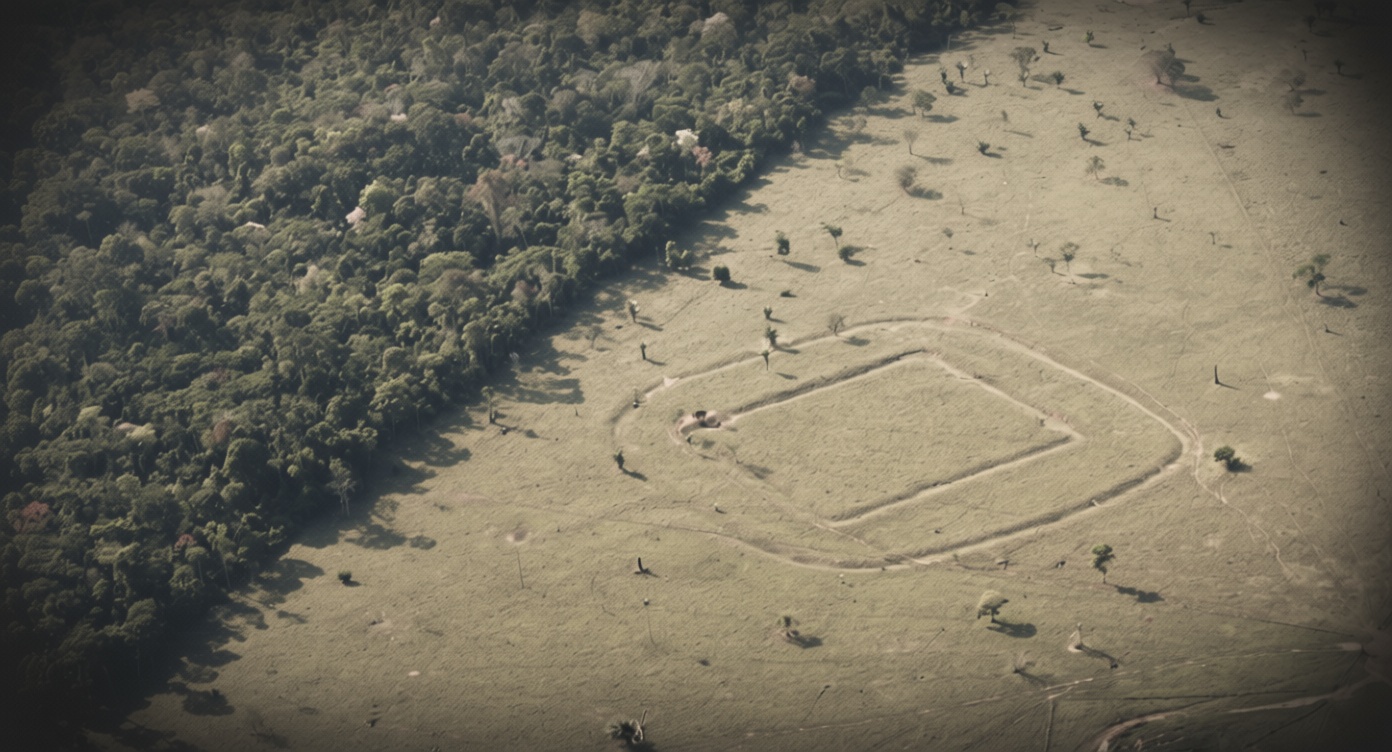
Archaeologists working in the southwestern Amazon have identified hundreds of ancient earthworks and geometric carvings hidden beneath dense rainforest canopy, adding fresh evidence that the region supported complex pre-Columbian societies long before European contact. The findings, published this week in Nature, document nearly 400 previously unknown geoglyphs — including circles, squares and other monumental designs — across a broad area near the borders of Bolivia, Brazil and Peru.
The discoveries challenge the long-held notion that the Amazon was largely untouched wilderness before the arrival of Spanish and Portuguese colonizers in the 15th century. Instead, the research points to a landscape that was extensively shaped by Indigenous peoples over many centuries, with some of the structures dating from roughly 600 B.C. to 850 A.D.
How the Sites Were Found
Because the forest canopy is so thick, the team relied on lidar — light detection and ranging — a laser-scanning technology that can map terrain hidden from view. From the air, lidar data revealed large-scale earthworks that would have been nearly impossible to identify from the ground alone. The structures include embankments, mounds and trenches, with some linked by straight roads or pathways.
Most of the geoglyphs span about 7 acres, and many feature ditches that are around 30 feet wide and 15 feet deep. The largest known formation covers more than 120 acres, underscoring the scale of landscape modification in the region. Taken together, the earthworks extend across an area of roughly 1,700 square miles.
José Iriarte, an archaeologist at the University of Exeter who was not involved in the study, called it “an important and ambitious study,” citing its “exceptionally extensive lidar coverage” and the “remarkable scale of pre-Columbian landscape modification in southwestern Amazonia.”
What the Geoglyphs May Have Been Used For
Despite the size and precision of the structures, their exact purpose remains uncertain. Researchers said the sites likely served multiple ceremonial and social functions, drawing in part on oral histories from the Apurinã people, who live in the center of the earthwork area. Lead author Martti Pärssinen, an emeritus professor at the University of Helsinki, said the team is “quite sure” the spaces were used for “festivities, political occasions, ceremonies, dance, music and also competition like ball games.”
The structures were attributed to an ancient society the researchers call the Aquiry, which Pärssinen described as a multicultural, multilingual group that shared a common cosmology reflected in the ceremonial centers. At the same time, scholars caution that much remains unknown. Anthropology professor Anna Roosevelt of the University of Illinois Chicago, who was not on the research team, said that “nobody has totally figured out” the exact meaning of the geoglyphs, including whether some had astronomical associations.
Wider Historical Significance
The new evidence strengthens the argument that the Amazon basin was far more populated and socially complex than earlier generations of researchers believed. Chroniclers such as Gaspar de Carvajal, a missionary who traveled through the Amazon in the 1540s with conquistador Francisco de Orellana, described heavily settled areas with large communities and continuous habitation. Those accounts were later dismissed, in part because disease and colonization devastated Indigenous populations and obscured earlier settlement patterns.
Researchers now say the lidar findings help correct that historical blind spot. Rather than a pristine forest untouched by human hands, the Amazon appears to have been a culturally engineered landscape, shaped by societies that built ceremonial centers, moved earth on a monumental scale and organized communities across vast distances. Further excavation, archaeologists say, will be essential to determine how these sites were used and what they reveal about one of the least understood chapters in the history of the Americas.