Overview
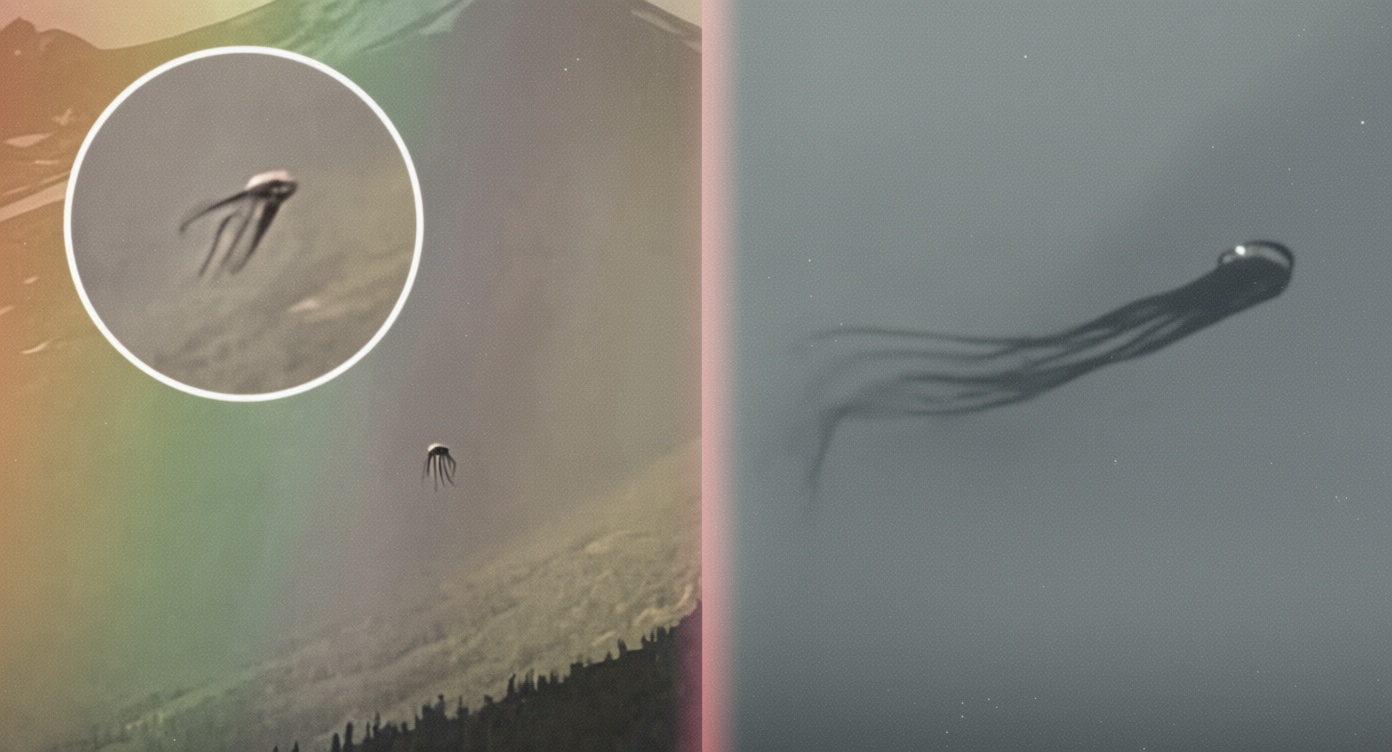
A series of videos shared online in early and mid-November purportedly shows unusual, jellyfish- or octopus-shaped objects hovering over cities and other locations. Social-media users dubbed the apparent phenomenon “jellyfish UFOs,” with some posts suggesting the objects were connected to a U.S. air-travel ground stop or unrelated service outages.
An investigation by Snopes, published Nov. 23, found no conclusive evidence that the objects were extraterrestrial or otherwise demonstrated nonhuman technology. Instead, the videos appeared to fall into several categories: footage likely showing commercially available kites or balloons, clips that displayed indications of generative artificial intelligence, and blurry or poorly documented material for which the date and location could not be independently established.
Anchorage Video Helped Drive the Trend
The online discussion appears to have accelerated after users reposted a video recorded in Anchorage, Alaska, in June. The original recorder argued that the object was neither a kite nor a balloon. However, Snopes consulted a woman with decades of kite-flying experience, including participation in a local kite-flying group.
After reviewing the footage, she said it “definitely” and “100%” showed an inflatable octopus kite. Her assessment is consistent with the appearance of commercially available jellyfish- and octopus-shaped kites, which are designed to float or move dramatically in the wind and can look unusual when filmed from a distance.
The Anchorage clip was subsequently reposted across platforms, helping fuel claims that similar-looking objects were being seen in multiple cities. Snopes noted that some videos with identifiable locations appeared to correspond to parks or beaches—settings where recreational kite flying would be plausible.
Kites, Balloons and AI-Generated Footage
Snopes’ review found that several clips appeared to show jellyfish or octopus kites, while others may have depicted balloons. Retailers sell inflatable designs that can resemble tentacled airborne objects, potentially explaining why viewers interpreted ordinary recreational equipment as something anomalous.
Other videos raised a different issue: signs of digital creation or manipulation. At least one clip carried a clear label identifying it as AI-generated content. Such labels do not necessarily establish that every similar video is fabricated, but they underscore the difficulty of treating viral footage as evidence without reliable information about its source, recording date, location and chain of distribution.
The investigation also found numerous videos that were too blurry or lacked enough contextual information to verify where and when they had been made. Reposts often removed original captions or obscured the identity of the person who recorded the footage, making independent verification more difficult.
No Fact-Check Rating Issued
Snopes did not assign the article a formal fact-check rating. The publication explained that its standards require sufficiently comprehensive details and conclusive evidence before applying such a rating. Because the collection included identifiable kites, apparent AI-generated material and clips with uncertain origins, the evidence did not support a single definitive conclusion covering every video.
The findings do not establish that every unidentified clip was a kite or balloon. They do show, however, that the available material provides no verified proof of aliens. As with other viral UFO claims, determining what a video depicts requires more than its visual impression: original files, metadata, corroborating witnesses and a confirmed location are often essential. In this case, the strongest identifiable explanations were ordinary airborne objects and digitally generated content, rather than evidence of an extraterrestrial event.


