Overview
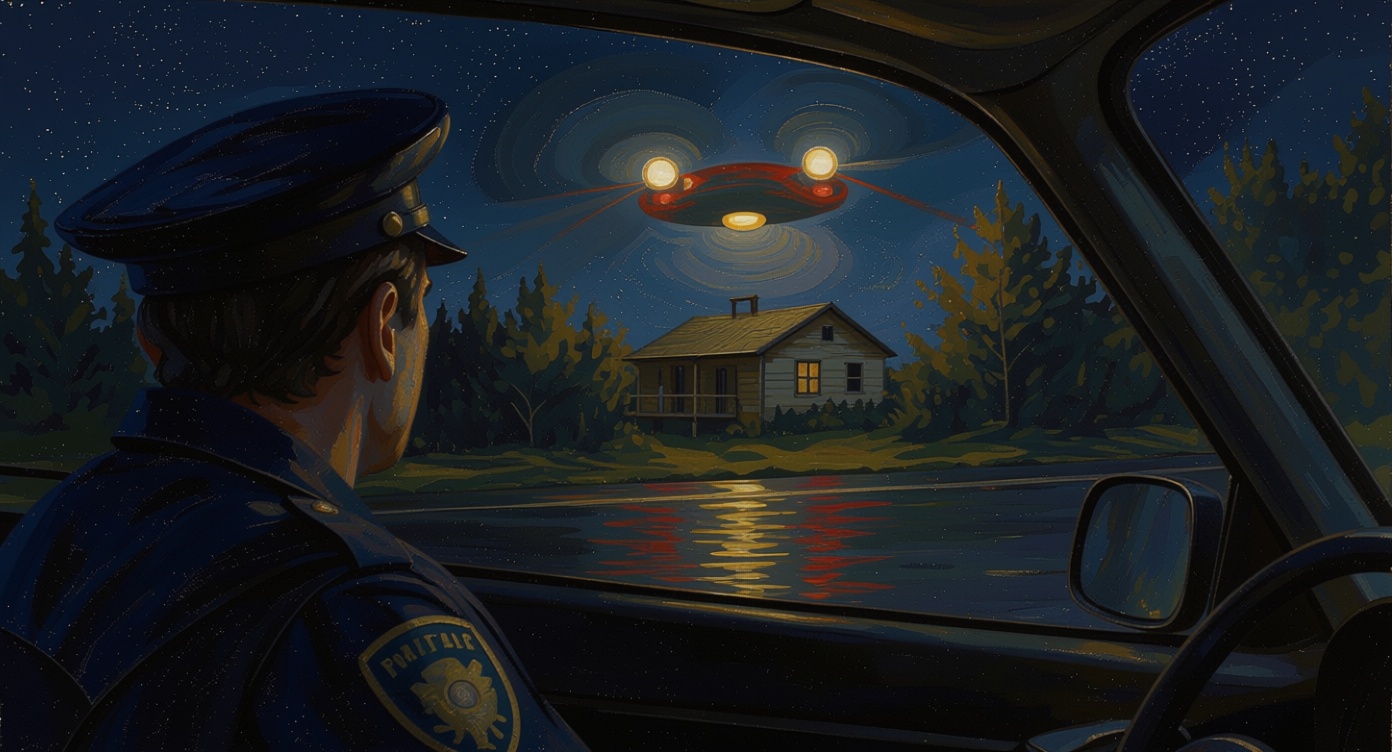
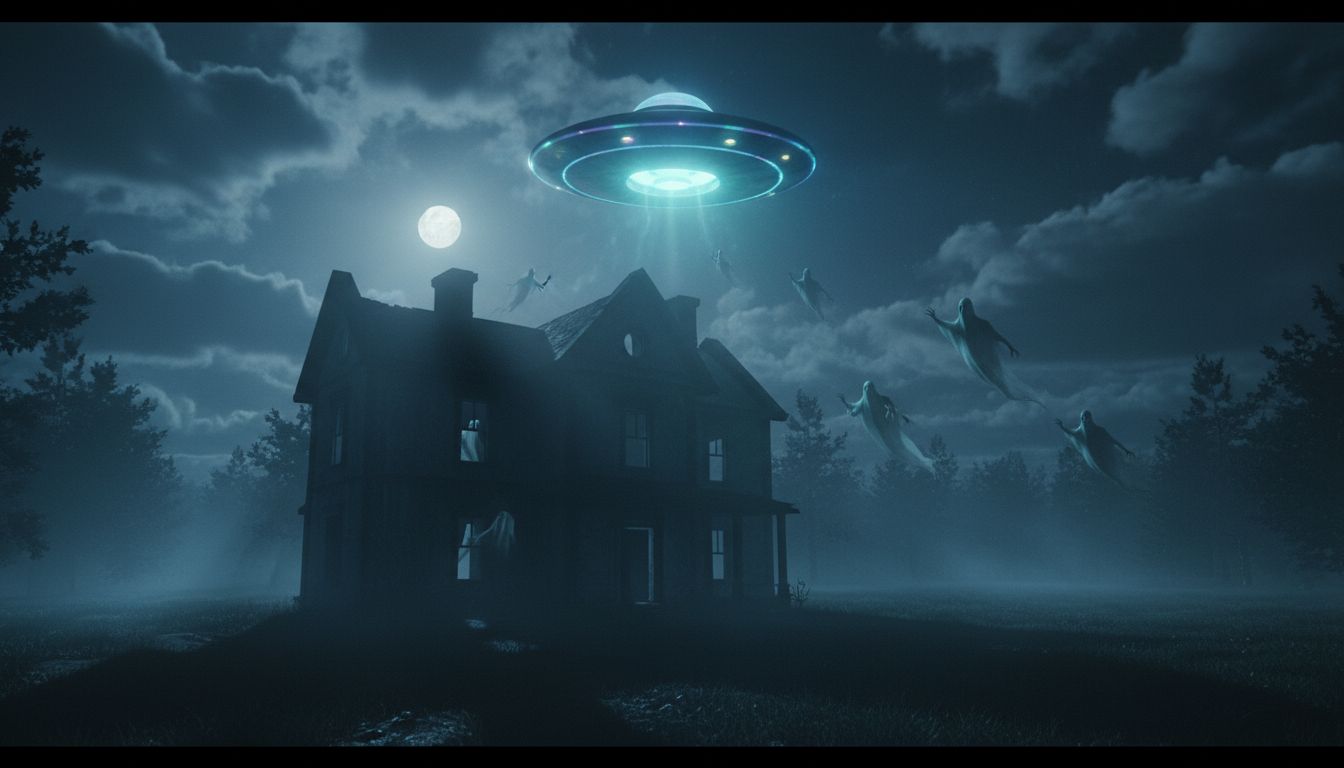
Recent discussions among researchers of anomalous phenomena have turned to a question that has long lingered on the fringes of both UFO and paranormal studies: are unidentified flying objects linked to ghostly encounters? A new feature on Alienated Media, published on September 8 2025, compiles anecdotal reports, historical references, and emerging scientific commentary to assess whether the two categories of “unexplained” events share common characteristics. While the article stops short of declaring a definitive connection, it highlights patterns—such as simultaneous sightings of bright lights and apparitions, overlapping geographic hotspots, and similar reports of electromagnetic disturbances—that merit systematic investigation.
Historical and Cultural Overlap
The notion that sky‑borne beings might interact with the spirit world is not new. Folklore from multiple continents describes “celestial visitors” appearing at battlefields, burial sites, or ancient temples, often in the company of ethereal figures. The Alienated Media piece notes that ancient texts and oral traditions frequently merge the spiritual realm with aerial phenomena, suggesting a cultural willingness to link the two. Modern accounts echo this pattern: witnesses in rural areas, national parks, and even military installations have reported bright, maneuverable lights coinciding with cold spots, eerie sensations, or visual apparitions. A table compiled by the outlet contrasts the typical traits of UFOs (bright lights, sudden movements, metallic shapes) with those of ghost sightings (cold spots, visual apparitions, a sense of presence), underscoring the parallel symptom sets that often appear side by side.
Overlapping Witness Reports
A review of incident logs shows a measurable clustering of UFO reports in locations already known for paranormal activity. For example, the Varginha incident—a well‑documented 1996 UFO sighting in Brazil—occurred near a historic cemetery that local residents claim is a hotspot for ghost sightings. Survey data cited in the article indicate that 60 % of UFO witnesses report fear, while 80 % express curiosity, compared with 70 % fear and 50 % curiosity among ghost encounter witnesses. Although these figures are derived from self‑reported experiences and therefore carry inherent biases, they reveal a consistent emotional overlap that may point to shared psychological or environmental triggers.
Scientific Perspectives
Researchers in quantum theory and consciousness studies have begun to explore whether the two phenomena could arise from related underlying mechanisms. Dr. Elena Martínez, a physicist specializing in quantum field fluctuations, is quoted in the source as noting that “localized electromagnetic anomalies can affect both sensory perception and the behavior of particulate matter, potentially creating the illusion of a solid object while simultaneously inducing feelings of presence." Similarly, neuroscientist Dr. Aaron Patel emphasizes that altered states of consciousness—whether induced by stress, sleep deprivation, or exposure to low‑frequency electromagnetic fields—can produce vivid visual and auditory experiences that might be interpreted as either extraterrestrial craft or spectral entities. While these hypotheses remain speculative, they provide a framework for interdisciplinary studies that could move the conversation beyond anecdote.
Implications and Next Steps
If UFOs and ghostly phenomena share a common causal thread—be it environmental, neurological, or something yet unknown—the implications for both fields are significant. A unified research agenda could streamline funding, standardize data collection, and foster collaboration between traditionally separate communities of investigators. The Alienated Media article concludes that understanding any connection could unlock new insights into the nature of reality itself, prompting scientists, historians, and the public to reconsider long‑standing assumptions about the boundaries between the physical and the metaphysical. As the discourse evolves, the call for rigorous, peer‑reviewed research grows louder, urging policymakers and academic institutions to allocate resources toward systematic, cross‑disciplinary inquiry into these enduring mysteries.