Claim of Imminent Alien Disclosure Rejected
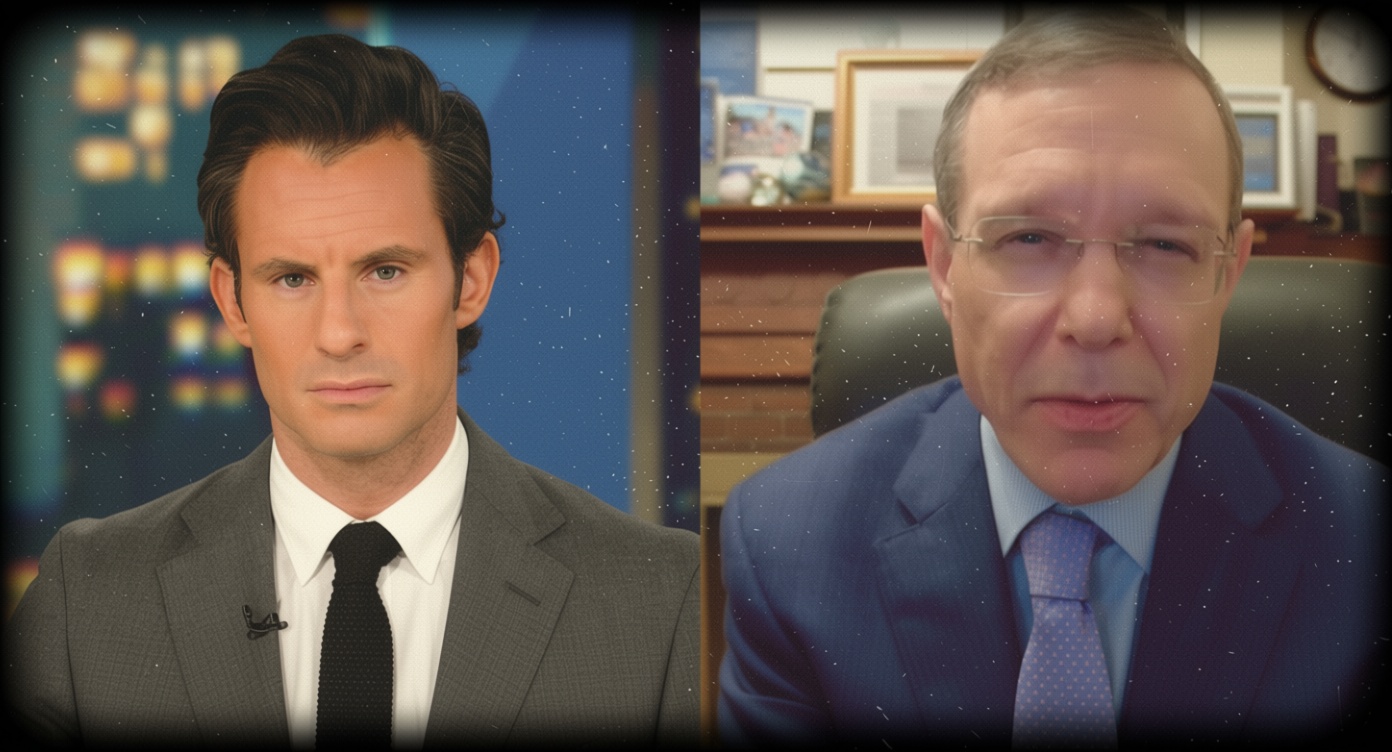
Astrophysicist Avi Loeb has rejected a widely circulated claim that he believes extraterrestrial beings will reveal themselves within 16 days, calling the assertion false and accusing its originator of misrepresenting his views for attention. Loeb addressed the controversy during a NewsNation interview with journalist Jesse Weber, excerpts of which were published in a Medium post dated Oct. 9, 2026.
The claim reportedly spread through a post on X that attracted more than 120,000 views. According to Loeb, the post inaccurately presented his scientific ideas and generated what he described as clickbait. “They are welcome to do that, but not to misquote me,” Loeb said during the interview. “When they say something that is not true, that is a lie, that is actually quite dangerous, because some people may believe it.”
The discussion took place amid renewed public attention surrounding unidentified anomalous phenomena, or UAP, and the possibility of life beyond Earth. Weber referenced recent headlines involving former intelligence official David Grusch, who has publicly described alleged crash-retrieval programs and accounts of nonhuman entities. Those claims remain disputed and have not been independently established as evidence of extraterrestrial visitation. The supplied interview transcript likewise provides no confirmed finding that aliens are present on Earth or preparing to make themselves known.
A Speculative Cosmic Question
Asked where the “16 days” prediction came from, Loeb did not endorse a timetable. Instead, he broadened the discussion to the age of the universe and the possibility that humanity may not be the first intelligent species to exist in Earth’s broader environment. “Time in the universe is measured in units of billions of years,” he said, arguing that any discovery of visitation could involve events that began long before modern civilization.
Loeb suggested that nonhuman intelligences might have reached Earth before humans appeared. He noted that Homo sapiens has existed for only a tiny fraction of Earth’s history, describing humanity’s arrival as occurring within roughly the last tenth of a percent of the planet’s existence. From that perspective, he raised the possibility that humans may not be the “indigenous intelligent species” of the cosmic neighborhood—a speculative question rather than a statement of established fact.
Loeb also offered a stark reflection on humanity’s long-term prospects, saying that if civilization disappeared, “nobody would mourn the death of our civilization and there will be no cosmic funeral.” His comments frame the issue less as a prediction of an imminent encounter than as an argument for investigating whether other intelligent life exists and how long technological civilizations may endure.
Scientific Search for Evidence
Loeb said that answering the question requires systematic observation rather than viral claims or unsupported predictions. He pointed to recent work associated with the Galileo Project, which he said uses observations from multiple directions to estimate the distances of UAP. He also described plans for a funded observatory intended to obtain higher-resolution images and spectra of unidentified objects, potentially allowing researchers to analyze their material composition.
Such measurements could help distinguish aircraft, satellites, atmospheric phenomena and other conventional explanations from genuinely unexplained objects. However, the information provided does not identify any confirmed extraterrestrial signal, craft or biological evidence resulting from those efforts. The interview transcript ends while Loeb is describing the planned facility, which he said would be located at the former residence of astronomer Carl Sagan in Ithaca, New York.
For now, the central question—whether humanity is the only native intelligent species in its cosmic neighborhood—remains unanswered. Loeb’s remarks present it as a subject for scientific inquiry, not a forecast that aliens will appear within a specific number of days.