Overview
An article published under the headline “The Mars Mystery: The Secret Connection Between Earth and the Re…” explores a long-running scientific and speculative question: whether there may be a deeper connection between Earth and Mars than standard planetary history alone can explain. Rather than claiming evidence of aliens or hidden civilizations, the piece frames Mars as a planet that continues to invite debate because of its similarities to Earth, its unexplained features, and its enduring role in popular and scientific imagination. The central theme is not certainty, but mystery—and the gap between what scientists have confirmed and what remains open to interpretation.
Scientific Context
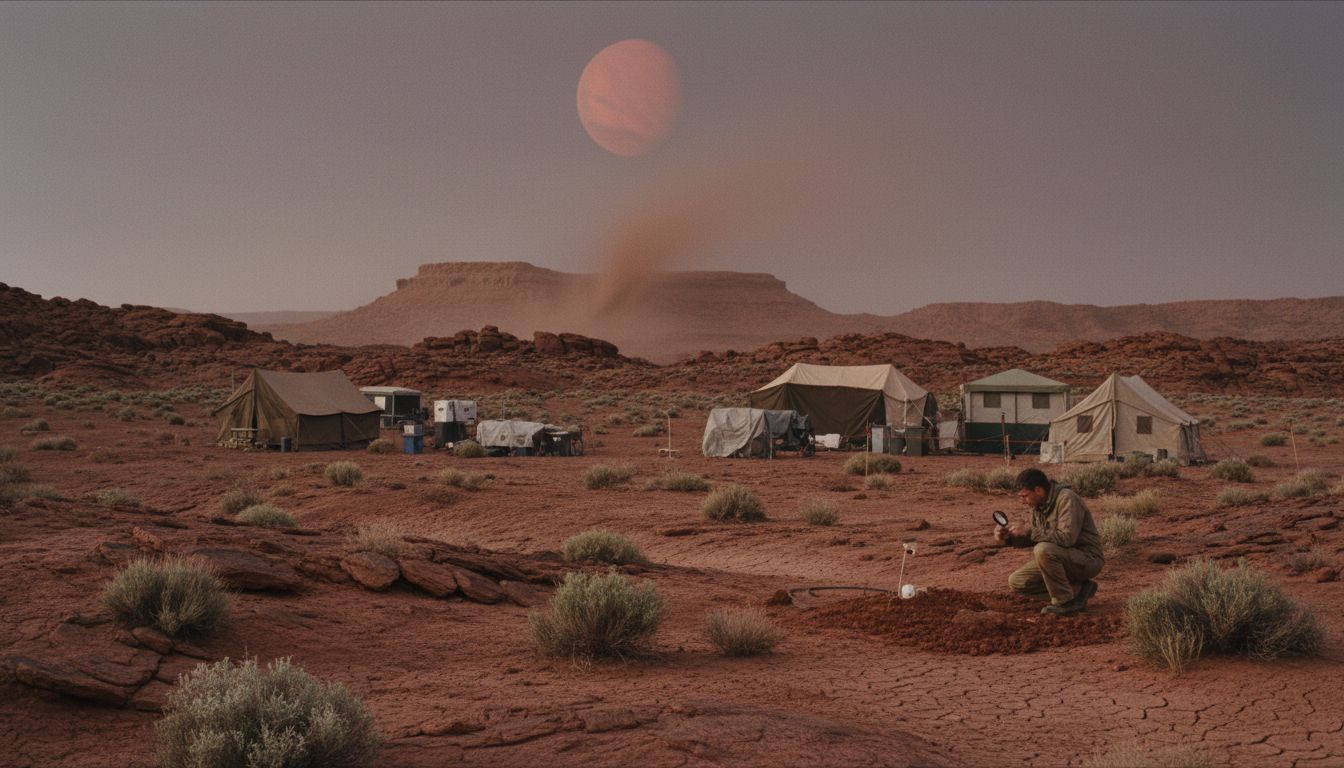
Mars has long been viewed as the most Earth-like planet in the solar system, which is part of why it remains so compelling. Researchers have found signs that the planet once had liquid water, a thicker atmosphere, and potentially habitable conditions in its distant past. Those findings have fueled questions about whether Mars and Earth may have shared materials, conditions, or even ancient organic chemistry in the early solar system. One scientifically accepted concept often cited in these discussions is meteorite exchange, the idea that rocks blasted off one planet by impacts can travel through space and land on another, creating a physical link between worlds.
At the same time, the article appears to lean into broader theories that stretch beyond conventional planetary science. These include speculation about whether Mars may have experienced a dramatic environmental collapse, whether its surface features could point to unusual geological history, and whether unexplained observations on the planet have contributed to persistent public fascination. Such ideas are not presented as established fact, but as part of the larger conversation surrounding Mars and its place in planetary science.
Unexplained Phenomena and Speculation
Much of the enduring appeal of Mars comes from features that continue to inspire interpretation. From unusual surface formations to recurring claims about possible past water channels, the planet has repeatedly generated debate over what can be explained through geology and what might still require further investigation. In public discussions, these questions often spill over into speculation about extraterrestrial life, ancient ecosystems, or even a hidden relationship between Earth and Mars in the deep past.
The article’s framing suggests that this uncertainty is precisely what keeps Mars relevant. Scientific exploration has answered many questions, but it has also raised new ones. Each mission, image, and data set adds detail to the picture without fully resolving the larger mystery. That tension between evidence and speculation is central to why Mars remains such a powerful subject in both science and popular culture.
Why the Debate Persists
Ultimately, the article presents Mars as a planet that sits at the crossroads of research, imagination, and unresolved inquiry. There is no definitive proof of a secret Earth-Mars connection in the extraordinary sense sometimes suggested by fringe theories, but there are legitimate scientific reasons to study the two planets together. Their shared origins in the solar system, the possibility of exchanged material, and Mars’ ancient environmental history all make the relationship worth examining.
What the article makes clear is that Mars is not just a destination for space probes—it is a mirror that reflects humanity’s larger questions about planetary evolution, habitability, and whether life has existed elsewhere. For now, the connection between Earth and Mars remains less a confirmed revelation than an active area of exploration, where science continues to separate what can be proven from what still invites wonder.