Overview
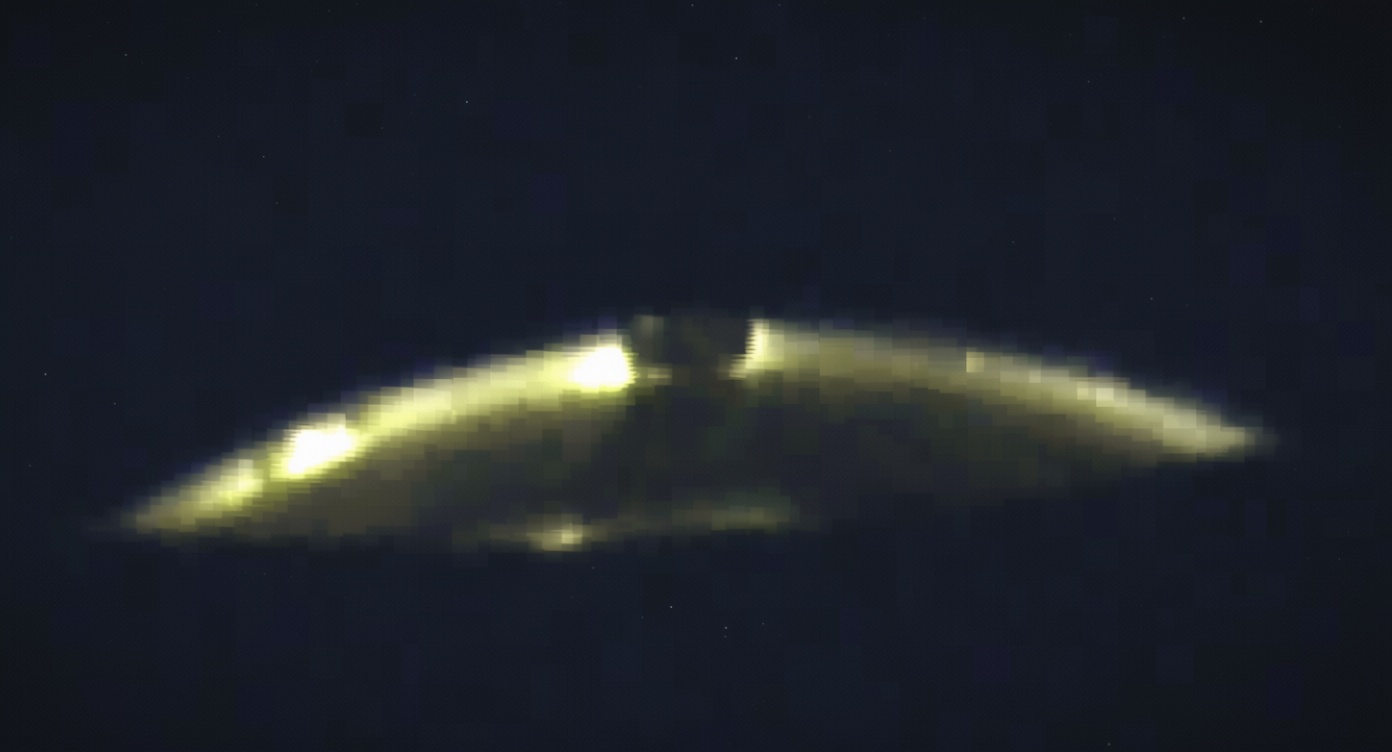
A new claim from Harvard astrophysicist Avi Loeb has reignited debate over how seriously the U.S. government is treating reports of UAP orbs—and whether officials are seeking answers or simply trying to shape a conventional explanation. In a post shared through the account of the UAP Science Advisory Council he now chairs, Loeb said that reliable U.S. government sources focused on national security approached him to build the council because they “cannot explain UAP orbs in terms of human-made technologies.” The statement has drawn attention not just because of what it says, but because of what it appears to imply: that some officials may be openly acknowledging a gap in understanding.
Loeb’s remarks, posted on X, frame the issue as a scientific and national-security problem rather than a purely speculative one. According to his account, the request from government sources was rooted in the limitations of publicly available data and the need for expert analysis. He wrote: “Reliable US government sources who are focused on national security asked me to establish the UAP Science Advisory Council because they cannot explain UAP orbs in terms of human-made technologies. Given these circumstances, it is the duty of all genuine scientists to figure out who these strangers visiting our backyard are.” The language is striking, but it remains Loeb’s characterization of the conversation rather than a publicly confirmed government admission.
Why the wording matters
The phrase “cannot explain” sits at the center of the controversy. For UAP researchers and observers who have long argued that official agencies have minimized unusual sightings, it reads like a tacit acknowledgment that certain cases do not fit known military, aerospace, or civilian technology. For skeptics, however, the same wording leaves room for a far more ordinary interpretation: that the government may be seeking a credible scientific consultant to help translate ambiguous reports into something conventional, measurable, and defensible. In that reading, the council would not be evidence of a breakthrough, but of an effort to explain the unexplained away.
That ambiguity is what gives Loeb’s post its force. The article’s framing suggests a fundamental question about transparency: are officials genuinely open to the possibility that the objects are anomalous, or are they looking for a respected academic to provide a prosaic explanation that preserves institutional confidence? Without additional documentation, the public is left to interpret Loeb’s statement through the broader lens of UAP history—one marked by secrecy, selective disclosure, and recurring disputes over how much the government knows versus how much it can prove.
Scientific scrutiny and public trust
Loeb has become one of the most visible academic voices in UAP discussions, and his willingness to treat such reports as worthy of scientific study has made him both influential and controversial. His latest comments place the issue in a more serious register by linking it to national security and to the scientific duty to investigate rather than dismiss. Yet the evidentiary threshold remains high. Claims about orbs, no matter how compelling, still depend on data quality, chain of custody, sensor context, and independent verification.
What this moment ultimately highlights is not just the question of what UAP orbs may be, but who gets to define them. If the government is truly asking outside experts for help, that could signal a meaningful shift toward openness. If, on the other hand, the goal is to offer a conventional explanation before the evidence is fully examined, then the debate over UAP transparency is far from settled. Either way, Loeb’s comments ensure that the conversation about UAP orbs is no longer confined to witness anecdotes—it is now part of a broader contest over credibility, science, and public trust.