Overview
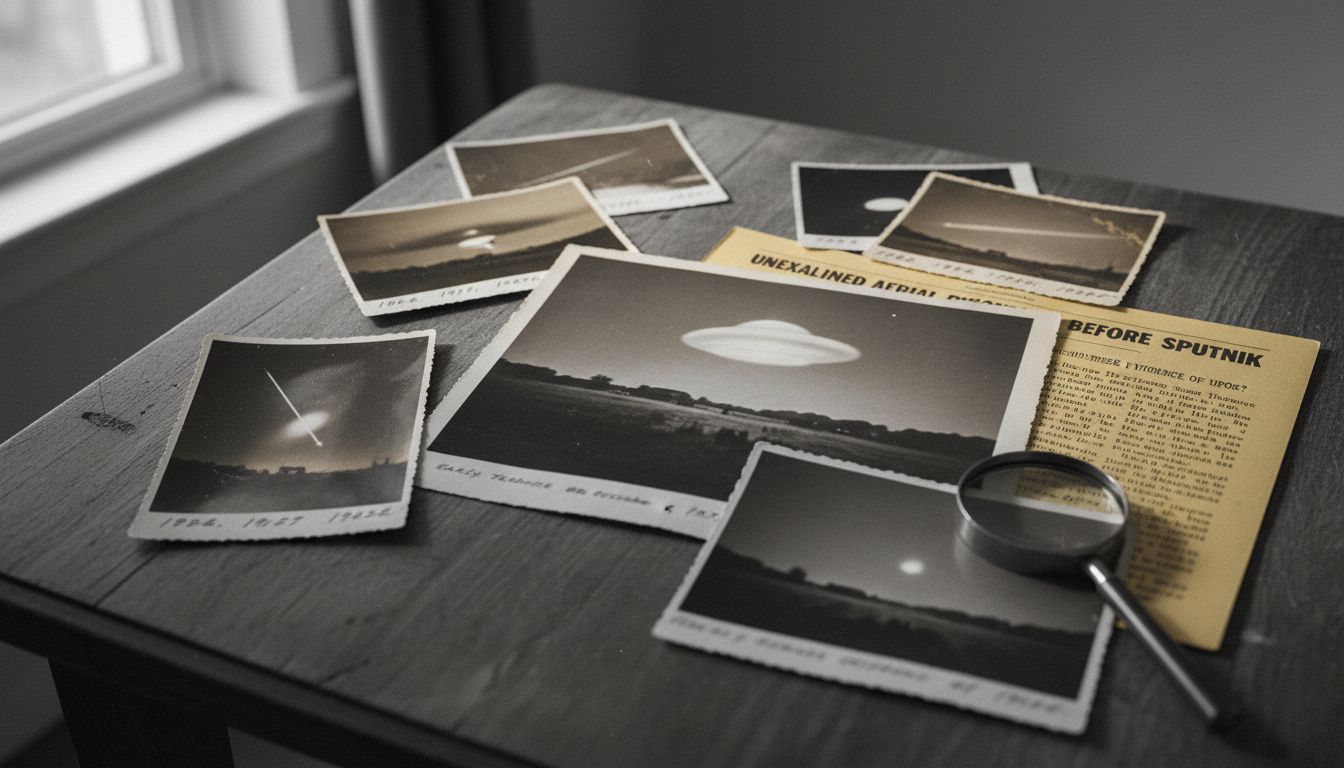
A newly published commentary is raising a familiar but consequential question in UFO research: whether photographs of unusual lights taken before the launch of Sputnik could represent evidence of unidentified flying objects. The article, “I Want to Believe. But Have You Checked the Original Photograph?” appeared on Medium on Sept. 29, 2026, and examines how easily ambiguous images can acquire extraordinary interpretations when their original context and technical details are not carefully reviewed.
The discussion centers on photographs reportedly made before the Soviet Union launched Sputnik 1 on Oct. 4, 1957—the event widely regarded as the beginning of the Space Age. Because any unexplained lights recorded before that date could not readily be attributed to an artificial satellite, such images have sometimes been presented as potentially significant in UFO narratives. However, the supplied article excerpt is incomplete and does not identify the photographs, establish when or where they were taken, or provide independent verification of their provenance.
The Evidence Question
The commentary’s central argument is methodological rather than conclusive. Its author, Rich Kolodziej, frames the issue through a skeptical appeal for examining primary evidence before accepting an extraordinary explanation. “Could we check the evidence first?” the article asks, emphasizing the importance of inspecting original photographs rather than relying on reproductions, captions, online claims, or later retellings.
That distinction is particularly important in historical image analysis. A photograph’s meaning can change substantially depending on the original negative, exposure settings, lens characteristics, film processing, cropping, retouching, and the conditions under which it was archived. Reflections, double exposures, developing artifacts, distant aircraft, astronomical objects, and light sources near the camera can all appear unusual when an image is separated from its technical and historical context. A high-resolution scan may also reveal details that are invisible in a compressed digital copy.
Research Cited
The excerpt states that researchers Stephen Bruehl and Beatriz Villarroel published a peer-reviewed paper in Scientific Reports on Oct. 20, 2025. It does not, however, provide the paper’s title, findings, photographs, or the researchers’ interpretation of the alleged pre-Sputnik lights. As a result, the available material does not establish that the study concluded the images depict spacecraft—or even that it regarded them as unexplained after examination.
The reference is nevertheless relevant to the broader debate. Scientific publications can help assess whether a claim has been documented, whether alternative explanations were tested, and whether other researchers can reproduce the analysis. Peer review is not proof that a conclusion is correct, but it provides a framework for evaluating evidence that social-media posts and television programs generally do not offer.
Popular Culture and Public Belief
The item also references the television series Ancient Aliens, although the supplied excerpt contains no further verifiable details about the program’s treatment of these photographs. Such references illustrate the way historical images can move between scientific discussion, entertainment, and popular UFO culture. Once an image is associated with alien visitation, the association can persist even when the original caption, archive record, or technical explanation is unavailable.
Kolodziej’s broader point is expressed through a deliberately personal line: “I want to believe.” The statement acknowledges the appeal of extraterrestrial explanations while arguing that curiosity should be paired with scrutiny. At present, the supplied source supports a call for closer examination—not a finding that pre-Sputnik photographs document alien spacecraft. Until the original images, records, and analysis are made available, the claim remains an open question rather than established evidence.