Overview
A new NewsNation report is drawing attention to one of the more speculative ideas in the UFO debate: the notion that Earth may be functioning as a kind of “galactic zoo,” watched by nonhuman intelligence but largely left alone. According to the report, an author argues that UFO sightings near military and defense sites could lend support to that theory, adding another layer to the broader discussion over unexplained aerial phenomena, or UAP. The framing is notable because defense-related locations have long been among the most closely watched and most frequently cited settings in UFO cases, due to their strategic sensitivity and the possibility that unusual activity in those areas may carry national security implications.
Why defense sites matter in UFO reporting
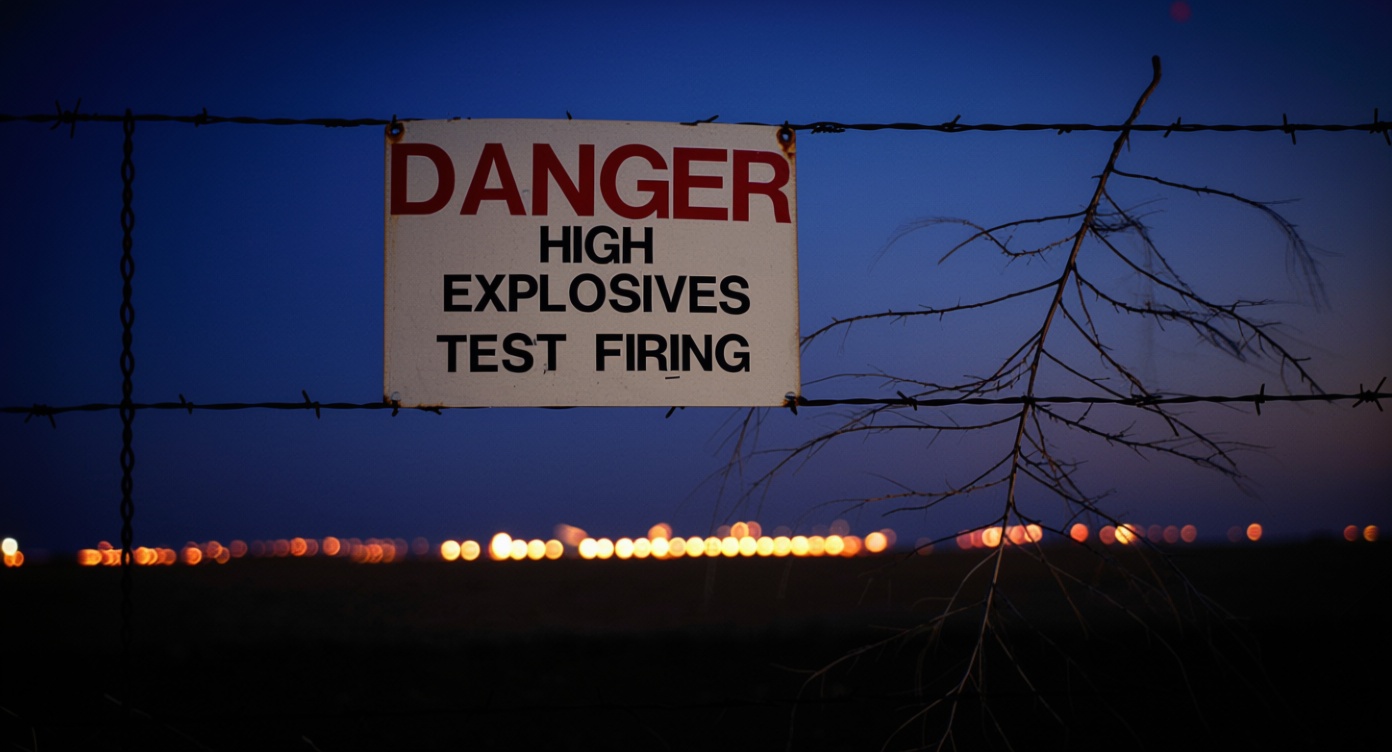
Sightings near defense installations are often treated differently from reports of lights or objects seen in isolated civilian settings. That is partly because military facilities tend to have more sophisticated tracking systems, radar coverage, and trained observers, making the events harder to dismiss outright. It is also because unexplained objects near restricted airspace raise obvious questions about air safety, surveillance, and foreign technology. In that context, the author’s argument is that if anomalous objects consistently appear around highly secure installations, the pattern could be interpreted by some as evidence of deliberate observation rather than random visitation. The “galactic zoo” idea, in that sense, suggests Earth may be monitored by an advanced intelligence that avoids direct contact while still studying human activity.
The theory behind the theory
The “galactic zoo” hypothesis has circulated for years in UFO and astrobiology discussions, but it remains firmly in the realm of speculation. Proponents generally argue that a more advanced civilization might choose to observe humanity without interference, either to avoid disrupting development or to follow some kind of nonintervention principle. In the NewsNation framing, sightings at defense sites are presented as potentially significant because they may fit that pattern of careful monitoring of human institutions, especially those tied to military capabilities. But while the idea is provocative, it does not establish that such objects are extraterrestrial, let alone that they are intentionally observing Earth as a zoo-like habitat. Alternative explanations still include misidentification, sensor error, classified aerospace technology, or adversary surveillance.
What the report adds to the UAP debate
The report arrives at a time when public interest in UAP remains high and official scrutiny has increased in recent years. Congressional hearings, Pentagon reviews, and independent research efforts have all helped move the topic from tabloid territory into a more serious policy conversation. Still, the jump from unexplained sightings to a theory about alien observation is a large one. The value of the NewsNation segment lies less in proving the “galactic zoo” idea than in highlighting how unresolved defense-site cases continue to fuel public curiosity and debate. For researchers, those incidents remain important because they sit at the intersection of mystery, technology, and national security—three areas where confirmed answers are often scarce.
A theory that remains unproven
Ultimately, the report underscores a familiar tension in UFO coverage: extraordinary claims attract attention, but evidence remains uneven. Sightings near defense sites may be among the most intriguing cases in the UAP archive, but they do not by themselves confirm a nonhuman presence or a hidden monitoring program. What they do confirm is that certain incidents continue to resist easy explanation, and that gap leaves room for ideas ranging from the plausible to the highly speculative. For now, the “galactic zoo” theory stands as a reminder of how quickly unresolved aerial mysteries can evolve into broader questions about humanity’s place in the universe.