Overview
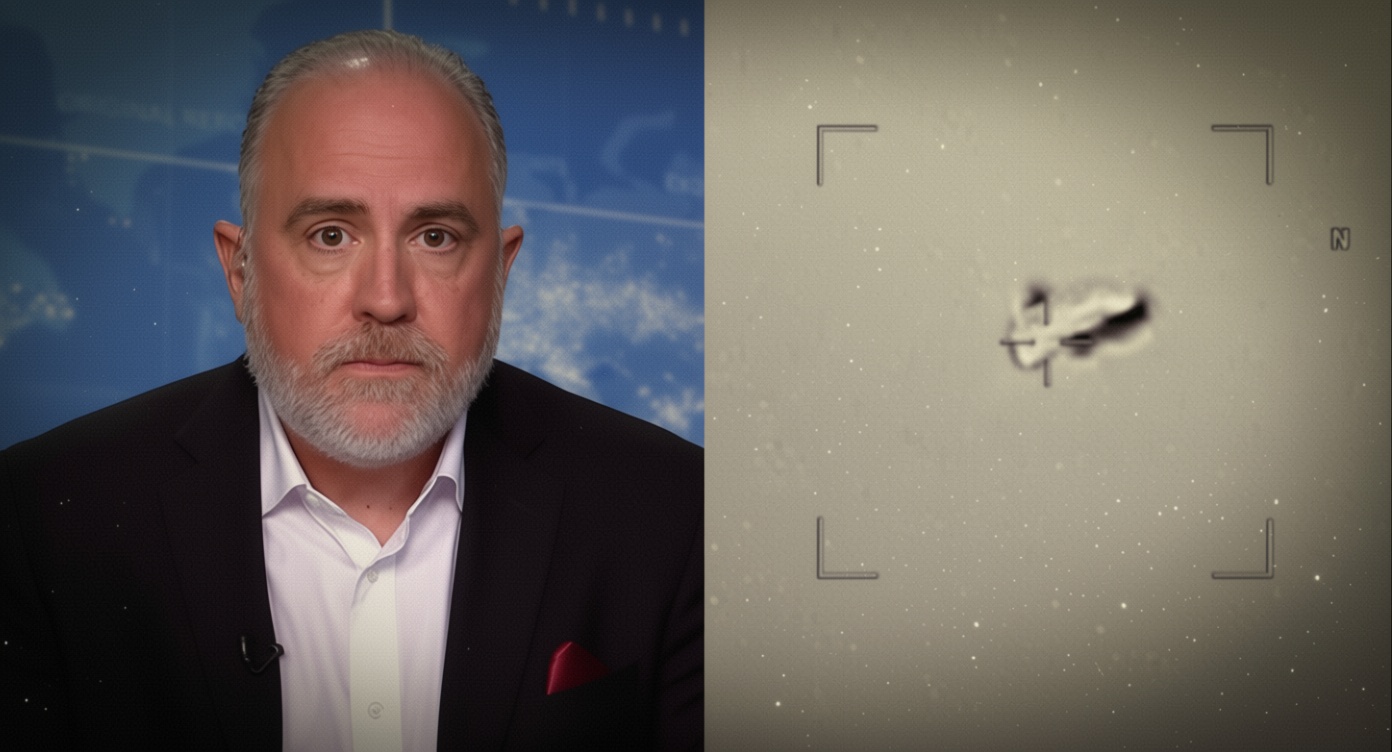
Harvard astronomer Avi Loeb is using an unexpected example — the motion of a baseball pitch — to make a broader case about how observers can misread movement when context and measurement are limited. In a recent Medium post, Loeb said that some reported unidentified anomalous phenomena, or UAP, appear strange not because they are necessarily exotic, but because their motion is being interpreted without enough data. The central point of his argument is that careful observation and physics, not speculation, are required to separate ordinary objects from truly unexplained events.
Loeb, who identifies himself as chair of the Unidentified Anomalous Phenomena Science Advisory Council, framed the issue as both a scientific and national security concern. He wrote that some orbs in the government’s four tranches of UAP reports “cannot be explained in terms of human-made technologies,” while stressing that resolving such cases requires “the hard work of collecting data rather than the easy work of expressing opinions on social media.” For Loeb, the debate over UAP remains hampered by competing tribes of believers and skeptics, both of whom he says are often too quick to settle on conclusions.
The baseball analogy
To illustrate his point, Loeb pointed to his upcoming appearance at a Houston Astros game, where he is scheduled to throw an early ceremonial pitch on August 3, 2026. In preparing for the event, he said he studied the physics of baseball and found that some pitches can appear anomalous depending on the observer’s viewpoint. A ball thrown with spin, speed, and a changing angle of observation can seem to deviate in surprising ways, especially if the viewer lacks trajectory data or a frame of reference. In that sense, what looks like a baffling motion from one angle may be perfectly ordinary from another.
That analogy, Loeb suggests, is relevant to UAP reporting. A distant light, orb, or fast-moving object may appear to accelerate, stop, or change direction abruptly when the available data is incomplete. The lesson, he argues, is not to assume either a prosaic explanation or an exotic one too quickly. Instead, scientists should reconstruct the motion using measurements that can be tested against physics.
Data, skepticism, and scientific method
Loeb’s post also revisits a recurring theme in his work: the idea that classified or limited-access sensor data could help resolve questions that visual reports alone cannot answer. He noted that meteor fireball detections from U.S. government satellite sensors have historically been shared with scientific databases such as NASA’s Center for Near-Earth Object Studies (CNEOS), pointing to that practice as a model for UAP research. He also referenced criticism he has faced over prior claims involving interstellar material, saying mainstream scientists have questioned whether the satellite data he relied on could be trusted.
For Loeb, the larger scientific method is straightforward, even if it is emotionally difficult: generate hypotheses, compare them with evidence, and discard the ones that fail. He argues that many discussions about UAP get stuck because believers resist being disproven and skeptics dismiss reports before the evidence is fully examined. In his view, the field advances only when researchers remain agnostic long enough to gather enough information.
A familiar object, a bigger question
By comparing a baseball pitch to a possible UAP observation, Loeb is trying to make a methodological point rather than a sensational one. Motion that seems unusual at first glance may turn out to be ordinary once more data is available. But the reverse is also true: genuinely unexplained objects can be missed if observers default too quickly to familiar explanations. His argument underscores a broader challenge in UAP research — that the difference between a mundane object and an anomalous phenomenon often lies not in the appearance alone, but in the quality of the data used to interpret it.