Overview
In a new Medium essay, astrophysicist Avi Loeb uses a deliberately provocative question — whether there could be “alien packages in our mailbox” — to argue for greater openness to unusual possibilities in the study of Unidentified Anomalous Phenomena (UAP). The piece is framed as a speculative commentary rather than a report of any confirmed extraterrestrial discovery, but it reflects Loeb’s broader push for the scientific community and the public to take anomalous evidence more seriously and with less institutional hesitation.
Trump memo and disclosure channels
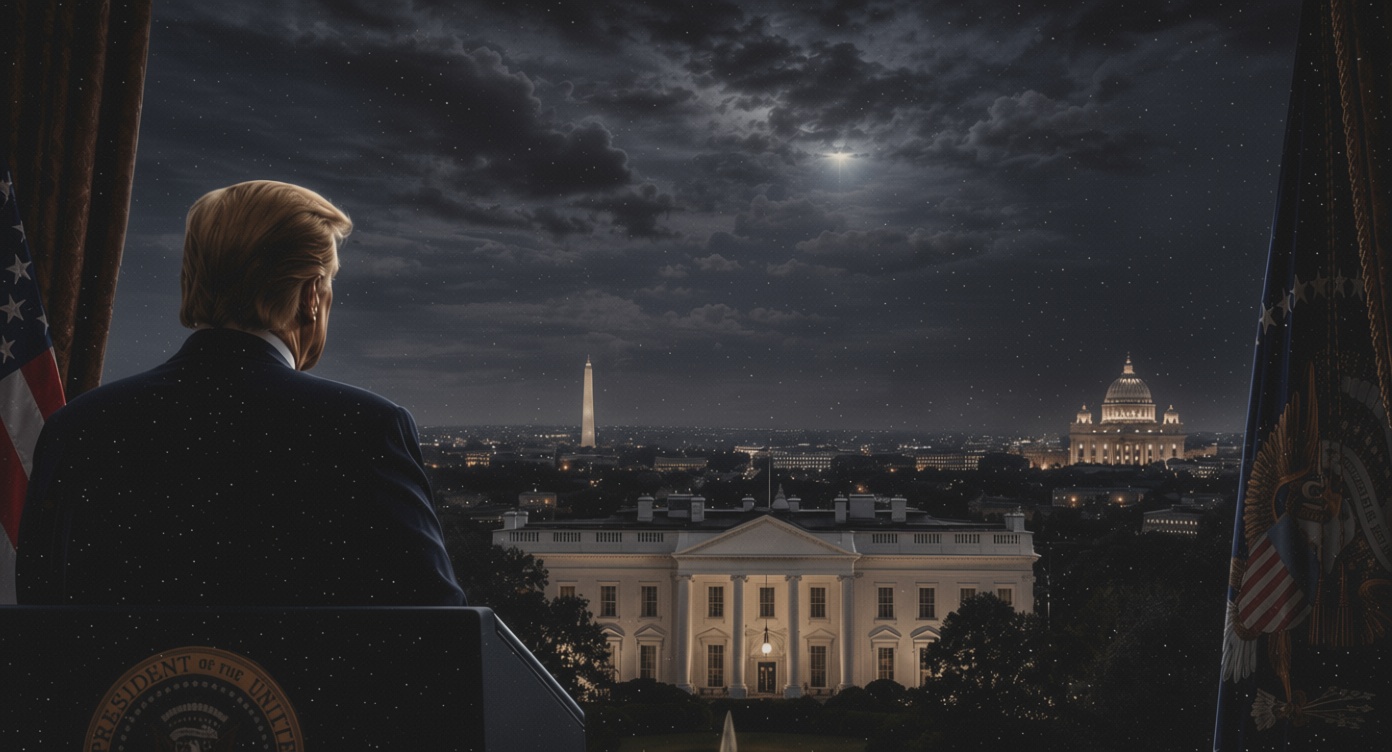
Loeb’s essay centers on a reported move by President Trump directing the Department of War and the intelligence community, through a national security presidential memo, to waive prior nondisclosure agreements (NDAs) for former government employees and contractors who worked on UAP-related matters. According to the essay, the policy does not amount to a declassification order; instead, it allows people with relevant information to come forward through official channels, including the All-Domain Anomaly Resolution Office (AARO) at the Pentagon and a newly referenced declassification task force under the Presidential Unsealing and Reporting System for UAP Encounters (PURSUE).
The essay argues that this legal shift could matter because years of congressional hearings and newly declassified records have suggested that some witnesses may have remained silent under the constraints of compartmentalized secrecy and NDAs. By removing that barrier, Loeb says, the administration may make it easier for credible firsthand information to reach investigators.
What Loeb says the evidence still shows
Despite the language of urgency, Loeb is careful to note that the publicly available record still does not show evidence “beyond a reasonable doubt” of non-human technology. He writes that four recent tranches of information released by PURSUE on May 8, May 22, June 12, and July 10, 2026 have not yet established that any UAP represent alien-made objects. In his view, the current challenge is distinguishing the “wheat” of possible alien technology from the “chaff” of natural phenomena and human-made systems.
That framing is central to the essay’s thesis: the most compelling UAP cases, Loeb suggests, may be hidden among a large volume of misidentified or mundane observations. He describes that possibility as an “unknown unknown” for AARO, PURSUE, and the UAP Science Advisory Council (UAPSAC), which he says he leads.
Scientific caution and political support
Loeb also uses the essay to praise what he portrays as bipartisan momentum around transparency. He thanks Trump and members of the UAP Caucus in Congress — including Anna Paulina Luna, Eric Burlison, Tim Burchett, Nancy Mace, Jared Moskowitz, Suhas Subramanyam, Robert Garcia, Kirsten Gillibrand, and Mike Rounds — for supporting greater disclosure. He says every step that lowers barriers for the release of credible evidence is a step toward a better scientific understanding of UAP.
Still, the central claim of the essay is one of openness, not proof. Loeb’s “alien packages” line is best understood as a rhetorical device meant to widen the public’s imagination while insisting that any extraordinary conclusion must ultimately be tested by rigorous analysis.
What happens next
The essay concludes by urging that any newly available material be evaluated carefully by the UAPSAC and other scientific bodies. For now, the significance of Loeb’s piece lies less in any verified discovery than in its broader message: the UAP debate, he argues, should remain open to unusual possibilities, provided those possibilities are examined with discipline rather than sensationalism.