Overview
A new hypothesis floated by Harvard astronomer Avi Loeb suggests that at least some of the UAP “orbs” reported by witnesses may not be craft at all, but meteoritic dust clouds interacting with the atmosphere. In a recent Medium post titled Are UAP Orbs Meteoritic Dust Clouds?, Loeb frames the idea as an open scientific question rather than a conclusion, underscoring the broader challenge of distinguishing truly anomalous objects from unusual natural phenomena that can appear artificial on camera or to the naked eye. The post arrives as public and government interest in UAP remains high, with researchers continuing to debate whether some sightings reflect advanced technology, sensor error, or misunderstood atmospheric effects.
A Chemist’s Proposal
Loeb says the idea came to him in the form of a preprint from John W. Birks, an emeritus professor of chemistry at the University of Colorado Boulder and an atmospheric chemist whose career includes work on the nuclear winter concept and ozone chemistry. In his message to Loeb, Birks said he reviewed hundreds of orb sightings reported to the National UFO Reporting Center and found that orb observations were highly correlated with meteor fireball reports on the American Meteor Society website, claiming “better than 99% confidence.” From that, he developed a theory in which meteor dust could account for the behavior of orbs, including their motion, appearance, and persistence. Birks also argued that daytime orbs may sometimes look like solid objects — “like flying saucers for example” — making them especially vulnerable to misidentification.
Why Loeb Is Taking It Seriously
Loeb said he received the email while on a 10-hour flight from Athens to Boston, but still read the paper with interest and shared it with the UAP Science Advisory Council that he leads. That response reflects Loeb’s broader approach to UAP research: he has repeatedly argued that unconventional claims should be tested with data, even when the most plausible explanation may turn out to be prosaic. In this case, the key question is whether a class of glowing or reflective objects reported as orbs could be linked to a natural process associated with meteors rather than to artificial flight. For Loeb and others in the field, the value of such a proposal lies less in proving a specific answer than in pushing investigators to widen the range of possible explanations.
Pentagon Context and Unresolved Cases
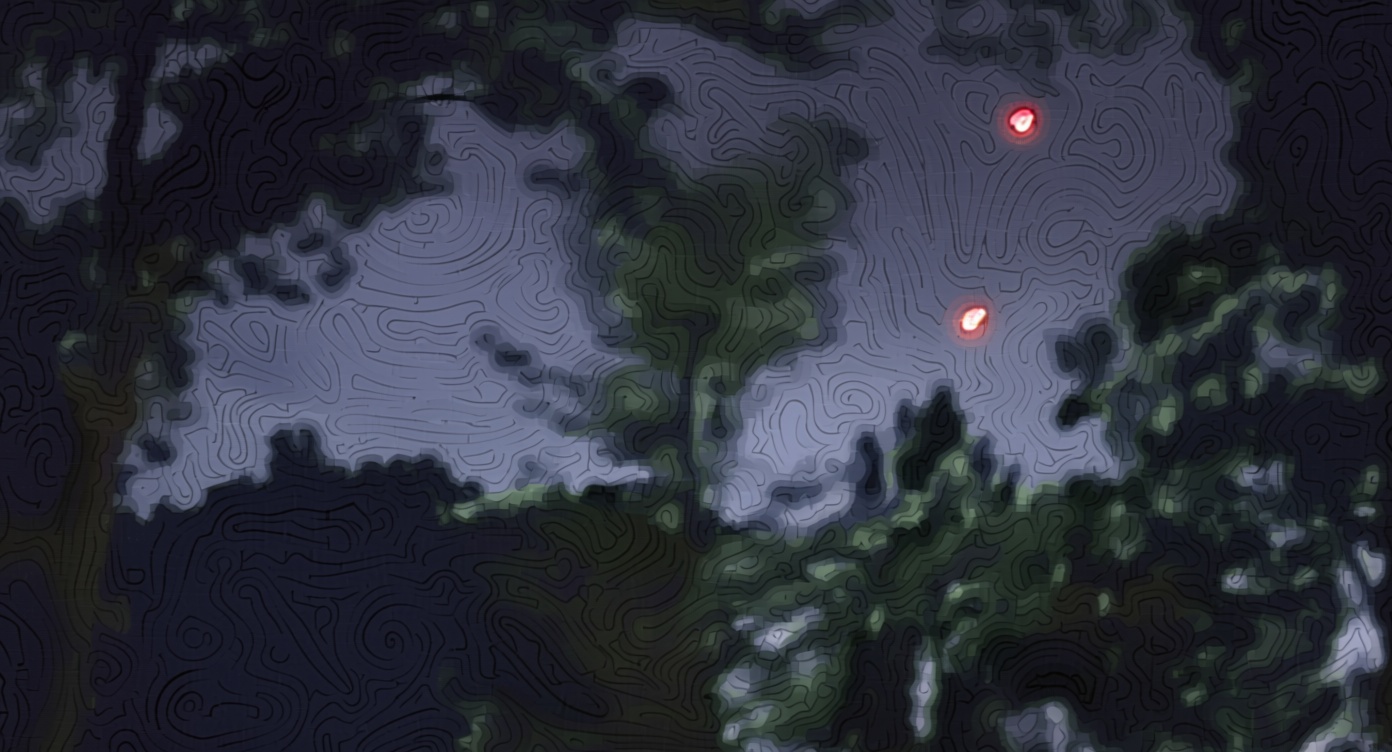
The discussion also intersects with government reporting on unresolved sightings. Loeb cited a Pentagon document signed by Dr. Jon Kosloski, director of the All-Domain Anomaly Resolution Office (AARO), describing an event in which law enforcement officials in October 2023 observed an orange “mother” orb releasing smaller red orbs. According to the report, some of the objects reportedly persisted for hours, behavior that investigators said did not fit the burn time or descent rate of known military flares. Loeb noted that roughly 40% of the reported phenomena in the file could not be explained by human-made technology, illustrating how much of the UAP record still remains uncertain even when reviewed by official channels.
What It Means
Birks’ theory does not resolve the UAP debate, but it does highlight an important scientific principle: extraordinary claims require careful scrutiny of ordinary explanations first. If meteor dust clouds can mimic orb-like behavior under certain conditions, then some sightings currently treated as anomalous may be reclassified after better analysis of timing, trajectory, brightness, and correlation with meteor activity. At the same time, the fact that a respected chemist is proposing a testable model — and that Loeb is willing to entertain it — reflects the increasingly interdisciplinary nature of UAP research. For now, the question remains open, but the conversation is moving further away from speculation and closer to empirical investigation.