Overview
Harvard astronomer Avi Loeb says a newly declassified UAP case from the Pentagon’s PURSUE disclosure website, labeled DOW-UAP-PR043, is more likely a missile than an unidentified anomalous object. In a post published Wednesday, Loeb framed the case as an example of how some unresolved sightings can take on a conventional explanation once analysts gain access to better background data and use terrain features to reconstruct the object’s motion. The case, originally released by the All-Domain Anomaly Resolution Office (AARO) as an unresolved report tied to Africa in 2025, has now been re-examined by Loeb and postdoctoral researcher Devesh Nandal.
Loeb said the central challenge in UAP analysis remains the same: without radar data or triangulation from multiple cameras, it is difficult to determine how far away an object is, and therefore impossible to know its true speed or size with confidence. That uncertainty, he argued, often leaves room for speculation. His team’s answer was to use the surrounding landscape as a kind of reference system, allowing them to infer both the camera’s movement and the target’s trajectory from the visible terrain.
How the case was analyzed
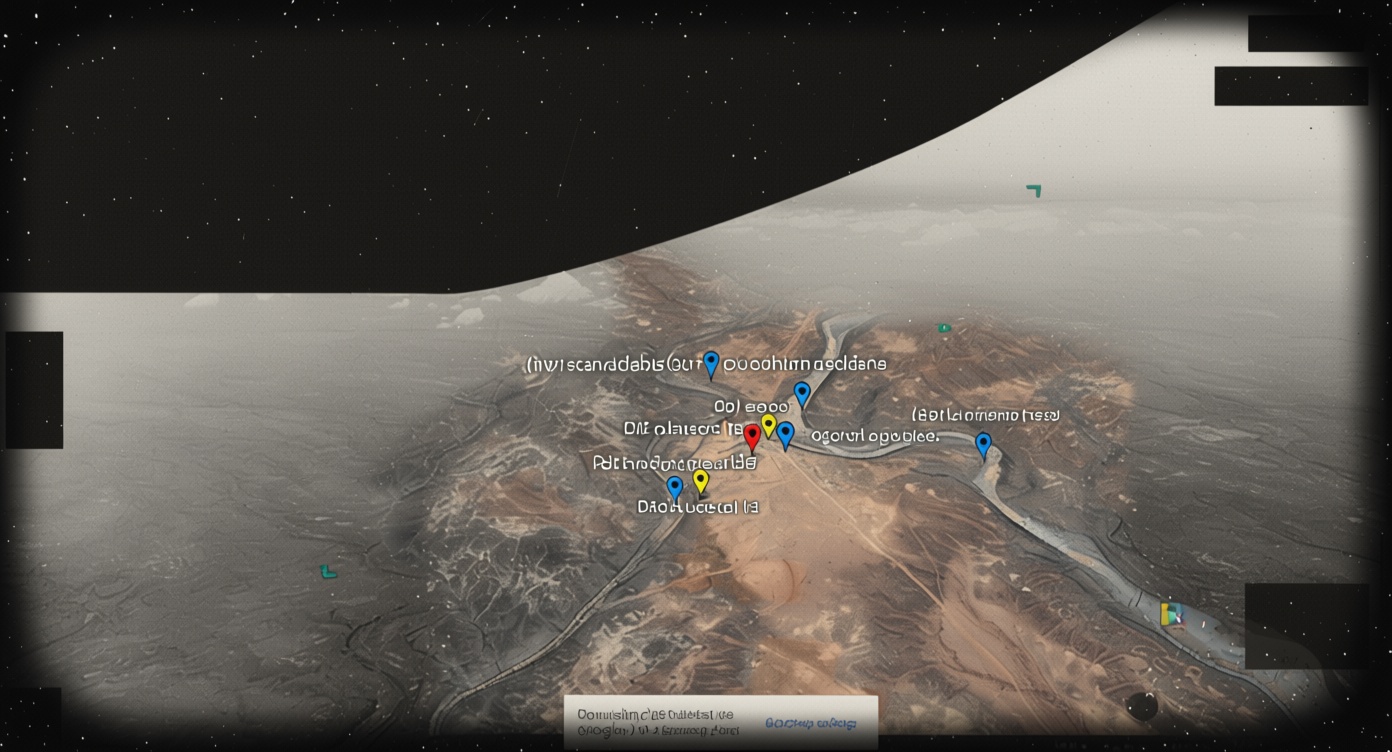
According to Loeb’s description, the team began with a publicly released infrared video that runs 11.75 seconds at about 29.97 frames per second, with a resolution of 1920 × 1080 pixels. They then matched the background terrain in the footage to Google Earth imagery, identifying what they believe is a location near 11.388655° N, 43.139259° E, close to Goubetto in southern Djibouti. A nearby channel in the scene corresponds to the Damerjog drainage system, which appears river-like in infrared but is more likely a dry wadi, or seasonal channel.
The researchers said the terrain match was strong because the same pattern of bends and tributaries appeared in both the video and the map. After stabilizing the terrain, they tracked the moving target relative to the ground. In one image included with the post, the object’s path is marked by 13 measured centroids from frame 61 to frame 73, with a fitted track running toward the lower right. Loeb said the frame-to-frame deviations were small and consistent with ordinary image-processing uncertainty.
What Loeb says the data suggests
Based on that reconstruction, Loeb and Nandal concluded that the object was “likely a fast missile.” Their interpretation directly challenges the unresolved status assigned by AARO, which had left the case open as a UAP report. Loeb said the analysis demonstrates “the remarkable power” of using background terrain to constrain an object’s motion when direct ranging data are missing. He also pointed readers to a full technical report outlining the method and results.
The broader implication is familiar in the UAP field: not every unexplained case remains mysterious once investigators can revisit the evidence with better tools. In Loeb’s view, DOW-UAP-PR043 shows that some incidents initially logged as anomalous may ultimately be traced to conventional aerospace activity, including military hardware. That does not resolve every UAP report, he suggested, but it does underscore the importance of careful geolocation and motion analysis before drawing extraordinary conclusions.
Why it matters
The post arrives as researchers and government reviewers continue to examine material released through the PURSUE website, which is part of a broader declassification effort around UAP cases. For Loeb, the significance of DOW-UAP-PR043 is less about proving a single sighting wrong than about illustrating a methodology: terrain-based analysis can narrow uncertainty when sensor data are incomplete. In a field often clouded by speculation, the result is a reminder that some “unidentified” cases may be unidentified only until enough context is recovered.