Overview
Astrophysicist Avi Loeb is arguing that skepticism itself can sometimes become a driver of conspiracy thinking, particularly when anomalous UAP evidence is dismissed too quickly or without transparent analysis. In a recent Medium post titled “Skeptics Are Capable of Promoting Conspiracy Theories,” Loeb framed the debate over unidentified anomalous phenomena not as a contest between believers and doubters, but as a test of whether both sides are applying the same standards of evidence. His central point is that if legitimate questions are waved away too casually, the resulting vacuum can encourage suspicion, distrust, and speculation rather than clarity.
Government Interest and a New Advisory Role
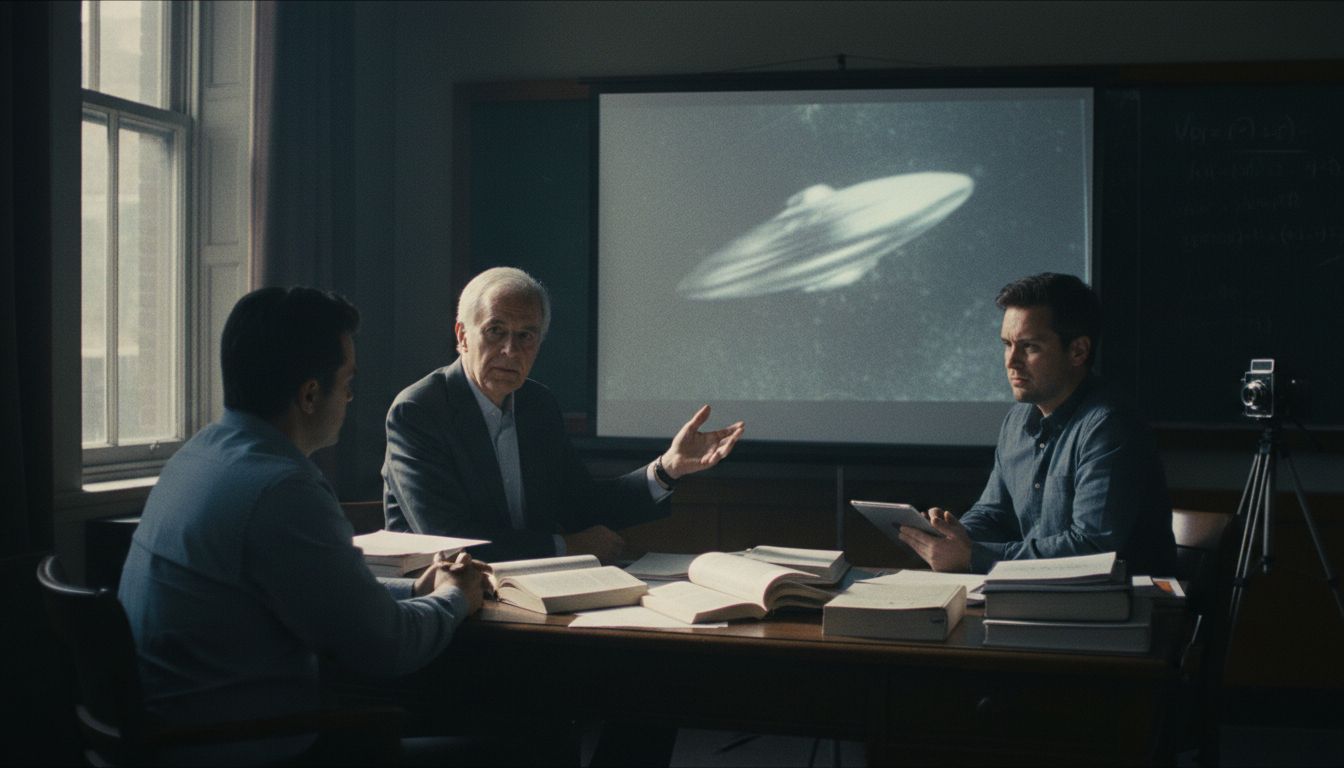
Loeb said he was contacted three months ago by representatives from the Office of the Director of National Intelligence and the Pentagon’s All-Domain Anomaly Resolution Office (AARO) and asked to establish and lead a UAP Science Advisory Council for the U.S. government. According to his account, the council was created to advise ODNI, AARO, the White House, the FBI, and the broader intelligence community on how to apply scientific methods to UAP reports using higher-quality data. He said the council’s members have already met roughly a dozen times over Zoom and are scheduled to gather in Washington next week. The formation of the group, Loeb suggested, reflects a growing recognition that unidentified objects near sensitive sites deserve systematic inquiry rather than reflexive dismissal.
Why Loeb Says Skepticism Can Backfire
Loeb’s essay takes aim at what he sees as a cultural imbalance: government agencies are increasingly willing to investigate UAPs, while much of academia remains hesitant to engage the subject. In his view, this reversal is striking because universities are traditionally supposed to be the place where controversial questions are examined openly. He argues that when skeptics reject anomalous reports without fully testing them, they may unintentionally reinforce the very conspiratorial thinking they hope to suppress. Rather than reducing uncertainty, Loeb writes, dismissiveness can leave the public to conclude that important evidence is being ignored or hidden. His broader message is that skepticism should be held to the same critical standard as extraordinary claims.
The Broader Stakes in UAP Research
Loeb also frames UAP research as more than a scientific curiosity. He argues that the U.S. government’s atmospheric sensors cover far more of the sky than astronomical observatories, which typically focus on narrow slices of space and do not track fast-moving objects overhead in real time. That, he says, makes government data potentially crucial in identifying rare anomalies. He also suggests the topic could attract private-sector interest from corporations, angel investors, and venture capital firms looking for breakthroughs in propulsion, materials science, or sensing technologies. In his view, even a small chance of encountering technology far beyond current human capabilities would justify serious scientific attention.
A Debate Over Method, Not Belief
Loeb’s post ultimately presents UAP science as a test of intellectual consistency. He is not simply urging people to believe in extraterrestrial explanations; instead, he is pressing for a process in which unusual data are examined with rigor, transparency, and discipline. His warning to skeptics is that dismissing unexplained phenomena too aggressively can create the impression that institutions are protecting assumptions rather than pursuing answers. For advocates of UAP transparency, that is exactly why the issue matters: not because the evidence already proves alien technology, but because the absence of careful inquiry can be just as damaging as sensational speculation.