Overview
Biologist Professor Michael Levin is challenging one of biology’s most basic assumptions: that intelligence begins and ends with brains. In a recent Quanta Magazine video highlighted by The Daily Grail, Levin argued that cells, plants, and even single-celled organisms may exhibit forms of intelligence that are often overlooked because they do not resemble human thought. His point is not that cells are conscious in the human sense, but that they show goal-directed behavior, problem-solving, and adaptability—qualities he believes deserve to be recognized as legitimate forms of intelligence.
Levin framed the issue by quoting William James, defining intelligence as “a degree of competency to reach the same goal by different means.” From that perspective, he said, much of biology already points toward intelligence at the cellular level. “Individual cells are very good at pursuing tiny little agendas,” Levin explained, describing them as systems with preferences, sensing, decision-making, and processing abilities. That view places intelligence on a continuum rather than as a binary trait reserved for humans or animals with nervous systems.
Cells as problem-solvers
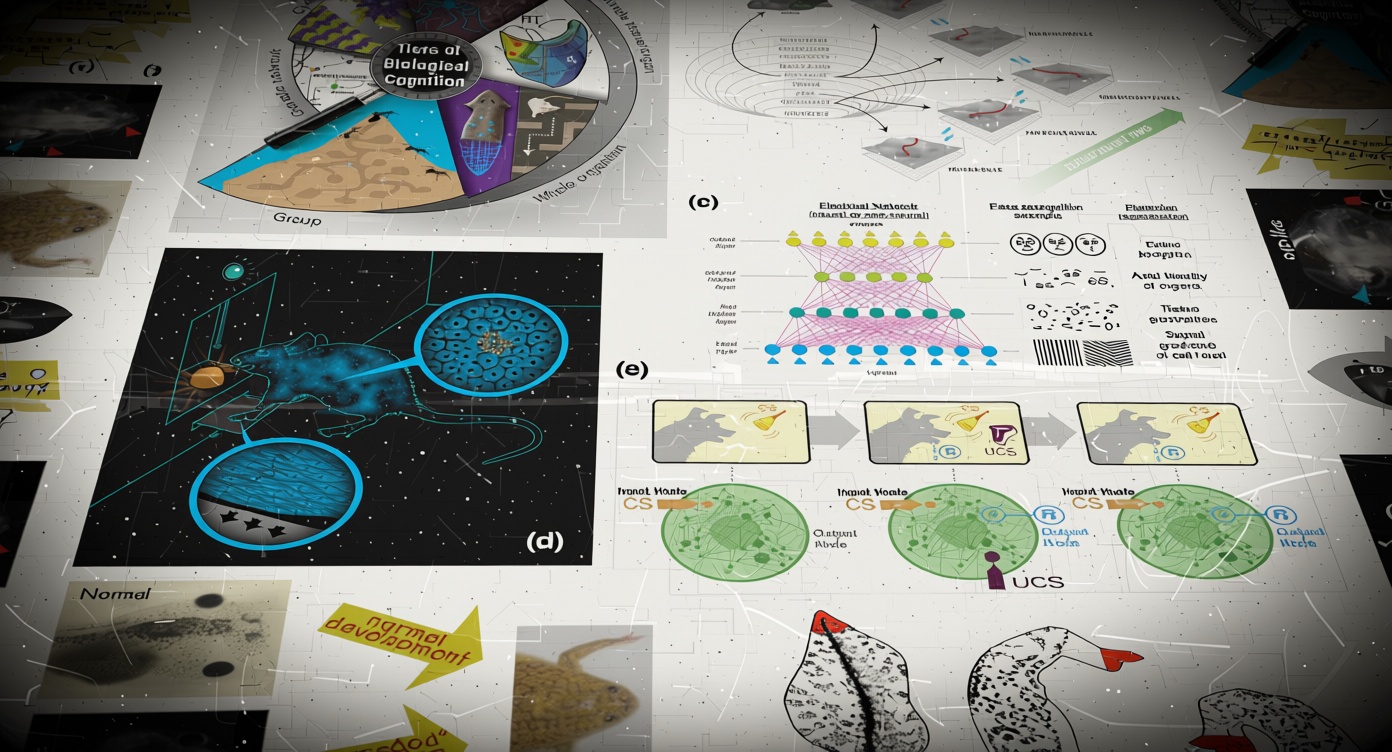
At the center of Levin’s research is the idea that groups of cells can act collectively to solve problems that go beyond the capabilities of any single cell. His lab studies how living tissues adapt when their normal conditions are disrupted, and how they still manage to reach developmental goals even when the environment changes. Levin argues that this kind of flexibility shows that living systems are not simply following a rigid genetic blueprint. Instead, he says, cells and tissues demonstrate an unexpected capacity for improvisation.
One of the most striking examples he cited involved tadpoles engineered with eyes on their tails. Levin said the animals were still able to see, despite the radical reorganization of their sensory architecture. To him, that result suggests that life already contains a deep reservoir of problem-solving capability, reducing the need to invoke new evolutionary mutations for every novel outcome. “You’re already starting with a problem-solving system that is very prepared for novelty,” he said, calling it part of the “wisdom of the cells and tissues.”
A broader debate about minds beyond humans
Levin’s argument fits into a wider conversation about whether intelligence, and perhaps consciousness itself, may be more widespread in nature than modern science typically assumes. The source material notes that some thinkers, including writer Mark Booth, have speculated that consciousness could be more fundamental than matter, rather than something produced only by complex brains. That kind of idea also echoes long-running discussions involving Whitley Strieber, who has explored the intersection of science, mysticism, artificial intelligence, and the limits of human perception when it comes to understanding non-human minds.
Levin, however, grounds his case in biology rather than metaphysics. He is wary of binary labels such as intelligent or non-intelligent, arguing instead for questions like “what kind” of intelligence and “how much.” In his view, scientists often learn more by assuming higher levels of organization and competence until proven otherwise. That approach, he said, has repeatedly led to new discoveries. If correct, it would mean the scientific study of intelligence may need to expand far beyond the brain—and perhaps even beyond familiar ideas of mind itself.