Overview
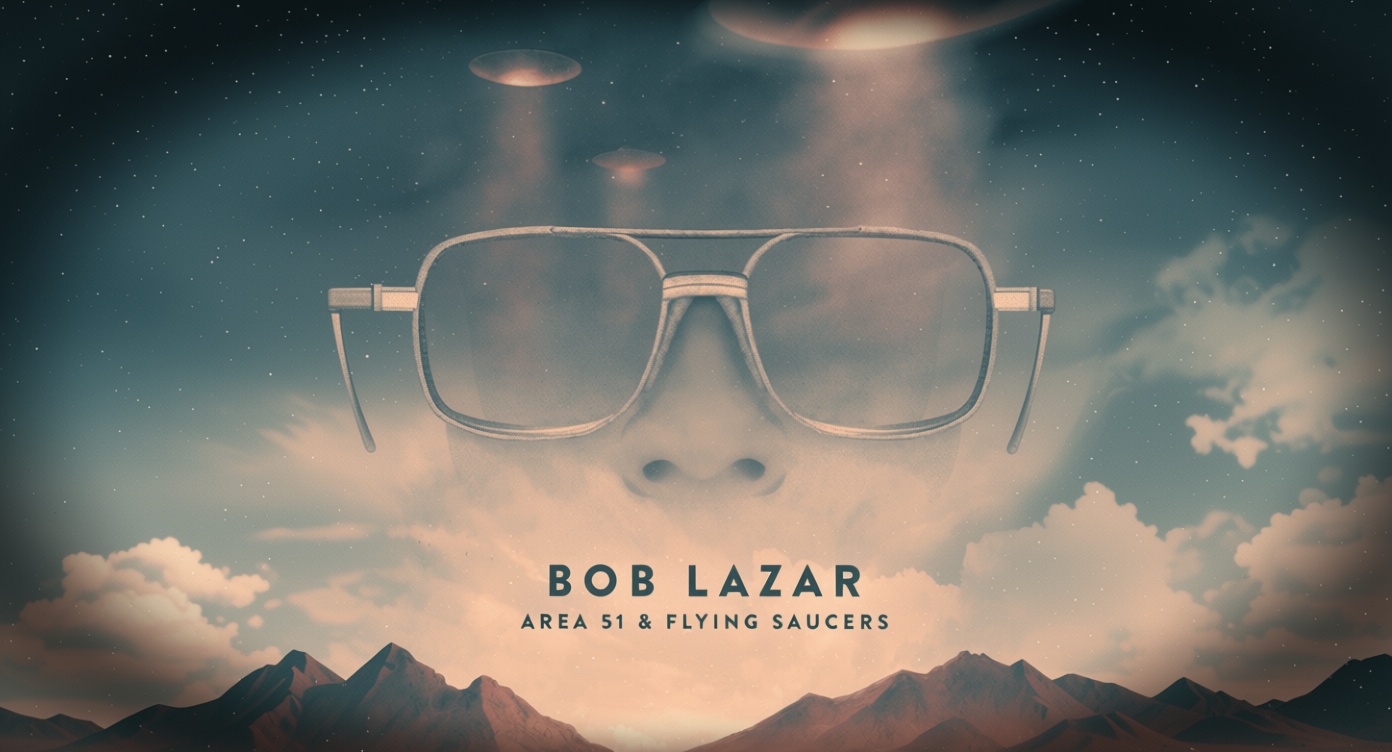
A review of the documentary record surrounding Bob Lazar presents a more limited and nuanced picture than either his strongest supporters or most vocal critics typically suggest. The available material appears to support Lazar’s connection to a contractor associated with Los Alamos National Laboratory, his technical background, and his familiarity with the Nevada Test and Training Range. At the same time, it does not substantiate several of the most consequential elements of his story, including claims that he earned degrees from the Massachusetts Institute of Technology and the California Institute of Technology, held a staff-physicist position, or worked on a government program to reverse-engineer extraterrestrial craft.
That distinction is important because Lazar’s public account has often been treated as an all-or-nothing proposition. Evidence that confirms part of his biography does not, by itself, establish his claims about alien technology. Conversely, gaps or inconsistencies in his academic record do not automatically prove that every aspect of his story was fabricated. The documentary record supports selected elements of Lazar’s background, but not the full narrative.
What the Record Supports
The strongest corroborating material concerns Lazar’s association with the Los Alamos environment and his apparent technical competence. Records and testimony cited in discussions of his past indicate a connection to a Los Alamos contractor, while contemporary reporting has also linked him to the broader scientific and engineering community in New Mexico. His familiarity with the geography, security culture, and operational environment surrounding the Nevada test range is likewise consistent with someone who had spent time in or around that setting.
Those points matter because they establish that Lazar was not simply an outsider with no apparent access to technical or military-adjacent environments. They may help explain how he became familiar with locations such as the restricted facilities near Groom Lake, commonly known as Area 51. However, familiarity with the test-range environment is not proof of access to a hidden spacecraft program, and a contractor relationship does not establish that Lazar held the position he later described.
Claims That Remain Unsupported
The documentary record does not provide reliable confirmation for Lazar’s claimed degrees from MIT and Caltech. Nor does it clearly establish that he was employed as a staff physicist or that he possessed the institutional standing required to participate in a highly classified extraterrestrial reverse-engineering effort. These unresolved issues are central, rather than peripheral, because Lazar’s account depends heavily on his alleged professional role and scientific credentials.
No publicly available documentation cited in the review verifies that Lazar worked directly with nonhuman technology or that the U.S. government operated the program he described. The absence of such evidence does not conclusively disprove the claims, particularly in a subject area defined by secrecy and restricted access. It does mean, however, that the extraterrestrial portion of Lazar’s story remains unsubstantiated by the documentary record currently available.
Broader UAP Context
The discussion comes amid renewed congressional interest in alleged secrecy surrounding unidentified anomalous phenomena. In a July 2023 statement to the House Oversight Committee, former intelligence officer David Grusch said he had been informed of a “multi-decade UAP crash retrieval and reverse engineering program,” while emphasizing that his testimony was based on information provided by others and that he had been denied access to the relevant compartments. He told lawmakers that he had pursued corroboration and reported the matter through official channels.
Grusch’s testimony demonstrates why claims involving alleged crash-retrieval programs continue to receive public attention, but it does not independently validate Lazar’s account. The two cases involve different witnesses, records, and evidentiary standards. A responsible assessment therefore requires separating documented associations, secondhand allegations, and direct proof.
Assessment
The most defensible conclusion is neither wholesale acceptance nor blanket dismissal. Lazar appears to have had genuine technical abilities and some connection to institutions and locations associated with classified research. Yet the available record does not establish his claimed academic history, official role, or participation in extraterrestrial technology research. Until verifiable employment records, academic documentation, or primary evidence emerge, the reverse-engineering narrative remains an allegation rather than a demonstrated fact.