Overview
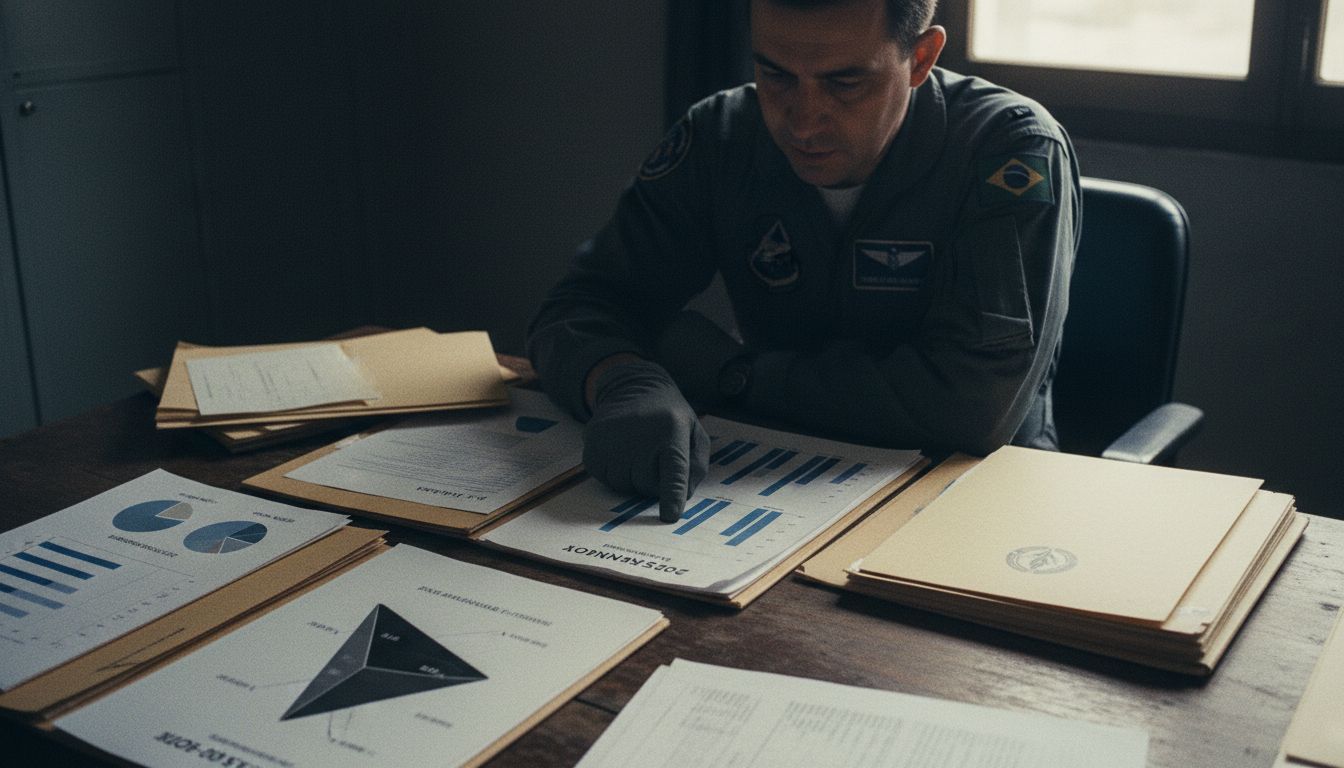
The Brazilian Air Force has quietly added another batch of pilot sighting records to the public record, renewing attention on one of the world’s more active repositories of military UFO reports. The newly released material, which aviation and UFO researchers have been circulating through National Archives holdings and shared Google Drive links, refers to the sightings in bureaucratic language as “hotel traffic” incidents — a label that has drawn interest because it appears to encompass unidentified contacts reported by pilots and air traffic personnel. While the documents do not, by themselves, confirm extraterrestrial activity, they do show that Brazil continues to treat these cases as worthy of formal recordkeeping and review.
What the Records Show
According to the summaries being discussed within the UFO research community, the new release includes a mix of routine misidentifications and a smaller set of reports that remain difficult to explain. The largest share of the cases are believed to involve Starlink satellite trains, which have increasingly become a common source of confusion for pilots and observers around the world due to their bright, linear formations after launch. But the records are also said to contain a meaningful minority of events that do not fit easily into that explanation. Preliminary sorting by enthusiasts and researchers suggests that around 22% of the reports may be anomalous, though that figure should be treated cautiously because it reflects an informal analysis rather than a formal Air Force conclusion.
Intriguing 2025 Incidents
Among the more attention-grabbing entries are 2025 reports that describe a black triangle near an aircraft and another involving large lights that reportedly caused turbulence. Those details are significant not because they prove anything extraordinary, but because they come from trained aircrew operating in a highly regulated environment where unusual visual events are typically logged with considerable specificity. In aviation safety terms, even ambiguous sightings matter: a pilot’s perception of a nearby object, or the sensation of turbulence linked to an unidentified light source, can prompt follow-up questions about traffic separation, weather, optical effects, or the possibility of an untracked airborne object.
Why the Release Matters
Brazil has a long history of archiving UFO-related material, and this latest disclosure fits a broader pattern of official transparency that contrasts with the more limited public access seen in some other countries. The release also underscores a challenge familiar to UAP researchers everywhere: most sightings are eventually explained by satellites, aircraft, atmospheric conditions, or instrumentation issues, but a residue of cases often remains unresolved. That unresolved category does not automatically imply something exotic; it simply marks the point at which available evidence is insufficient to offer a confident identification. Still, for investigators, that leftover fraction is often where the most compelling questions begin.
Community Response and Next Steps
The fact that the documents are being distributed through both official archival channels and informal UFO community repositories has helped accelerate attention, but it also raises the usual concerns about context, transcription, and selective emphasis. Researchers will likely continue comparing the raw reports with satellite data, flight tracks, weather conditions, and any available radar information to determine which incidents can be confidently explained. For now, the Brazilian Air Force’s latest release offers a useful reminder that the line between ordinary aviation phenomena and genuine anomalies can be thin — and that the most responsible reading of such records is one that stays grounded in evidence, not speculation.