Reported Incident
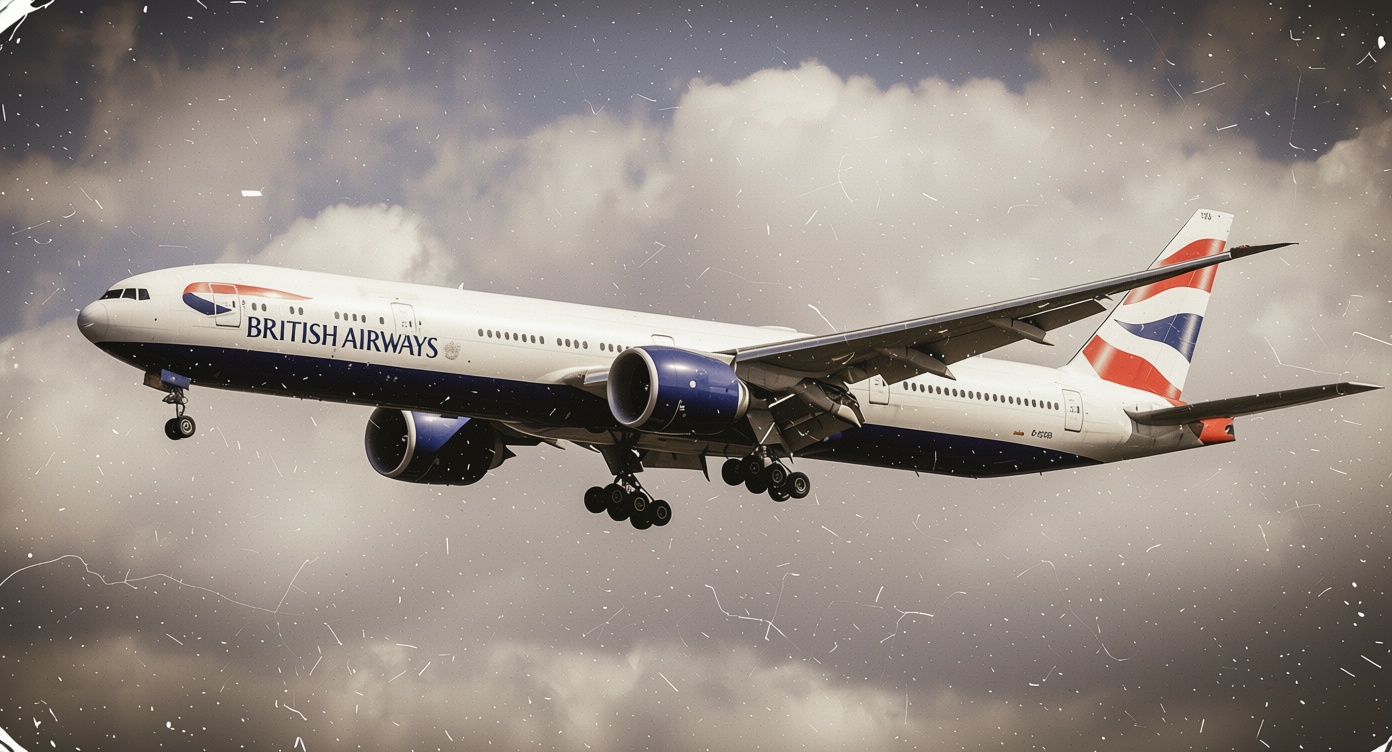
British Airways crew members reportedly described a near miss involving an unidentified flying object during a flight from New York, according to a report published by Aerospace Global News on October 27, 2026. The available source identifies the incident as involving a flight bound for or associated with Heathrow, but provides no further information about the aircraft’s route, altitude, timing or location.
The report does not identify the crew members involved, specify how many people observed the object or explain how close the encounter allegedly came to the aircraft. It also does not include a description of the object’s shape, size, color, speed or apparent behavior. No photographs, video, air traffic-control recordings or cockpit communications are provided in the available material.
What Is Known—and What Is Not
The term UFO, increasingly referred to by government agencies as an unidentified anomalous phenomenon, describes an observation that has not been immediately identified. It does not, by itself, indicate that an object is extraterrestrial or that it displayed capabilities beyond known aviation technology. Possible explanations for reports of this kind can include drones, balloons, aircraft, atmospheric effects, optical illusions or errors in perception—although no explanation can be assigned in this case based on the information currently available.
The source material characterizes the event as a report rather than a confirmed aviation-safety incident. It does not say whether the crew filed a formal report with British aviation authorities, the U.K. Airprox Board, air traffic control or British Airways’ internal safety systems. There is also no indication that the aircraft changed course, experienced damage, encountered turbulence or suffered any disruption to passengers or operations.
Aviation-Safety Context
Unidentified objects near commercial aircraft are treated as potential safety concerns regardless of their ultimate identity. A suspected drone, for example, can pose a serious hazard during takeoff, landing or low-altitude flight, while balloons and other airborne objects may present collision risks at cruising altitude. Commercial pilots are generally expected to report unusual traffic or objects so that air-navigation authorities can compare the account with radar data, flight paths and other witness reports.
However, a crew account alone is not enough to establish what was encountered. Investigators would typically seek the aircraft’s position and altitude, weather and visibility conditions, radar or transponder information, communications with controllers and statements from other witnesses. Those details are not included in the item available for review.
Need for Further Verification
British Airways has not been quoted in the supplied report, and no response from the airline, aviation authorities or U.S. agencies is included. As a result, the incident’s date, operational consequences and investigative status remain unclear. The report also provides no evidence linking the encounter to military activity, foreign technology or extraterrestrial phenomena.
The account should therefore be viewed as an unverified report of an alleged aviation encounter, rather than confirmation of a recovered object or a proven near-collision. Additional documentation—including an official incident record, air-traffic data or a statement from British Airways—would be needed to establish what happened and whether the object posed a measurable risk to the flight.