Overview
In the spring of 1891, Brooklyn residents were jolted by an unusual wave of reports about a strange, hairy creature prowling the bayside communities of Bath Beach, Bensonhurst, Gravesend Beach, and Unionville. Newspapers soon gave the mystery a colorful nickname: the “Devil with Red Whiskers”. Other accounts called it the “Phantom Giant”, and later retellings would dub it the Bath Beach Bigfoot. Whatever the label, the creature’s alleged appearance triggered real alarm, with some residents reportedly staying indoors after dark while others organized vigilante patrols armed with clubs and revolvers.
The 1891 sightings and the railroad encounter
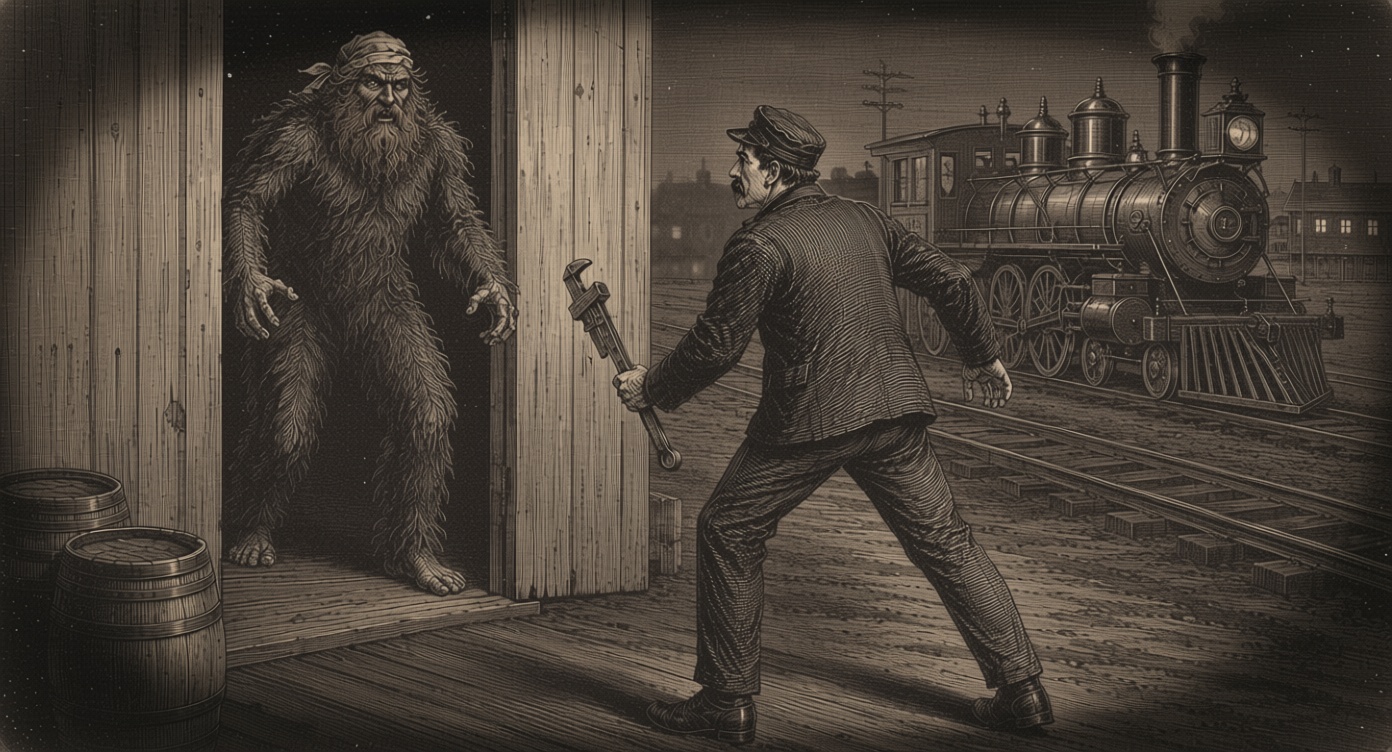
The most detailed account came from William Bell, an engine dispatcher with the Brooklyn, Bath and West End Railroad, who said he encountered the being in the Unionville train yards around 2:30 a.m. on Easter morning, March 29. Bell described a pitch-dark scene, with only flickers of torchlight and a sea wind in the distance, when he heard what he later rendered as a “blood-curling roar.” In the Brooklyn Citizen, he said the creature appeared at a window in the carhouse near the depot, estimating it at about six feet two inches tall, with a body “resembling that of a gorilla” and covered in long hair. He also said it seemed to wear a “crimson mask” and a handkerchief bound tightly around its head.
The New York Sun’s version of the story leaned into the sensational tone of the era, emphasizing the creature’s supposed ferocity and the difficulty of rendering Bell’s roar in print. Bell was portrayed as a sober, credible witness, which helped give the story weight at a time when local newspapers often mixed anecdote, color, and alarm. Still, the descriptions varied widely. Some witnesses said the figure looked like a bear with a human head; others said it resembled Satan himself. That inconsistency left room for competing explanations, including the possibility that the “monster” was a person in disguise, perhaps even a robber trying to intimidate locals.
Why the story spread
The Brooklyn reports fit a familiar pattern in American folklore and early press culture: a frightening unknown, a handful of eyewitness claims, and a community eager to interpret the strange through the lens of fear. Bath Beach in 1891 was not a wilderness, but a developing urban edge—close enough to the city to be familiar, yet still dotted with rail yards, dark lanes, and open stretches that could fuel rumor. In that environment, a large, hairy figure with a human face could become something larger than a single sighting. The story became a neighborhood obsession, amplified by newspapers competing for attention and by residents who were already primed to believe something uncanny was abroad.
Modern echoes
The article also connects the Brooklyn tale to a more recent Connecticut sighting in which a driver reported seeing an eight-foot-tall hairy figure crossing the road before he recovered and continued driving. Though separated by more than a century, the two accounts share a common structure: a brief, unsettling glimpse of something humanoid but not quite human, followed by uncertainty and debate over what was actually seen. Whether interpreted as folklore, misidentification, or something more unusual, the “Devil with Red Whiskers” remains a striking example of how UAP and cryptid-style reports can emerge far from the places people usually associate with such stories.