Overview
A British cruising catamaran crew has recounted how quick thinking, seamanship and safety preparation helped them save their boat after it struck an unidentified floating object in the mid-Atlantic. The incident involved Hanuman, a Catana 53 taking part in the ARC+ Rally from Las Palmas to Grenada, when it collided with something in the water roughly 425 miles south-west of Gran Canaria and far from immediate assistance.
Skipper Steve May said he was asleep below when the boat was suddenly jolted and the normal rhythm of sailing changed without warning. “We’ve hit something! Get up here!” crew member Kurt shouted from night watch after the impact, prompting the rest of the team to spring into action. May initially believed the catamaran had simply been knocked off course by an unusual wave, but the sound of objects falling and the boat slowing from around 9 knots quickly suggested something more serious.
Immediate response at sea
The crew’s first priority was to determine whether the hull had been breached and whether water was entering the boat. Kurt, already thinking ahead, instructed the others to check the bilges while he and fellow watchkeeper Karen went below and lifted floorboards to inspect the compartments. At first, they found no water in the living spaces, and the boat’s autopilot had already brought Hanuman back onto course.
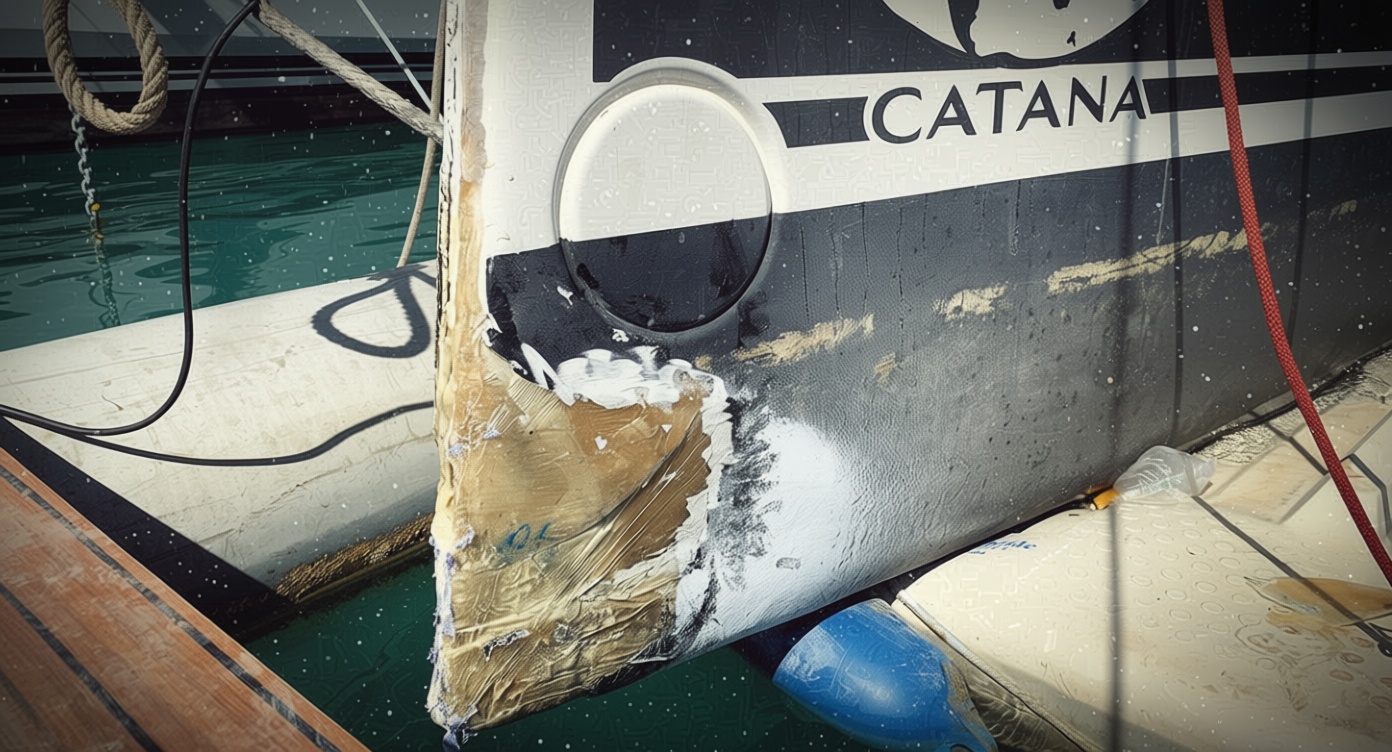
The situation changed when Kurt opened the deck engine compartments and spotted water sloshing around beneath the starboard engine block. In the beam of a spotlight, the source became clear: a through-hull fitting had broken away, leaving a clean round hole in the laminate. Kurt immediately reached for the softwood bungs required under the ARC+ Rally safety inspection and plugged the opening, slowing the ingress. With the leak under control, the boat’s automatic bilge pumps began to make progress, and Karen helped clear water with a manual bilge pump.
Safety preparation made the difference
Karen said the crew’s preparation was critical to the outcome. “Had we not gone through the safety inspection, I’d not have known where the bungs were,” she said. “Everyone on board needs to know where all the safety equipment is and how to use it.” Her remarks underline a central lesson from the incident: in a crisis at sea, familiarity with safety gear can be as important as the gear itself.
The crew also benefited from the discipline of assigning clear roles. While some checked for flooding, others monitored the boat’s behavior and worked to keep it stable. That division of labor, combined with a calm response, helped prevent the situation from escalating into a full-scale emergency. In offshore sailing, where help can be many hours or even days away, that kind of immediate, coordinated response can determine whether a vessel survives or sinks.
Aftermath and recovery
Once Hanuman reached port, the damage required further efforts to keep the catamaran dry and stable. According to the report, 100-litre barrels filled with water were initially used to raise the port bow, although they did not provide enough lift to clear the damaged area fully. The incident highlights the vulnerability of yachts crossing remote ocean passages to collisions with submerged or floating debris, even when crews are vigilant and conditions appear routine.
For ocean racers and cruising sailors alike, the encounter serves as a reminder that a UFO at sea—an unidentified floating object rather than anything extraterrestrial—can be every bit as dangerous as a storm or equipment failure. In this case, the outcome was far better than it might have been: the boat stayed afloat, the crew stayed composed, and a potentially catastrophic breach was contained through fast, practiced action.