Overview
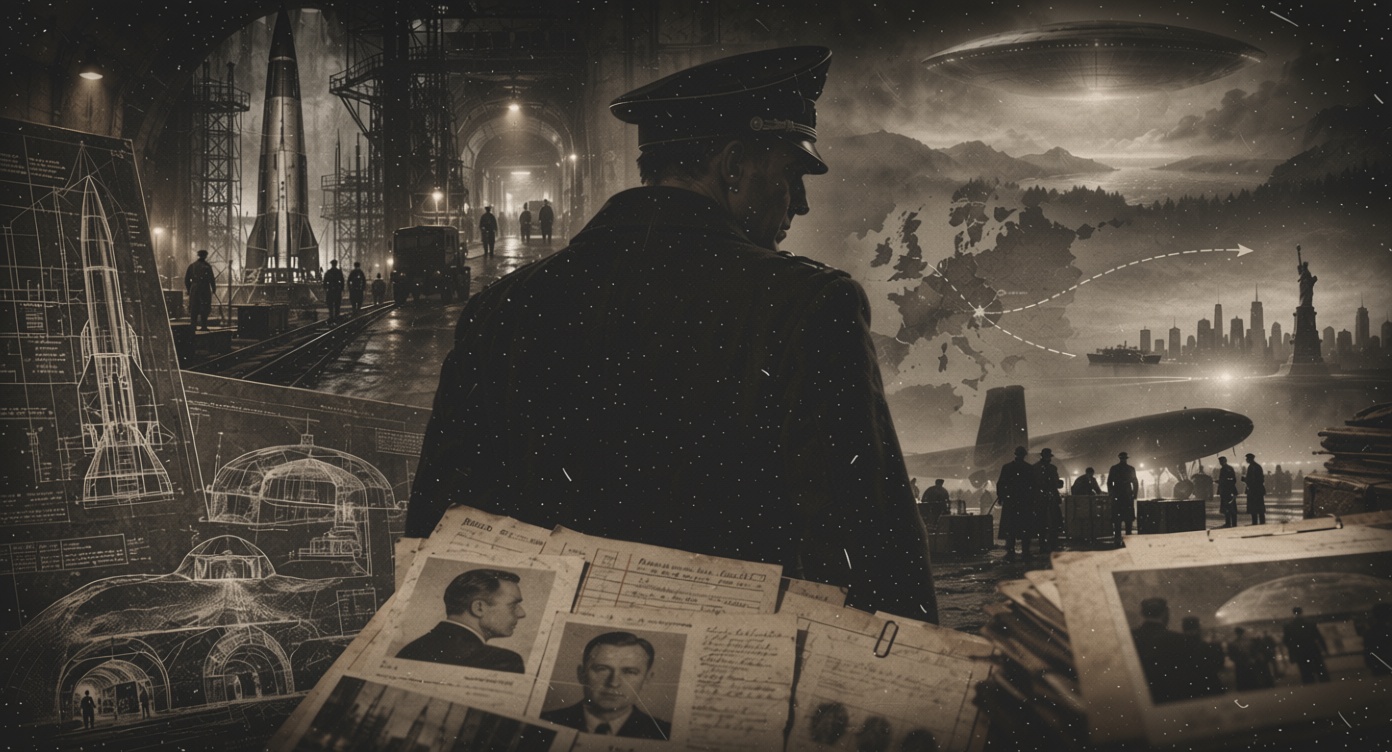
A report by Liberation Times journalist Christopher Sharp has revived claims that alleged “Nordic” beings were connected to the purported 1933 Magenta UFO incident in northern Italy. The account appears in Sharp’s article, Hans Kammler: The Nazi General Linked to a U.S. UFO Legacy Program, published on September 12, 2026. It presents allegations from unnamed intelligence-community sources who claim that Italy recovered an unusual craft near Magenta, gave Nazi Germany access to it in 1934, and identified its occupants as advanced terrestrial beings described as “Nordics.”
The material does not provide independently verified evidence confirming that a non-human or otherwise anomalous craft was recovered at Magenta, nor does it establish that alleged beings were found at the site. The claims form part of a broader, disputed narrative linking wartime German weapons programs, postwar U.S. intelligence operations and a supposed long-running UFO “legacy program.”
The Magenta Claim
According to the sources cited by Sharp, the alleged Magenta recovery became significant to German authorities after Italy transferred access to the craft. The article says Heinrich Himmler’s Ahnenerbe organization, established in 1935, was allegedly used to search for the “Nordics” and investigate or exploit their technology.
Sharp’s reporting also connects the Magenta story to the legend of Die Glocke, or “The Bell,” an alleged Nazi device often associated in UFO literature with secret research into advanced propulsion or energy systems. The article suggests that any Bell-like apparatus may have represented an attempt to reproduce technology recovered from the Magenta object. However, the provided material does not identify authenticated wartime documents, physical evidence or independent witnesses that substantiate this interpretation.
Hans Kammler and the Paper Trail
The central historical question in the report is whether SS General Hans Kammler died in 1945, as generally accepted, or survived and entered American custody. Kammler oversaw major German weapons and construction projects, including underground facilities and portions of the V-weapons program. His responsibilities also placed him close to engineers, factories, technical records and forced-labor operations.
Sharp highlights a typewritten document dated May 7, 1945, reproduced in the 2019 book The Hidden Nazi. The document reportedly states that Kammler surrendered the previous day and was being sent to Kohnstein for “detailed interrogation and evaluation.” The report acknowledges that the document is difficult to authenticate because it lacks a traceable archival file number, an identified original and unredacted letterhead or signature.
Other American and British records have been cited by researchers as raising questions about the accepted account of Kammler’s death. Even if he had been captured, however, his potential value to the United States would not necessarily depend on UFO-related knowledge. His control over German weapons programs alone could have made him a significant intelligence target during the closing months of World War II.
From Nazi Programs to U.S. Intelligence
The report alleges that American officials learned of the purported German work in 1944 and 1945, later absorbing separate technical and intelligence streams through the Joint Intelligence Objectives Agency, Operation Overcast and Operation Paperclip. It further traces an alleged lineage through the Central Intelligence Group, the CIA and the U.S. Air Force, culminating in a claimed transfer to the Air Force and defense industry in 1962.
These programs are historically documented as efforts to obtain German scientists, technical expertise and military records after the war. The leap from those established activities to a covert UFO-technology program remains unproven in the material supplied.
Assessment
Sharp’s article raises questions about Kammler’s fate and places the Magenta account within a larger theory of postwar technology transfer. Its most consequential assertions rely on unnamed sources, contested documents and connections drawn between separate historical episodes. At present, the available information supports treating the Nordic-being and UFO-legacy claims as allegations requiring further corroboration, rather than established historical facts.