Overview
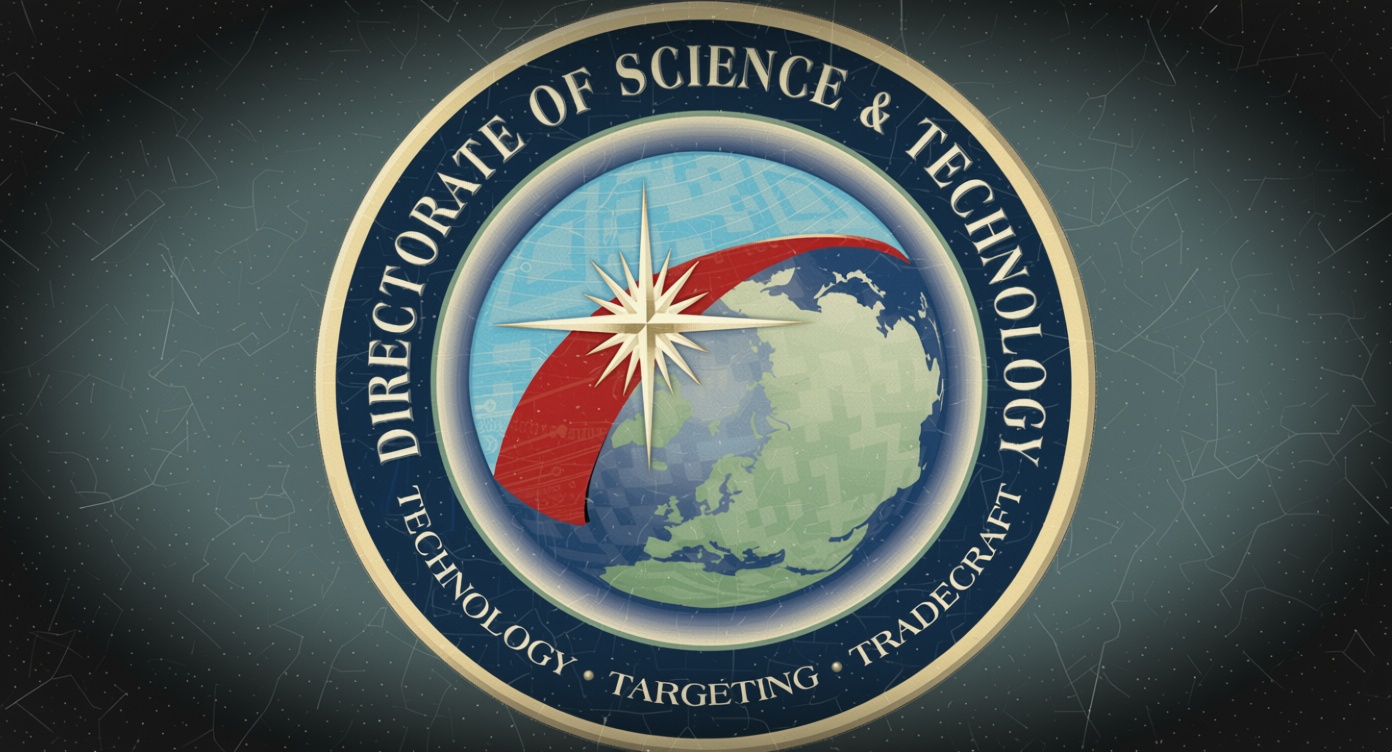
The CIA’s Directorate of Science and Technology (DS&T) is being examined as a possible institutional participant in an alleged UAP program involving the collection of unusual materials, recovery operations and private-sector research. The theory rests partly on the directorate’s documented history of managing advanced scientific and technical work across the intelligence community. However, the available information does not establish that the DS&T has handled nonhuman technology or coordinated a covert UAP-recovery program.
The CIA describes DS&T as a group of scientists, engineers and technical specialists responsible for applying emerging technologies to intelligence problems. In an agency account of its origins, the directorate says its personnel work with case officers and sometimes collaborate with other intelligence agencies and private-sector specialists. That broad mission has prompted questions about whether DS&T could have provided an organizational home for activities alleged by UAP witnesses and researchers.
A Directorate Built Around Technical Intelligence
The origins of the DS&T are closely tied to the early Cold War, when U.S. officials sought more reliable assessments of Soviet scientific and military capabilities. Following the Soviet Union’s first atomic test in August 1949 and its rapid development of a hydrogen bomb, policymakers pressed federal agencies to improve scientific intelligence and develop technologies capable of detecting and countering emerging threats.
The CIA’s historical account portrays the directorate as a response to those challenges. Its personnel were expected to address problems that traditional intelligence methods could not solve, often by combining scientific expertise, specialized collection tools and outside research. The agency later associated DS&T work with innovations including the lithium-iodine battery, medical image-processing methods and technology that contributed to Google Earth.
CIA materials also describe DS&T personnel as the “Wizards of Langley,” a nickname intended to reflect their technical creativity rather than any connection to unexplained phenomena. The directorate’s documented remit includes research, technical collection and support for intelligence operations—functions that, in principle, could overlap with some of the activities described in alleged UAP-program accounts.
Allegations and the Evidence Gap
Some allegations have identified CIA technical offices, including DS&T, as potential coordinators of UAP-related collection or contractor research. Such claims often point to the directorate’s access to classified facilities, scientific personnel and private laboratories. They also suggest that an organization experienced in handling sensitive aerospace, surveillance and materials-science projects would be capable of compartmentalizing unusual work.
That possibility remains speculative in the absence of corroborating records. The source material documents DS&T’s technological capabilities and its history of interagency and private-sector cooperation, but it does not identify a UAP program, recovered nonhuman materials or research confirming an extraterrestrial origin. Nor does it provide contracts, budget documents, laboratory findings or authenticated communications linking DS&T to such an effort.
Why the Question Persists
The question reflects a broader difficulty in evaluating UAP claims: legitimate secrecy surrounding advanced defense and intelligence projects can create uncertainty about what agencies have investigated. Programs involving surveillance systems, experimental aircraft, sensors or materials research may remain classified for national-security reasons, while later recollections can blur distinctions between known military technology and genuinely unexplained incidents.
For now, the CIA’s own historical record supports a narrower conclusion. DS&T has long possessed the scientific expertise and institutional relationships that could enable classified technical investigations, but that capability is not evidence of involvement in nonhuman technology. Any definitive assessment would require independently verified documentation beyond the agency’s general history and the allegations under review.