Overview
Archaeological evidence from Montana’s Beartooth Mountains is challenging long-standing assumptions about where early North Americans could live. Researchers have identified Clovis-era artifacts and sediments at an elevation of roughly 9,000 feet, near the Greater Yellowstone region—an environment previously considered too cold, glaciated and ecologically limited for human settlement around 13,000 years ago.
The findings build on the 1968 discovery of the “Clovis Child” at the Anzick Site in Park County, north of Yellowstone National Park. Together, the discoveries suggest that Clovis communities may have occupied high-elevation landscapes much earlier than archaeologists had thought possible, potentially making the Montana sites among the oldest and highest known human habitation locations in North America.
Evidence From the Beartooths
The newly reported research centers on sediment and artifacts recovered high in the Beartooth Mountains. Archaeologist Scott Dersam said the presence of the sediment itself conflicts with established reconstructions of the region’s ancient environment. “I wouldn’t say it’s impossible,” Dersam told Mountain Journal, “but in standard paleoecology in the surrounding ecosystem, all the glaciology experts, this is just not something that should exist given the ecosystem we believe we had.”
The concern is not simply whether people could have reached the mountains. Researchers are also examining whether the area could have supported sustained activity during the late Ice Age. At the time, large ice sheets covered much of Canada, while the high country around Yellowstone was generally believed to have been too heavily glaciated or inhospitable for Clovis groups.
Dersam characterized the implications in unusually forceful terms, saying, “We could have the oldest Clovis sites in North America here, and it happens to be in a place that shouldn’t exist in an ecosystem that shouldn’t exist.” He added that the evidence represents “more than a monkey wrench to the current paradigm.”
The Clovis Child and Earlier Context
The Montana discoveries gain significance from the Anzick Site, where construction workers uncovered the remains of a young child in 1968. The burial included an antler and approximately 100 stone artifacts, making it the oldest known Clovis burial site in North America.
Testing conducted by Texas A&M University’s Center for the Study of the First Americans, with researchers from the University of Oxford and Stafford Research of Colorado, concluded that the remains and associated artifacts were the same age. They were dated to between 12,725 and 12,900 years ago, according to Texas A&M researcher Michael Waters.
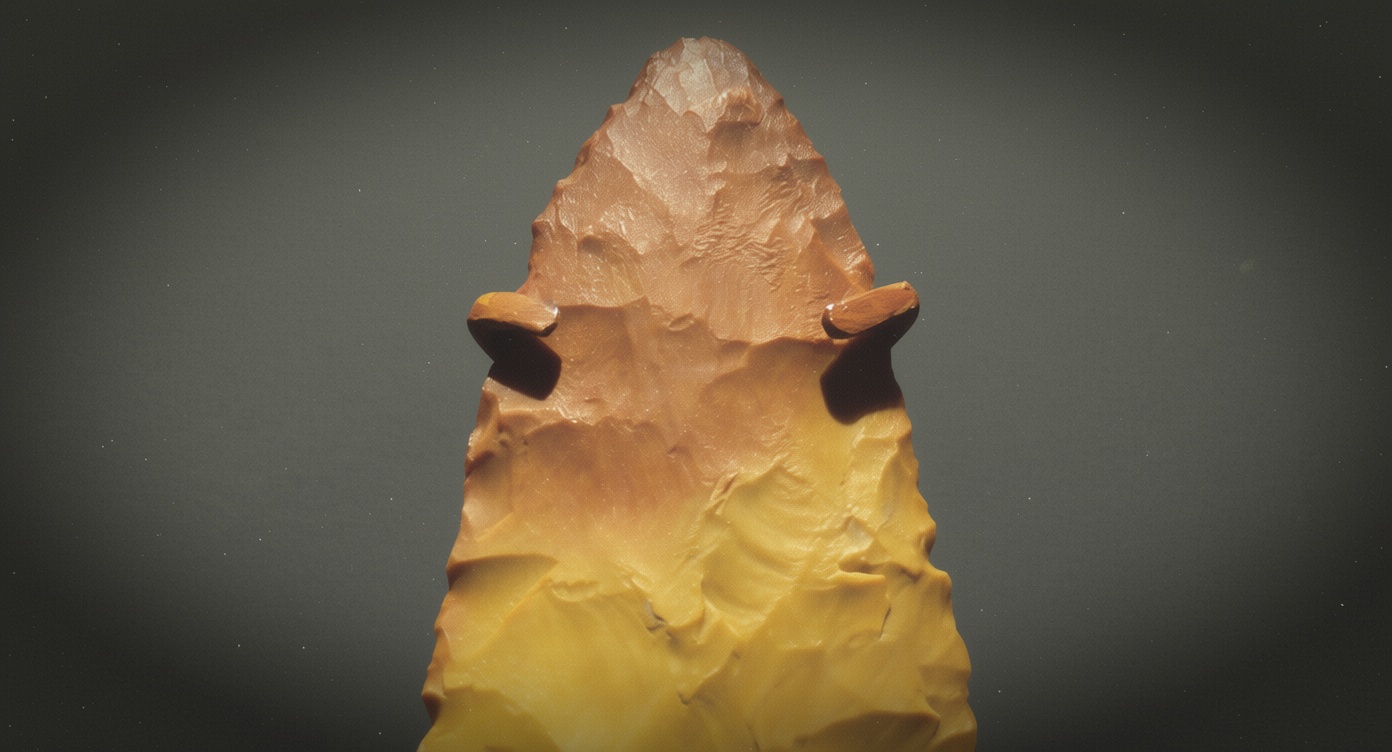
The Clovis culture is generally recognized as the first widespread prehistoric archaeological tradition in North America, appearing approximately 13,000 years ago. Its people are known especially for distinctive fluted projectile points, although the full history of their origins, movements and relationship to earlier populations remains debated.
What the Findings Could Mean
If the Beartooth evidence is confirmed through additional dating, excavation and independent analysis, it could expand understanding of how quickly early communities adapted to North America’s varied environments. Rather than remaining primarily in lower-elevation regions south of the continental ice sheets, Clovis groups may have explored and occupied rugged mountain landscapes while glaciers still shaped much of the continent.
Researchers emphasize that the interpretation is still developing. The age of the artifacts, their association with the sediment and the nature of human activity at the site will all require careful verification. Even so, the discoveries add to a broader body of research showing that the peopling of North America was more complex—and potentially earlier and more geographically diverse—than older models suggested.