Overview
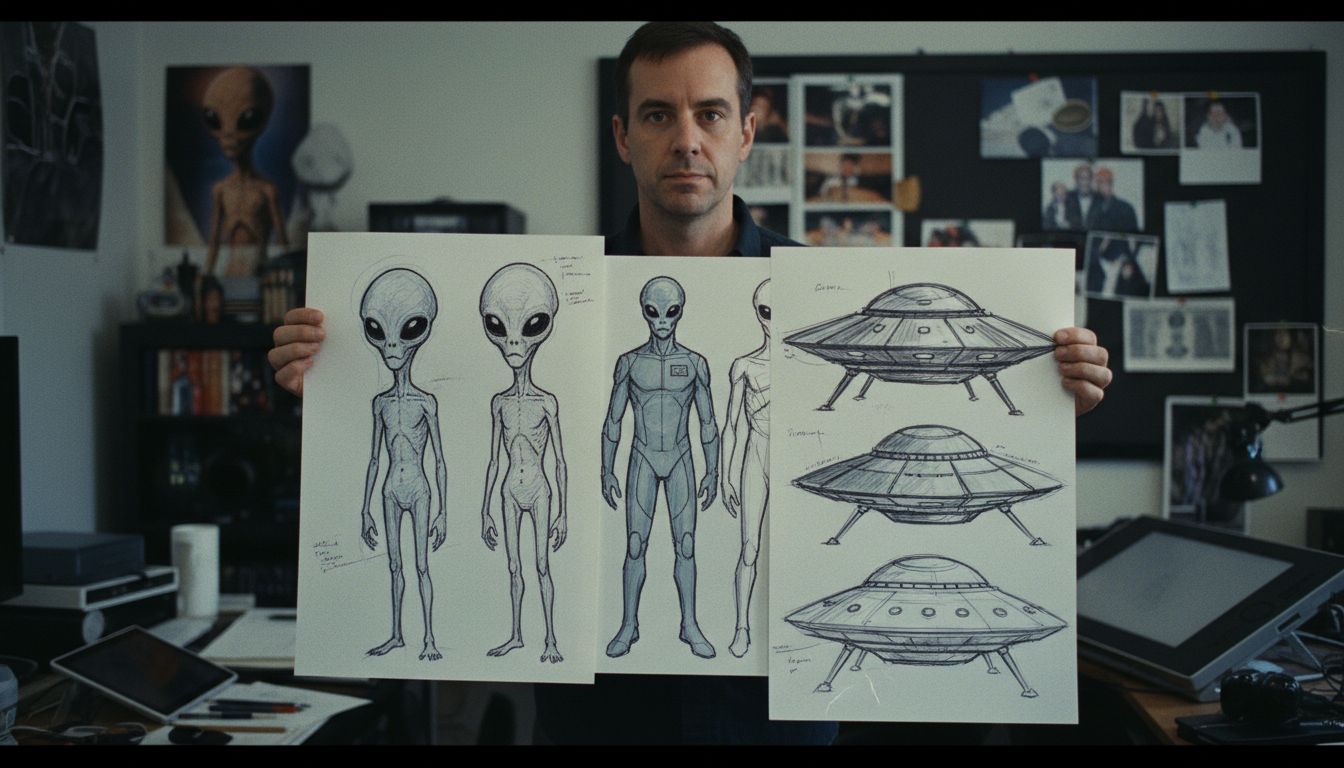
Concept artist Daniel Baker has offered fans a fresh look at one of science fiction’s most recognizable figures: the Grey Alien. In a recent social media post tied to Disclosure Day-themed content, Baker shared a series of design explorations that reimagine how a classic UFO/UAP occupant might appear on screen. The work appears to be part of the wider visual development associated with Steven Spielberg’s Disclosure Day, a project that has already drawn attention for its blend of familiar extraterrestrial imagery and modern cinematic design.
The post highlights Baker’s role as one of the concept artists contributing to the film’s visual language. Rather than presenting a single final design, the images appear to showcase alternative interpretations of the alien figure, suggesting an iterative creative process in which proportions, facial structure, and overall silhouette are tested and refined. For fans of UFO lore and science-fiction design, the material offers a glimpse into how iconic “alien” imagery is shaped long before it reaches the screen.
Design Explorations and Visual Language
What makes Baker’s shared artwork notable is the way it engages with a familiar cultural shorthand. The Grey Alien has become one of the most enduring images in UFO mythology: large eyes, slender frame, enlarged head, and an expressionless face that has come to symbolize the unknown. Concept art like Baker’s is significant because it must strike a balance between honoring that iconography and creating something that feels credible within a film’s specific world.
In the case of Disclosure Day, the design explorations suggest an effort to think beyond a single standardized alien template. By presenting multiple approaches to the UFO/UAP occupant, Baker and the production appear to be examining how subtle variations can dramatically change the tone of a character. A more delicate or humanoid form can imply vulnerability or intelligence, while a harsher, more angular design can suggest menace or mystery. These choices matter, especially in a story centered on disclosure, contact, or the interpretation of unexplained phenomena.
Why It Matters to UFO and Sci-Fi Audiences
For UFO enthusiasts, concept art serves as more than promotional material; it is a window into how contemporary filmmakers translate decades of witness accounts, pop-culture imagery, and speculative theory into visual storytelling. The Grey Alien, in particular, sits at the intersection of folklore, alleged encounter narratives, and entertainment media. Baker’s explorations reflect that intersection, showing how a well-known figure can still be reimagined in ways that feel fresh without losing its identity.
The release also underscores how concept artists help define the tone of a project long before audiences see finished scenes. In a film like Disclosure Day, the visual treatment of an alien occupant could shape whether the story feels more grounded, eerie, scientific, or mythic. Baker’s contribution, shared in the context of Disclosure Day celebrations, reinforces just how central design is to building anticipation around a UFO-themed production.
Ultimately, the images offer a reminder that some of science fiction’s most enduring ideas continue to evolve. Even the Grey Alien—a figure instantly recognizable around the world—can still be reinterpreted through the lens of a working concept artist, one design pass at a time.


