Overview
A new Deseret News essay is drawing attention to an unconventional but increasingly discussed idea in UFO studies: that UFO and UAP experiences may function less like straightforward sightings of physical craft and more like expressions of religious imagination. The piece centers on Diana Walsh Pasulka, a Catholic religious studies scholar at the University of North Carolina Wilmington, who argues that encounters with the unexplained are often interpreted through the language, symbols and expectations people already possess. In that sense, UFO reports may tell as much about human belief as they do about the objects or phenomena themselves.
Pasulka did not begin as a believer in the UFO topic. According to the article, she once dismissed it, but changed her perspective while studying the archives of Catholic saints such as Teresa of Ávila and St. Francis of Assisi. She noticed striking parallels between historical mystical experiences and modern accounts of unidentified phenomena. Medieval Catholic reports described visions of “flying houses,” “balls of light” and “little people,” descriptions that resemble some contemporary UFO narratives. Her conclusion is not that saints and UFO witnesses are describing the same thing, but that people across eras tend to frame mysterious experiences in culturally available terms.
Religion, language and interpretation
At the heart of Pasulka’s argument is the idea that religion provides tools for understanding events that fall outside ordinary explanation. As she puts it in the book discussed by Deseret News, religion helps people “assess nonordinary events and phenomena” by offering ritual, language and community to process experiences that might otherwise overwhelm an individual. That framework, she suggests, helps explain why extraordinary sightings so often become embedded in faith traditions, legends or spiritual narratives.
Pasulka’s thinking also fits into a broader historical argument about modernity. She cites sociologist Max Weber’s idea that the modern world had become “disenchanted” through rationalism and science. But in her view, the persistence of UFO reports may be doing the opposite. Rather than closing the door on transcendence, the UFO phenomenon may be reopening it. As she writes, the possibility that UFOs are real has been “the best thing for religion and religious practitioners for at least 200 years,” because it preserves room for mystery in a world that often claims to explain everything.
UAPs, the government and renewed debate
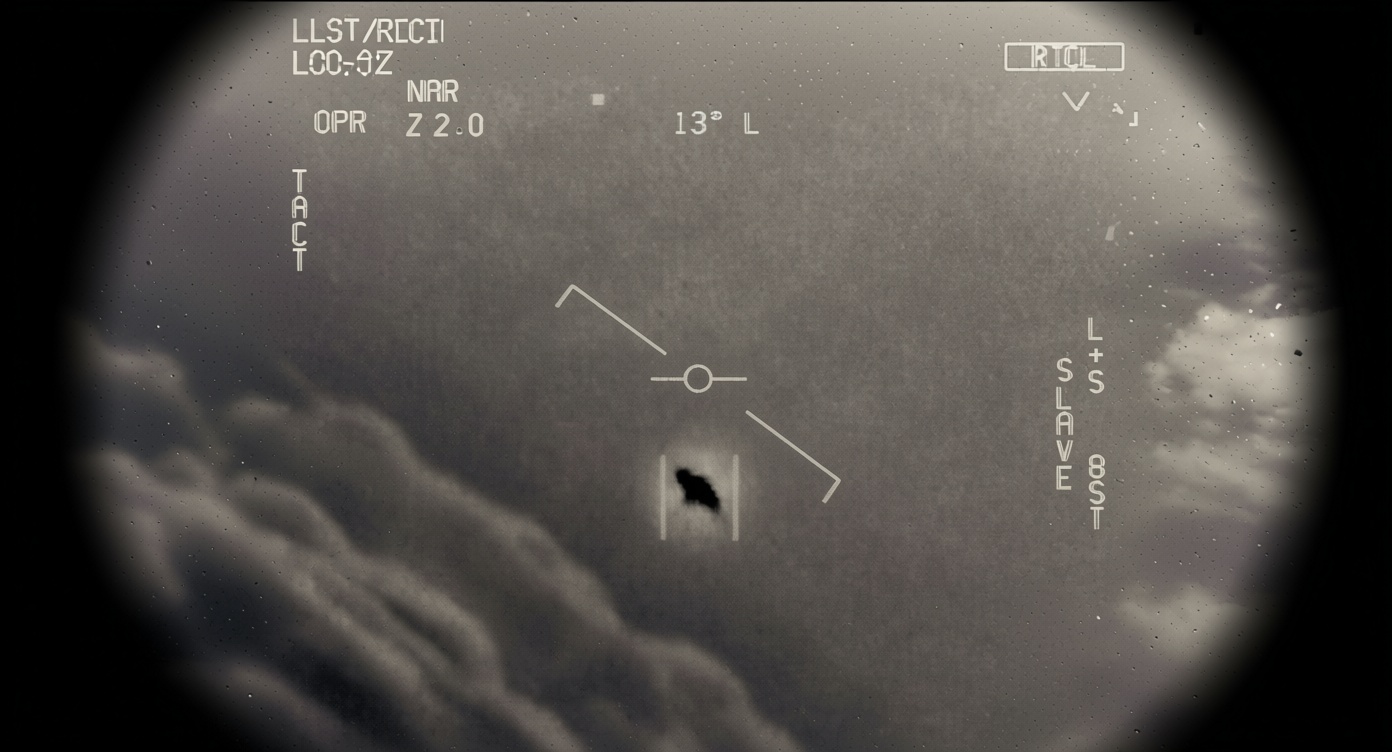
The article also places Pasulka’s ideas in the context of the recent government release of files on Unidentified Anomalous Phenomena (UAP). While those records did not establish the existence of extraterrestrial beings, they did renew public debate about what scientists, officials and the public can know for certain. In that sense, the current UFO conversation has moved beyond fringe speculation and into more mainstream questions about perception, knowledge and the limits of materialist explanations.
Pasulka has expanded these themes in her recent book, The Others: UFOs, AI, and the Secret Forces Guiding Human Destiny, where she groups UFOs alongside angels, demons and artificial intelligence under the broader category of “nonhuman intelligence.” The framing is provocative, but the Deseret News piece treats it as part of a serious scholarly effort to understand why mysterious phenomena continue to resonate in modern life.
A belief system shaped by mystery
For Pasulka, studying UFO reports has not weakened her faith; it has strengthened it. She told Joe Rogan in a recent podcast conversation that the research “supercharged my Christianity.” That line captures the central tension in the article: UFOs are often discussed in material terms, yet for many people they function as a gateway to spiritual reflection. Whether one sees them as unexplained technology, misperception or something else entirely, Pasulka’s work suggests they may also be revealing how deeply humans rely on imagination, belief and tradition to make sense of the unknown.