Overview
A new crop circle formation was reported on 16 July 2026 near Odstone Barn, close to Wayland’s Smithy in Oxfordshire, adding another entry to a long-running tradition of mysterious agricultural formations in southern England. The report, published by VibeWire Magazine, was accompanied by video footage and imagery showing the design emerging in a field in a landscape already known for its prehistoric associations. While crop circles are often met with skepticism, each new sighting tends to attract renewed attention because of the location, the timing, and the enduring cultural fascination surrounding these patterns.
The publication described the formation as a newly discovered crop circle and linked it to a broader discussion of historical landscapes, suggesting that the field’s setting near one of Oxfordshire’s best-known ancient sites gives the event added significance. No formal survey or scientific assessment was included in the source material, and the report does not claim a definitive explanation for how the formation was made.
Key Details
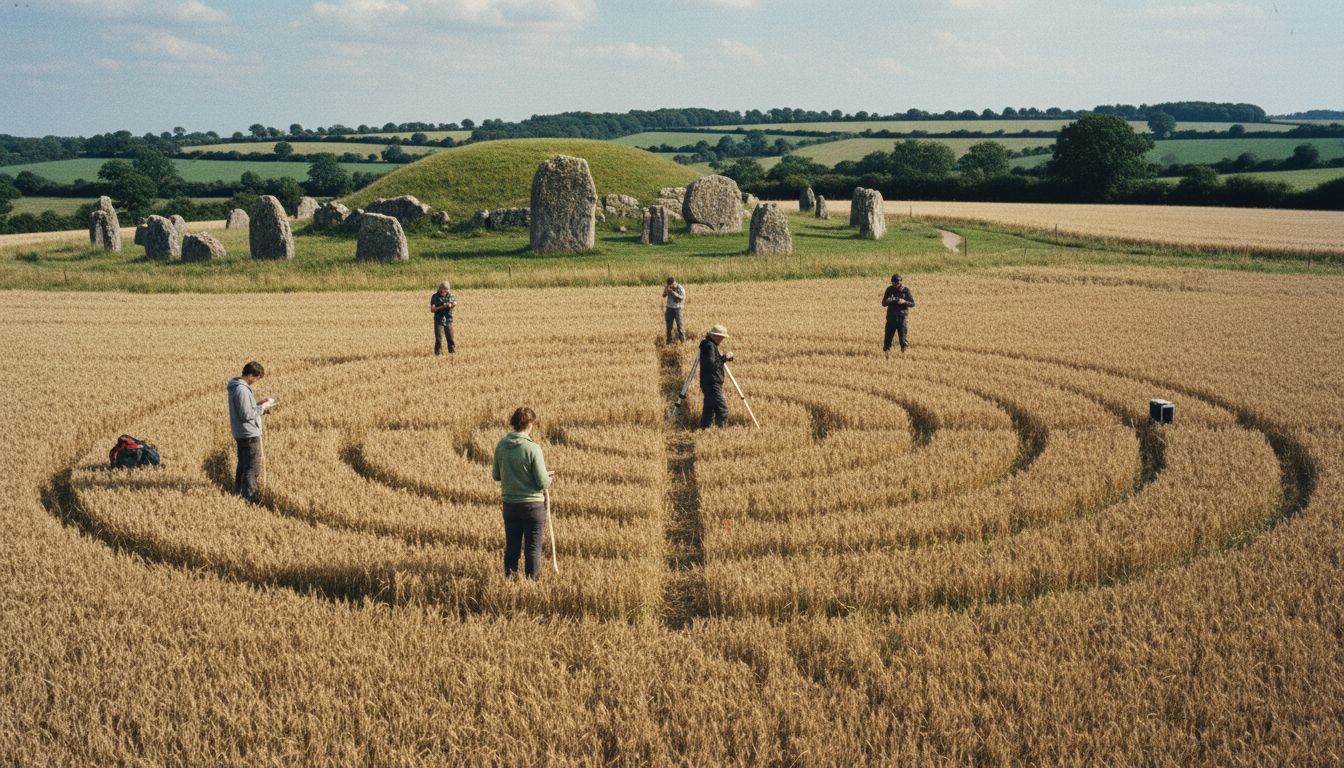
According to the source, the crop circle was reported at Odstone Barn near Wayland’s Smithy on 16/07/26, with a video posted to YouTube alongside the magazine entry. The images provided show a geometric pattern flattened into standing crop, a visual style consistent with many modern crop circle reports from the UK. As with similar cases, the immediate questions are not only about authorship but also about scale, symmetry, and the speed with which the formation appeared.
That said, no evidence in the source material establishes whether the pattern was created by people, whether it had been formally documented by researchers, or whether any witnesses observed its formation. Crop circles in the UK are frequently linked to hoaxes, artistic interventions, or local folklore, and the report does not present new data that would settle those possibilities. Still, the location and presentation ensure the formation will likely be discussed by enthusiasts and skeptics alike.
Historical Landscape Context
The setting near Wayland’s Smithy is central to why the report drew interest. Wayland’s Smithy is a Neolithic long barrow in the Vale of White Horse, part of a wider ceremonial landscape that includes some of Britain’s most significant prehistoric monuments. Such places often appear in crop circle discussions because they sit within a terrain layered with archaeology, myth, and cultural memory. That history gives any new formation nearby a ready-made narrative, whether interpreted as coincidence, performance, or something more unusual.
In that sense, the crop circle is not simply being viewed as an isolated pattern in a field. It is being read against the backdrop of a landscape that has long invited speculation about ritual, alignment, and hidden meaning. Even for those who approach crop circles as man-made art, the choice of location can matter as much as the design itself. The proximity to Wayland’s Smithy inevitably amplifies the mystery.
Interpretation and Next Steps
For now, the formation remains a reported discovery rather than a verified anomaly. The most responsible reading is that it is an intriguing field pattern in a historically charged area, documented by a media outlet that covers UFO and unexplained phenomena. Further analysis would typically require on-site inspection, measurements, interviews, and crop damage assessment to determine whether the formation shows signs of human construction or something less straightforward.
Until then, the Oxfordshire discovery sits in the familiar space between folklore and investigation. It is a reminder that crop circles continue to occupy a unique niche in British public life: part rural puzzle, part media event, and part canvas for the enduring appeal of the unexplained.