Overview
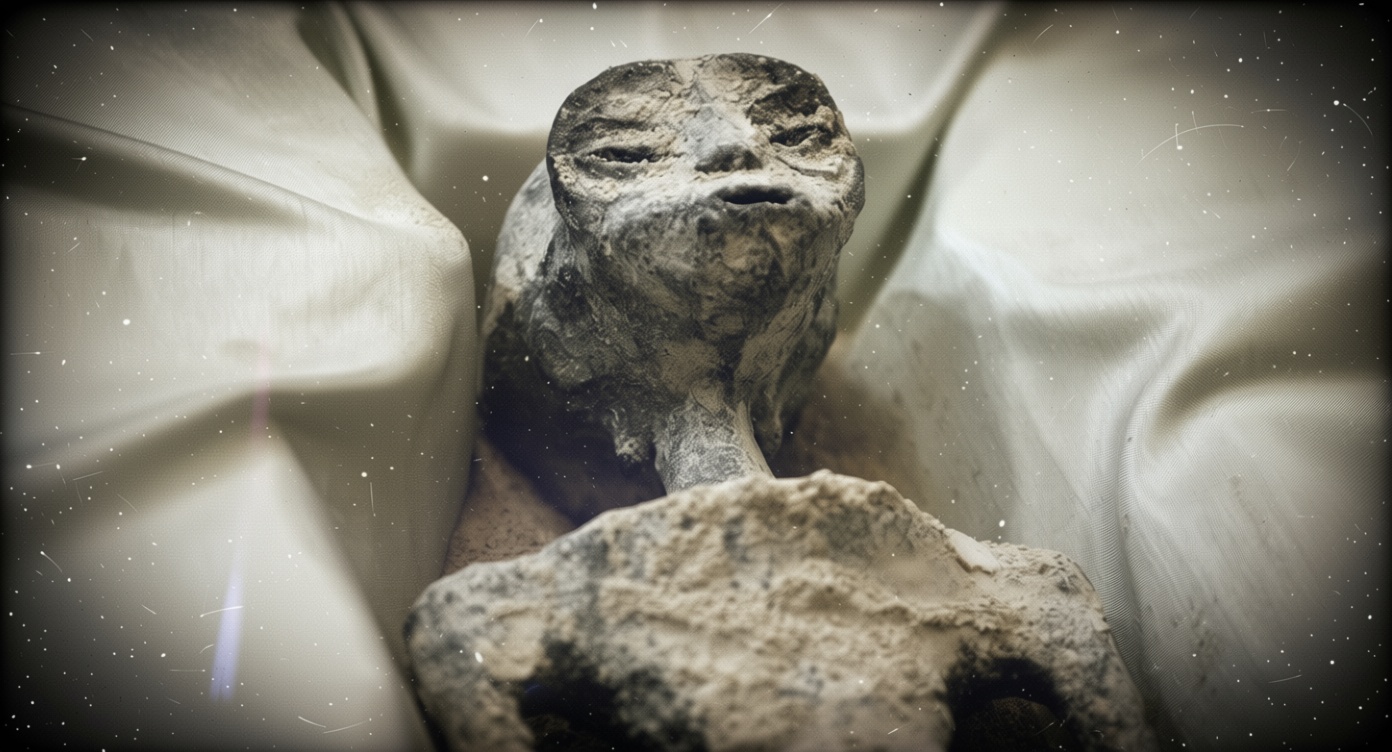
Widely circulated images described online as photographs of an extraterrestrial being have been identified as a constructed puppet used in a special-effects screen test, not evidence of an authentic alien. The figure was created by creature designer Jordu Schell, whose work was also featured in a major exhibit at the International UFO Museum and Research Center in Roswell, New Mexico.
The images appear to have been separated from their original context and shared by commenters who treated them as genuine. A linked video reportedly shows Schell revealing the puppet, providing a behind-the-scenes explanation for the unusual figure’s appearance. The case illustrates how photographs of practical effects can be detached from their production history and later presented as unexplained imagery.
The Roswell Alien Display
In July 2011, the Roswell museum unveiled a permanent installation created by Distortions Unlimited, a special-effects company founded by Ed and Marsha Edmunds. The exhibit, titled the “Roswell Alien Display,” presents a cinematic recreation of extraterrestrial figures at the site of a crashed flying saucer.
The installation was designed to support the museum’s presentation of the 1947 Roswell incident, a long-standing subject of UFO speculation. However, the display itself is a work of artistic interpretation rather than physical evidence from the alleged crash. It combines full-scale creature figures, a metallic saucer, sand, smoke, atmospheric lighting and sound effects to create an immersive visitor experience.
Design and Development
Schell served as the project’s lead sculptor and concept artist. According to the production discussion, the team deliberately moved away from the familiar “little green men” image and instead pursued a more restrained, unsettling version of the so-called Grey alien. Schell described the intended expression as “stunned” and crisis-driven, emphasizing the appearance of beings caught in a confusing or dangerous situation rather than posed as aggressive invaders.
Several details were incorporated to make the sculptures appear more lifelike. The oversized black eyes included subtle pupils and internal depth, while the skin received a multi-toned grey finish intended to suggest organic complexity. Before the full-scale figures were produced, the team used wire armatures and small maquettes to establish their positions. Schell reportedly favored a neutral, unusual posture—one he considered “weird”—over a conventional action pose.
Technical Execution and Unveiling
The production team discussed using Chavant clay, a sculpting material valued for its stability and ability to hold fine detail without cracking. Marsha Edmunds also noted that the final figures incorporated subtle animatronic movements, including head tilts, to make the display more convincing for museum visitors.
The exhibit was formally unveiled on July 1, 2011. Its life-sized figures stand around a simulated crash site beneath the damaged saucer, with environmental effects designed to heighten the sense of immediacy. While such features can make the scene appear realistic in photographs or video, they remain elements of a museum presentation created by professional artists and fabricators.
Context and Significance
The identification of the viral images as a puppet underscores the importance of verifying the origin of alleged UFO evidence before drawing conclusions. In this instance, the imagery is connected to a documented special-effects project involving Schell and Distortions Unlimited. The Roswell exhibit remains significant as a piece of themed museum storytelling, blending Hollywood-style creature design with the mythology surrounding the New Mexico incident—but it should not be confused with independent evidence of extraterrestrial life.