Overview
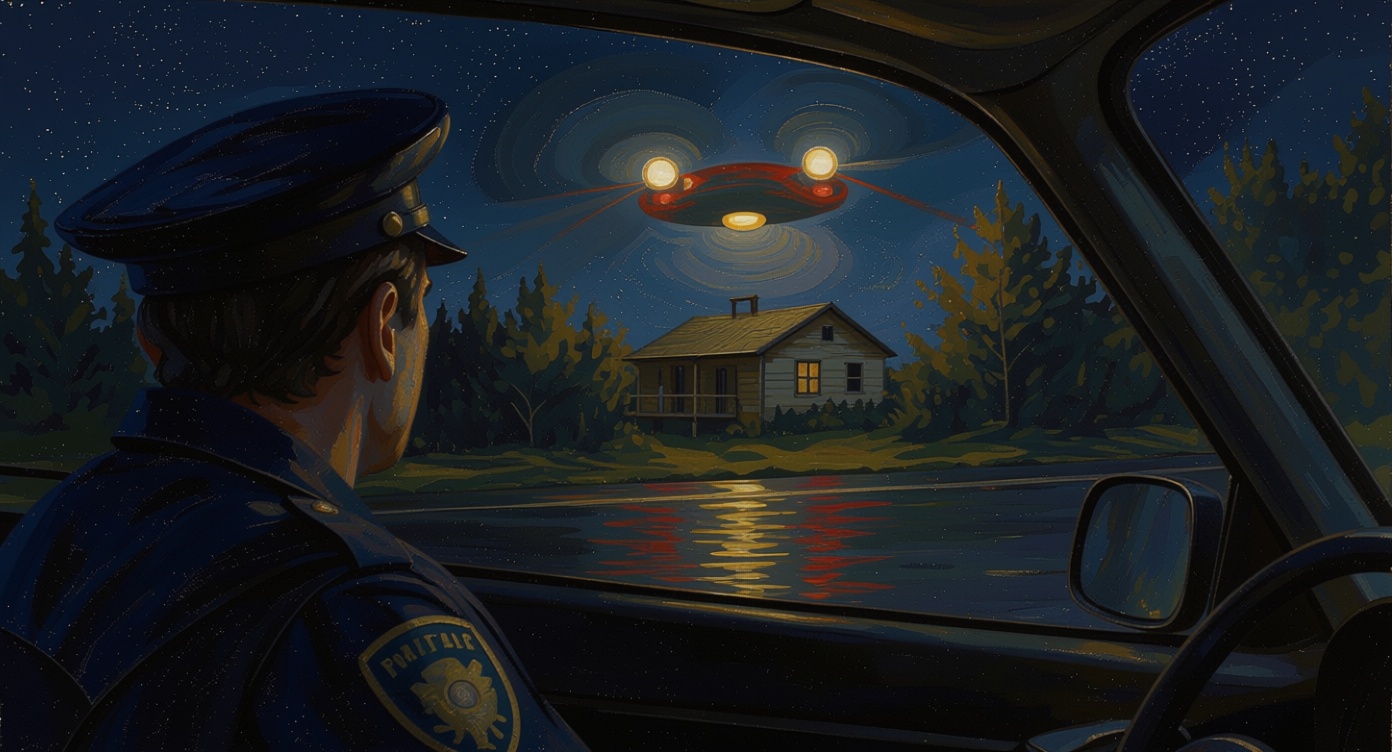
The Apollo program, carried out by NASA between 1961 and 1972, remains a landmark in human spaceflight, delivering the first crewed landings on the Moon and returning over 380 kg of lunar rocks for scientific study. While the missions’ primary legacy is geological—mapping the lunar surface, confirming the presence of water ice in permanently shadowed craters, and refining models of the Moon’s formation— they have also become a focal point for UFO and UAP (unidentified aerial phenomena) speculation. Recent discussions on social media platforms, especially Twitter, have revived the claim that Apollo astronauts may have encountered “extraterrestrial artifacts” while on the Moon, prompting renewed scrutiny of the original mission footage and reports.
Apollo Data and Scientific Findings
The Apollo missions produced a robust data set that continues to underpin contemporary lunar research. Apollo 11’s historic landing in July 1969 yielded the first lunar samples, while Apollo 12’s precision touchdown near Surveyor 3 allowed engineers to retrieve components of an earlier unmanned probe for comparative analysis. Apollo 17, the program’s final crewed flight in December 1972, conducted extensive geological sampling across the Taurus‑Littrow valley, providing the most diverse collection of lunar material to date. These missions confirmed the Moon’s basaltic composition, identified a complex history of volcanic activity, and verified the existence of water ice in permanently shadowed regions, findings that have guided recent commercial and governmental plans for lunar bases. No official NASA documentation records the discovery of any non‑natural structures, anomalous devices, or unexplained aerial phenomena during any of the missions.
Reported UFO Sightings Near the Moon
Throughout the 20th century, reports of unidentified flying objects often coincided with heightened public interest in space exploration. The Moon, as Earth’s nearest celestial neighbor, has been cited in numerous anecdotal accounts of bright lights or moving objects appearing near its limb. A 2025 blog post on Alienated Media compiled several of these claims, noting that “numerous reports claim to have observed unidentified flying objects in the vicinity of the Moon.” However, the post also acknowledges that the majority of such sightings lack corroborating data and are typically based on amateur observations or misinterpretations of astronomical phenomena such as satellites, meteoroids, or atmospheric reflections.
Expert Assessment of the Evidence
Scientists and former NASA officials consistently emphasize the rigorous verification processes applied to Apollo telemetry, photographs, and sample analysis. Dr. Ellen Stofan, former NASA chief scientist, has stated that “the Apollo archives have been examined repeatedly for anomalies, and none have stood up to scientific scrutiny.” Independent researchers who have reviewed the publicly released mission footage report that the visual artifacts often cited as “UFOs” can be explained by camera lens flares, optical reflections, or the motion of the spacecraft’s own equipment. Moreover, the U.S. Department of Defense’s recent UAP task force, while acknowledging unexplained aerial observations in Earth’s atmosphere, has not linked any such phenomena to lunar operations.
Context and Outlook
The persistence of UFO narratives surrounding the Apollo missions reflects a broader cultural fascination with the unknown and a tendency to reinterpret historic events through contemporary lenses. While the allure of “alien artifacts on the Moon” makes compelling headlines, the available evidence remains firmly rooted in conventional scientific interpretation. As NASA prepares for the Artemis program and commercial partners plan sustained lunar presence, the focus is shifting from conjecture to concrete research objectives—such as in‑situ resource utilization and expanded geological surveys. Future missions equipped with higher‑resolution imaging and real‑time data transmission may finally put lingering questions to rest, offering definitive answers about both the Moon’s natural history and the origins of any anomalous sightings.