Overview
A recent discussion by astrophysicist and science communicator Sabine Hossenfelder has pushed back on claims that unidentified anomalous phenomena, or UAPs, seen by federal agents in 2023 might be evidence of warp drive technology. The debate centers on a pre-print paper by Harvard astrophysicist Avi Loeb and co-author Shaun David Brocus Fell, which argues that a puzzling atmospheric event could be consistent with a small, spacetime-distorting object moving through Earth’s atmosphere. Hossenfelder’s response was blunt: she rated the idea “8 out of 10” on her “bullshit meter,” underscoring her skepticism while acknowledging that the underlying incident remains unexplained.
The 2023 “Orbs Launching Orbs” Case
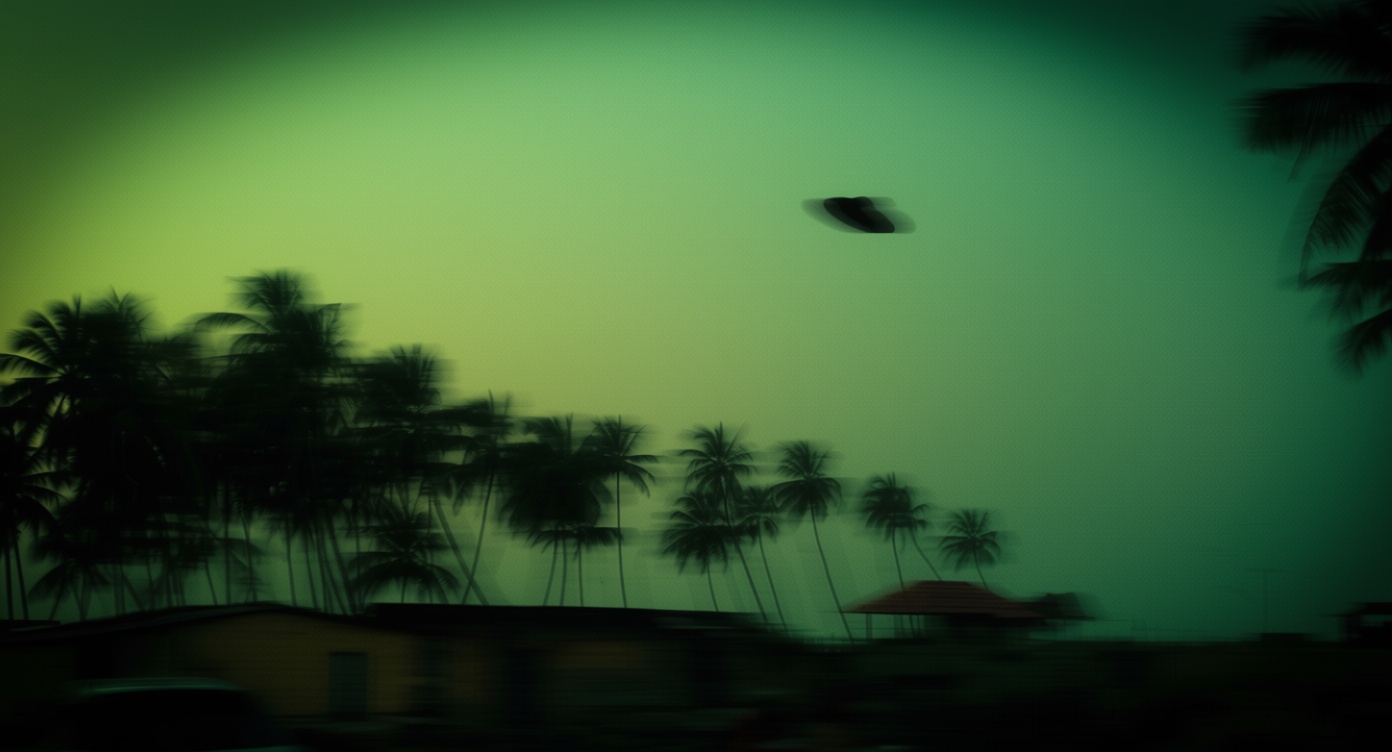
The event at the center of the debate was reported by the Pentagon under the label “Orbs Launching Orbs.” In October 2023, six federal agents in the western United States said they observed a large orange glowing orb that appeared to release clusters of smaller red orbs before disappearing. The pattern reportedly repeated over two nights. According to the official account summarized in the discussion, the objects moved silently, changed altitude, and remained stationary for hours, prompting investigators to rule out several conventional explanations, including drones, weather-related phenomena such as ball lightning, and known military systems like infrared weapons. While the case drew attention in UFO and UAP circles, the available reporting has not provided a definitive identification.
Loeb’s Warp Drive Hypothesis
In a pre-print paper titled “Radiative Signatures from Warp Drives Traveling Through the Earth’s Atmosphere,” Loeb and Fell proposed a highly unconventional explanation: the objects might have been micrometer-scale “spacetime bubbles.” The theory draws on concepts from Einstein’s General Relativity, in which a warp drive would not necessarily move an object through space in the usual sense, but instead contract spacetime in front of it and expand it behind it. Loeb’s calculations suggest that a larger warp drive, if moving at a significant fraction of light speed, would generate an enormous shockwave, ionize the surrounding air into plasma, and emit intense X-rays and gamma rays—effects that would be difficult to miss. To match the modest glow described by the agents, Loeb argues the bubbles would have to be extraordinarily small and moving only a few times faster than the speed of sound.
Scientific Critique and Open Questions
Hossenfelder’s criticism is that the visual appearance of an object in the atmosphere depends primarily on its size, speed, and interaction with air, not on its propulsion system. In other words, a glow does not uniquely indicate a warp drive. She also points to deeper theoretical problems, including momentum conservation: even if spacetime could be manipulated, a craft would still need to account for how it accelerates without violating physical laws. Another major obstacle is the requirement for negative energy, a key ingredient in many warp drive models that remains purely theoretical and has never been observed in nature. In her view, the warp-bubble concept functions more like a “superfluous decoration” than a necessary explanation for the sightings.
Broader Context
The exchange highlights a familiar tension in UAP research: the gap between genuine anomalies and speculative physics. Hossenfelder notes that the U.S. military has shown real interest in studying hyperdrives and related concepts, but she says Loeb’s attempt to connect the 2023 sightings to warp technology is highly speculative and unsupported by direct evidence. For now, the Pentagon case remains unresolved, and the warp drive explanation remains at the margins of scientific plausibility rather than the center of the investigation.