Overview
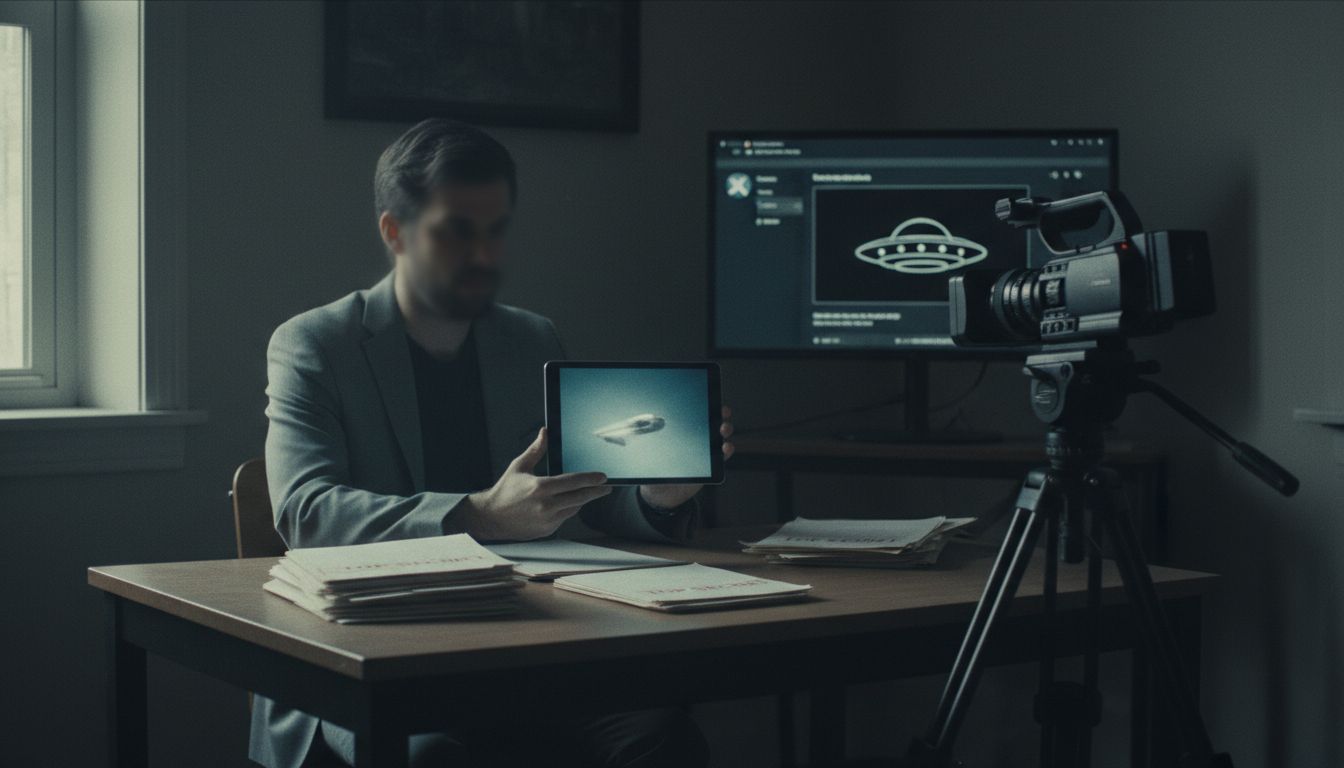
A video shared on X and produced by the YouTube channel Post Disclosure World has drawn attention for compiling a series of explosive claims from current and former U.S. intelligence figures about UFO, or UAP, secrecy. The discussion centers on whistleblower Matthew Brown, along with former Defense Department and intelligence officials David Grusch, Christopher Mellon, and researcher Dr. Eric Davis, all of whom have either spoken publicly about or been associated with allegations that the government possesses high-quality evidence of unidentified aerial phenomena. The video presents these accounts as part of a broader pattern in which the public is shown degraded imagery while more revealing data remains classified.
Allegations of Better Evidence Behind Closed Doors
One of the video’s central claims is that U.S. agencies may be withholding clearer imagery of UAPs than anything released publicly. Christopher Mellon, a former Deputy Assistant Secretary of Defense for Intelligence, is cited as saying that while the public is shown “fuzzy” infrared footage, the government may hold clear optical photographs and satellite imagery of objects in space that appear “obviously not manmade.” David Grusch, who testified before Congress in 2023, is also described as saying he reviewed “overhead collection” data and images tied to recovered non-human vehicles. These are serious allegations, but they remain unverified publicly and have not been independently substantiated by documentary evidence released to the wider public.
The “Immaculate Constellation” Claim
The video places particular emphasis on Brown’s discussion of a purported special access program referred to as “Immaculate Constellation.” According to Brown’s account, the Pentagon’s release of low-quality UAP footage may be part of a broader psychological strategy to normalize weak evidence and reduce public demand for more revealing material. He argues that the government is effectively trying to “acclimatize” audiences to mediocrity while keeping more advanced information hidden. That interpretation reflects a growing strand of UAP advocacy: that disclosure is not simply about confirming unusual sightings, but about confronting a long-running system of secrecy that has shaped what the public is allowed to see.
Historical References and Broader Context
The video also revisits several historical touchpoints that have circulated in UAP circles for years, including a 1948 Naval memo reportedly referencing a “flying disk pandemic” and a 1964 incident at Holloman Air Force Base in New Mexico, which Brown and others discuss as part of alleged early contact narratives. The report suggests that secrecy around UAPs may have had broader scientific consequences, potentially slowing work on propulsion, energy, and other technologies. Brown frames that possibility as evidence of a “carefully constructed reality,” while others in the segment argue that humanity may be dealing with technologies or entities that do not fit conventional assumptions.
What the Video Says About Disclosure
The broader takeaway in the video is that the alleged cover-up may be more consequential than the existence of non-human intelligence itself. The speakers suggest that continued silence by major world powers, including Russia, China, and Brazil, could indicate a tacit understanding to preserve the current order rather than disrupt it with disclosure. That view remains speculative, but it reflects a central tension in the UAP debate: whether the issue is primarily about anomalous objects, or about institutions managing information with profound scientific, strategic, and cultural implications. For now, the claims remain part of an unresolved public conversation, with advocates pressing for transparency and skeptics demanding firmer evidence.