Overview
The BBC is examining whether the UK may have a blind spot when it comes to UFO sightings, arguing that reports of unusual aerial activity may be under-counted, poorly recorded, or simply overlooked. The question is not whether every strange light in the sky has an extraordinary explanation, but whether Britain has the right reporting and tracking systems in place to capture what pilots, civilians, and air traffic controllers are actually seeing. That issue has become more pressing as the term UAP, or unidentified anomalous phenomenon, increasingly replaces “UFO” in official and media discussion.
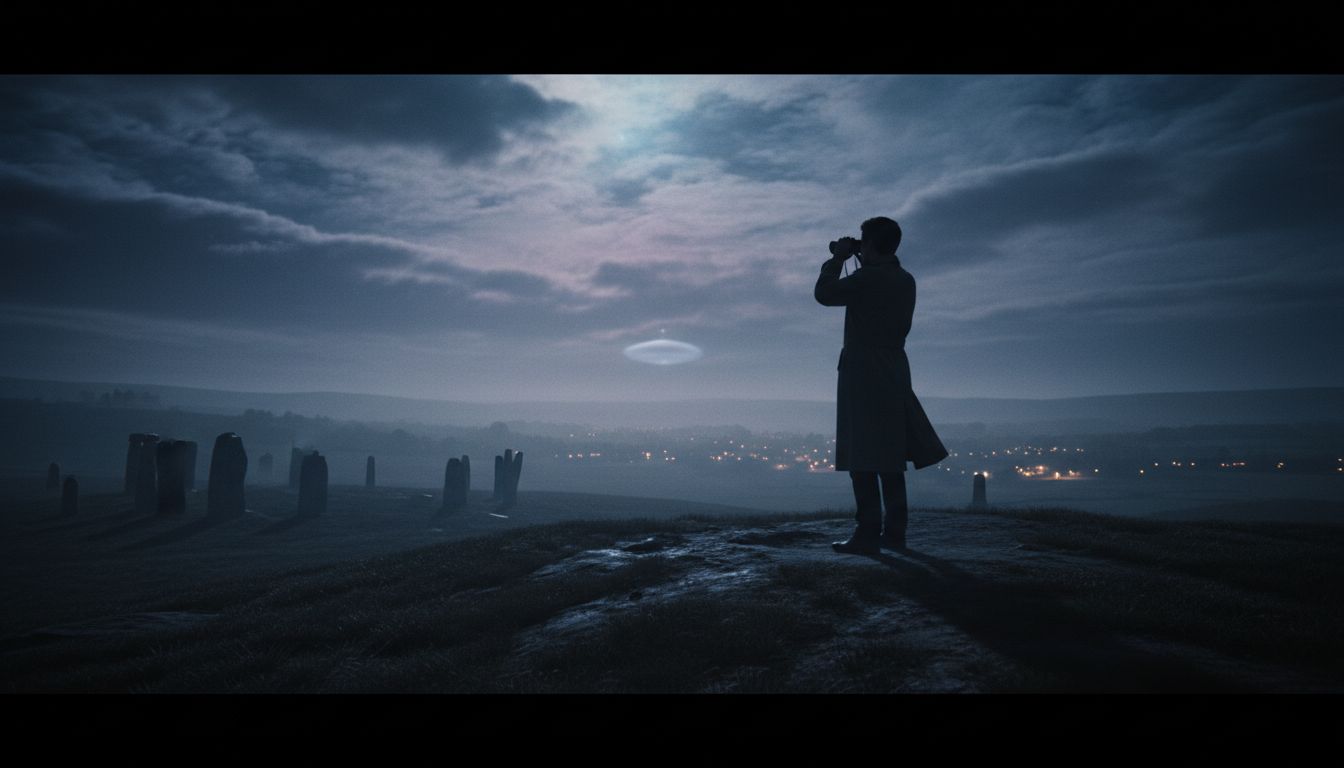
One of the most striking examples in the report comes from retired pilot Chris Crowther, who spent 42 years in aviation and logged roughly 22,000 flying hours. Yet one moment from 1978 still stands out. Flying a light aircraft toward Norwich Airport over The Wash, Crowther says he was alerted by Eastern Radar to “unidentified traffic” moving rapidly in the opposite direction. Seconds later, he recalls something streaking past his starboard wing tip — an object or cluster of objects he still cannot explain. “I still have the image in my mind,” he said, describing what looked like “a dozen dark objects, perhaps the size of a football.”
Why the UK may be missing reports
Crowther did not report the encounter, and that detail is central to the BBC’s broader point. If experienced aviators sometimes choose not to file a report, then the public record may represent only a fraction of what is actually being observed. The article suggests that the UK’s system for capturing these accounts may be less visible and less comprehensive than many assume, leaving uncertainty about how many sightings go unrecorded each year.
That concern matters because unexplained aerial reports are not confined to folklore or internet speculation. Aviation professionals, military personnel, and members of the public regularly describe objects or lights that appear to defy easy explanation. In an era of crowded airspace, drones, satellites, weather balloons, and advanced aircraft, there are often mundane explanations. But the BBC report asks a different question: are all relevant reports being collected in the first place?
The US contrast and the wider UAP debate
The UK discussion stands in contrast to the United States, where the subject has moved much further into the mainstream. In recent years, American authorities have released declassified documents, while military pilots, intelligence figures, and whistleblowers have testified publicly about encounters with unexplained objects. Some have described manoeuvres that, they claim, go beyond known human technology. That has pushed UAPs from the margins into policy debates about air safety, national security, and information transparency.
The BBC also notes how cultural attention has helped sustain the topic, with Steven Spielberg returning to UFO themes in his latest film, Disclosure Day. But beneath the public fascination is a serious aviation question: if something unusual is detected in controlled airspace, who records it, how is it assessed, and what happens to the data?
What the BBC is really asking
Ultimately, the report is less about proving extraterrestrial visitors than about reporting infrastructure and institutional awareness. If the UK lacks a clear, accessible, and trusted pathway for reporting UAP sightings, then the country may be relying on a partial picture of the skies above it. That leaves open the possibility that some events are dismissed too quickly, while others are never formally captured at all.
For Crowther, the memory remains vivid nearly half a century later. For researchers and regulators, his account is a reminder that unexplained sightings are not just a public curiosity — they are also a data problem. And unless that data is collected consistently, the UK may never know whether it is seeing the full picture, or only the fragments that happen to be reported.