Overview
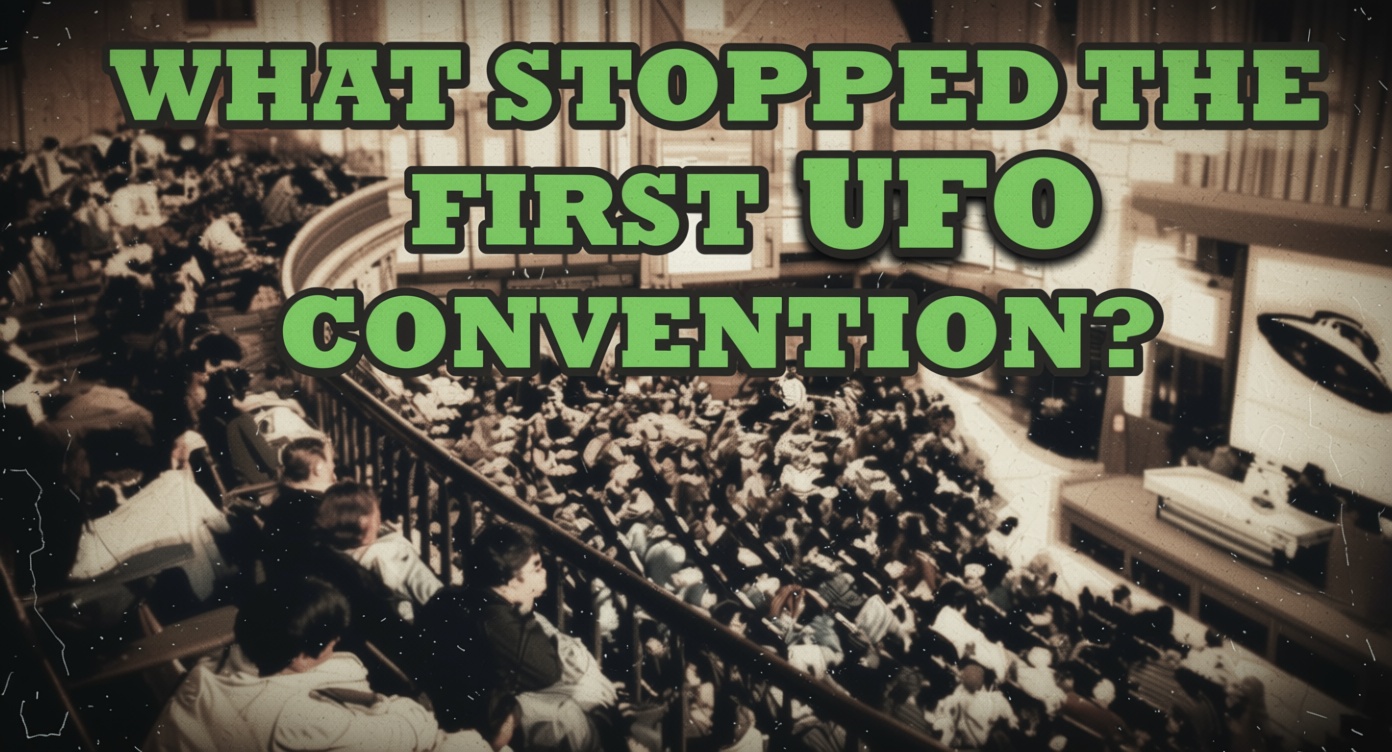
An early attempt in Alexandria, Louisiana, to organize a UFO convention never got off the ground, offering a small but telling example of how local curiosity about unexplained aerial phenomena has often outpaced public readiness to embrace it. According to the historical account, a business club in Alexandria briefly floated the idea of hosting a gathering centered on unidentified flying objects, a plan that was unusual enough to suggest the city may have been ahead of the curve. But the effort fizzled when local support failed to materialize, underscoring a familiar pattern in UFO history: enthusiasm can be strong in theory, yet difficult to sustain when it comes time to commit time, money, and public backing.
A Convention Idea Before Its Time
The Alexandria proposal stands out not because it became a major event, but because it reveals how early and unexpectedly UFO culture began to seep into civic and business circles. In retrospect, a convention devoted to the subject seems like a product of a later era, when conferences, witness panels, and public talks on anomalous phenomena became more common. At the time, however, the idea appears to have been too speculative for the local market. The organizers seem to have hoped that a UFO-themed convention could draw attention and interest, but the response suggested otherwise. Rather than becoming a regional attraction, the plan serves today as a reminder that even in communities intrigued by the unknown, public appetite for formalizing that interest can be limited.
Why the Effort Failed
What ultimately derailed the Alexandria concept was not controversy so much as indifference. The summary of the history makes clear that local enthusiasm never matched the organizers’ expectations, and that absence of support proved decisive. That outcome is notable in its own right, because UFO events often rely on a mix of belief, curiosity, and spectacle to gain traction. In this case, those ingredients never came together in sufficient quantity. The episode also reflects the broader challenge of promoting fringe or emerging topics in a civic setting: even when people are willing to discuss mysterious sightings or unexplained cases, they may still hesitate to turn that interest into a public-facing event.
Broader UFO-History Threads
The Alexandria story appears alongside several other researched UFO-history pieces that help frame the larger cultural landscape. Among them are reports involving phantom airplanes, a term that captures the long-running overlap between aviation mystery and unidentified aerial observations. Another piece examines the religious reflections of Salvador Freixedo on a 1960 event in Peru, showing how UFO accounts have often intersected with spiritual interpretation rather than simple descriptions of craft or lights in the sky. These historical threads suggest that UFO narratives are rarely isolated incidents; they often become part of wider debates about religion, technology, perception, and human meaning-making.
A Debated Encounter Still Drawing Attention
Also highlighted is the contested case of Sid Padrick, whose alleged UFO encounter remains open to interpretation and debate. Cases like his continue to attract interest precisely because they sit at the boundary between testimony and uncertainty. They are valuable not only for what may have happened, but for how they illustrate the enduring difficulty of separating memory, environment, and interpretation in extraordinary claims. Taken together, the Alexandria convention that never happened and the other historical episodes show how UFO history is shaped as much by missed opportunities, cultural hesitation, and unresolved questions as by the sightings themselves.