Overview
The idea that Earth could be a “galactic biological oasis” has emerged as a speculative framework for interpreting reports of unexplained objects near our planet. The concept imagines that an advanced nonhuman intelligence might regard Earth’s evolving biosphere as unusually valuable and could hypothetically deploy autonomous craft to observe it, manage access, or monitor potential threats. Some proponents have suggested that certain reported “orbs” might represent components of such a system.
There is no verified evidence that extraterrestrial intelligences have established a monitoring network around Earth, or that unidentified aerial phenomena are connected to biological preservation. The hypothesis remains an imaginative interpretation rather than a documented finding. NASA’s publicly available information on asteroids, by contrast, provides an established scientific context for understanding why objects may be detected near Earth and why planetary monitoring is necessary.
What NASA Says About Near-Earth Objects
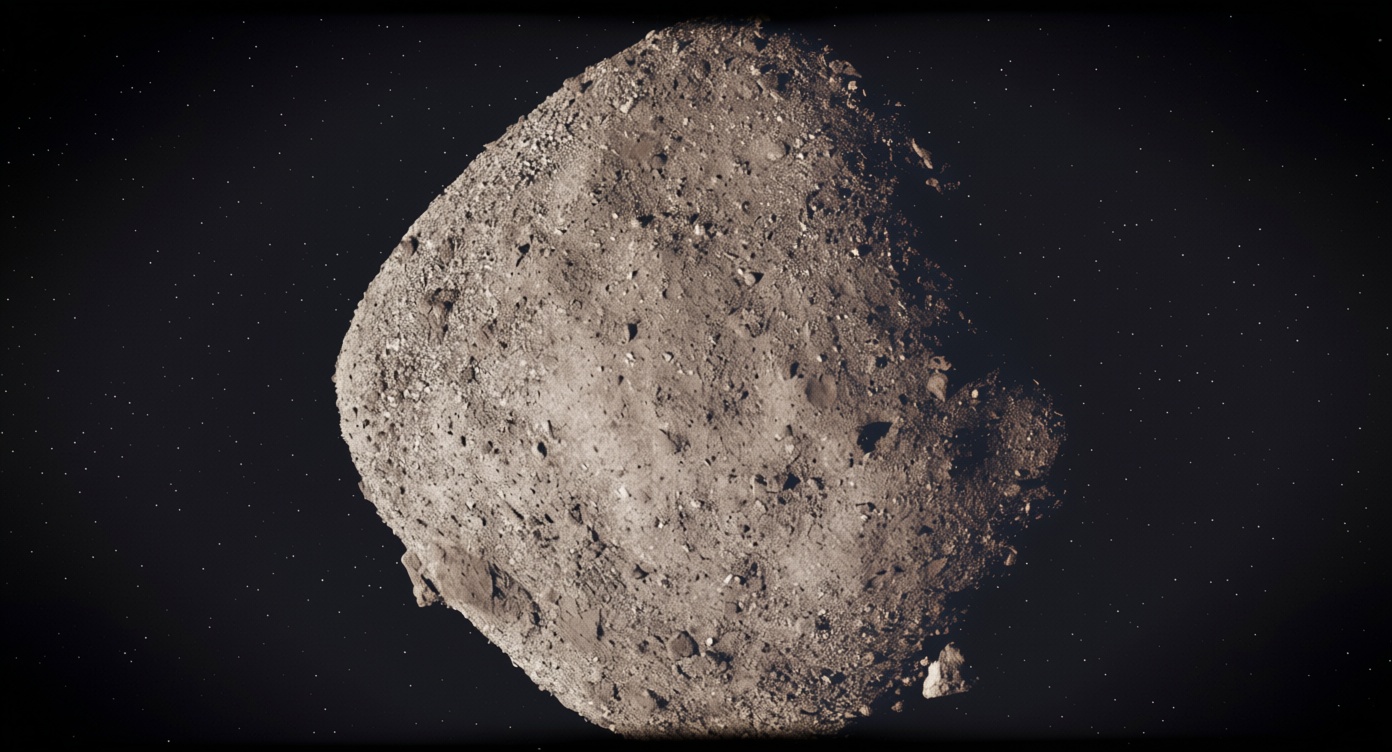
According to NASA’s asteroid facts, most asteroids orbit the Sun in the main asteroid belt between Mars and Jupiter. They range from Vesta—about 530 kilometers (329 miles) in diameter—to objects less than 10 meters across. The combined mass of all known asteroids is less than that of Earth’s Moon.
Gravitational interactions can push asteroids and comets into the vicinity of Earth. These bodies are known as Near-Earth Objects, or NEOs, when their orbits bring them within approximately 48 million kilometers (30 million miles) of Earth’s orbit. Most NEOs are asteroids. NASA’s Center for Near Earth Object Studies, or CNEOS, tracks these objects, calculates their trajectories and evaluates whether they pose a potential hazard.
Why Orbital Monitoring Matters
NASA distinguishes between proximity and danger. A potentially hazardous asteroid is generally one that can approach within 7.5 million kilometers (4.6 million miles) of Earth’s orbit and is estimated to be at least 140 meters (460 feet) wide. That classification indicates a possible long-term threat—not a prediction that an impact will occur.
NASA states that it is highly unlikely an asteroid large enough to cause widespread damage will strike Earth during the next century or more. Smaller objects enter the atmosphere more frequently. An asteroid roughly 10 meters across may produce a bright fireball and sonic boom about once every decade, while a 50-meter object could cause local devastation on timescales averaging roughly once every 1,000 years. Objects around 140 meters in diameter could create impact craters spanning one to two kilometers and cause severe regional damage.
Separating Science From Speculation
These monitoring efforts could be used rhetorically to support the idea that an advanced civilization might also watch Earth for biological or planetary reasons. However, NASA’s asteroid-tracking programs are conducted by human scientific institutions using telescopes, orbital calculations and planetary-defense systems. They do not provide evidence of autonomous extraterrestrial craft or a deliberate “regulation” of access to Earth.
Reported orbs can have many possible explanations, including aircraft, satellites, atmospheric phenomena, sensor artifacts or misidentified astronomical objects. Without reliable data—such as multiple calibrated observations, recoverable materials or independently verified flight characteristics—linking them to a biological monitoring system would be premature. The galactic-oasis hypothesis may raise questions about the value of life, but it remains unsubstantiated and distinct from established planetary science.