Overview
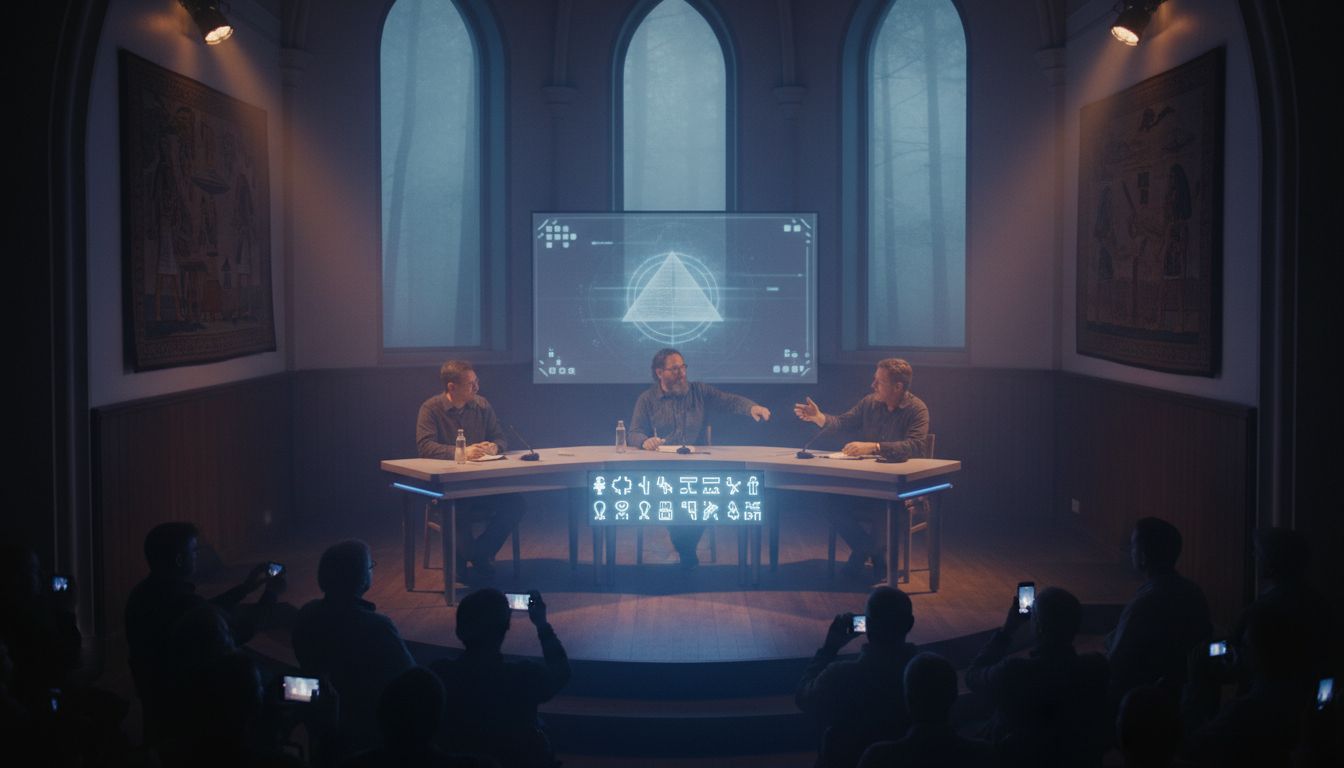
A Spanish-language video circulating in UFO disclosure circles argues that the long-running debate over unidentified anomalous phenomena, or UAPs, has moved from speculation into the political mainstream. Hosted by Jonah Boss on Hablemos de, the program frames recent congressional hearings as a turning point in a decades-long pattern of official denial, limited disclosure, and contested evidence. Rather than presenting the issue as settled, the video emphasizes that the central question has shifted from whether UAPs exist to what the U.S. government may know about them.
Historical Context
The video places current developments in a broader historical arc that begins with Roswell in 1947, when an initial announcement about a recovered “flying disc” was quickly revised by U.S. officials to say it was a weather balloon. It then moves to Project Blue Book, the Air Force’s official investigation into UFO reports from 1947 to 1969, which examined more than 12,000 sightings and left 701 cases unexplained. According to the program, this history laid the foundation for a culture of secrecy that persisted for decades, even as public interest never disappeared. The narrative then jumps to 2017, when The New York Times published reporting on the Advanced Aviation Threat Identification Program (AATIP) and declassified infrared footage, including the now-famous “Tic Tac” incident, which renewed scrutiny of military encounters with unexplained objects.
Testimony Before Congress
The video highlights the July 26, 2023 congressional hearing as especially significant because it featured three high-profile witnesses testifying under oath. Former Navy pilot Ryan Graves described repeated UAP sightings off Virginia Beach and said pilots lacked a clear official mechanism for reporting safety concerns. Retired Navy Commander David Fravor, who encountered the “Tic Tac” UAP in 2004, testified that the object mirrored his aircraft’s movements and then disappeared at impossible speed. The most consequential testimony came from former intelligence officer David Grusch, who alleged the existence of a multi-decade “crash retrieval and reverse engineering” effort and claimed the government possesses “non-human biologics.” Grusch also said some individuals had been harmed in efforts to keep the alleged program secret. These statements remain unverified, but they have become central to disclosure debates.
New Claims and Evidence
The program also discusses a later hearing on November 13, 2024, which it presents as an escalation in the public record. Former AATIP director Luis Elizondo said UAPs are real and not of human origin, while retired Rear Admiral and former NOAA administrator Tim Gallaudet argued that official institutions have shown indifference toward the data. Investigative journalist Michael Shellenberger added to the discussion by referencing a purported program called “Immaculate Constellation” and alleging the existence of thousands of high-resolution military videos that have not been shared with Congress. The video also points to a widely discussed clip from October 30, 2024, in which a Reaper drone allegedly fires a Hellfire missile at an orb-shaped object over Yemen, only for the object to continue moving after the strike. None of these claims have been independently verified in public reporting, but they have intensified calls for transparency.
Political and Public Implications
The article closes by underscoring the political tension surrounding UAP disclosure. The video argues that legislative efforts, including the UAP Disclosure Act, were weakened under pressure from private defense interests. That claim reflects a broader concern among advocates: if recovered materials or sensitive records do exist, control over them may extend beyond elected oversight. For now, the official record remains limited, and much of the evidence cited in disclosure circles rests on testimony, leaked footage, and unresolved cases. Still, the hearings have ensured that UAPs are no longer confined to the margins of public debate; they are now a matter of congressional record, national security discussion, and continuing public scrutiny.