Overview
In Catalan folklore, El Dip is described as a vampiric hound that prowled the rural mountains and grazing lands of southeastern Catalonia, preying on livestock and, in some versions of the story, people traveling after dark. The legend is especially associated with the village of Pratdip, located on the southeastern slopes of the Serra de Llaberia in the Baix Camp area. A recent account published by Moon Mausoleum presents El Dip as a figure situated between several traditions: the European hellhound, the werewolf and the vampire.
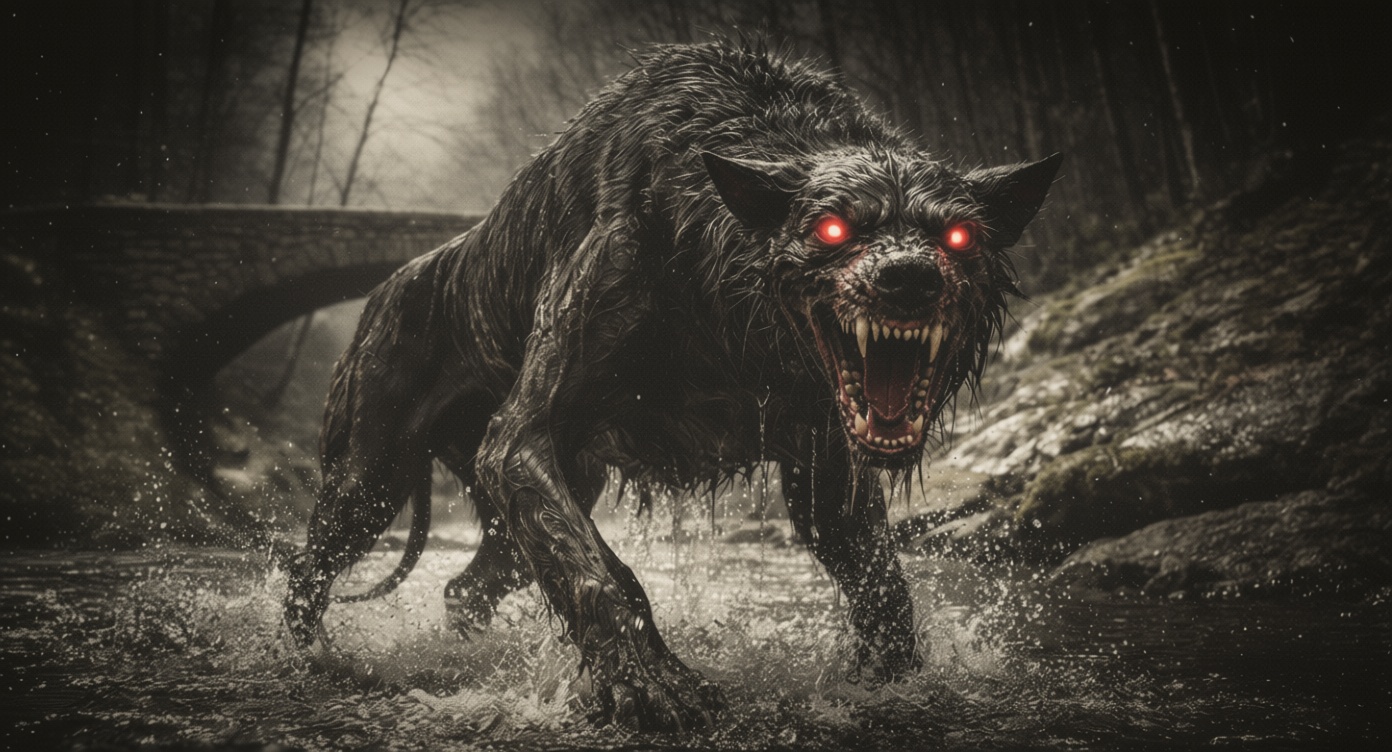
According to the folklore, El Dip was not simply a large or unusually aggressive dog. The animal was said to drain the blood of its victims, particularly cattle, sheep and goats. Shepherds and villagers reportedly feared finding animals with fatal bites to the throat, while the creature’s nighttime activity reinforced its association with the supernatural. The stories also warned against remaining outside too late, including villagers who lingered in local taverns after dark.
A Supernatural Predator
Descriptions of El Dip vary, but the hound is commonly portrayed as black or ash-colored, with eyes that appeared to gleam in the darkness. Like other supernatural animals in Catalan mythology, it was also said to have a lame leg, a distinctive feature that separated it from an ordinary wild predator. Its appearance and behavior combined familiar rural dangers with the more unsettling characteristics of a vampire: stealth, nocturnal movement and a thirst for blood.
The setting likely helped sustain the legend. In communities dependent on livestock, unexplained animal deaths could have serious economic consequences. Wolves, feral dogs or other predators may have been responsible for some attacks, but folklore offered a different explanation when the evidence seemed unusual or when fear spread through isolated villages. Stories of El Dip transformed the threat into a recognizable supernatural being—one that could explain both the deaths of animals and the danger believed to face people on lonely roads.
Pratdip and the Legend’s Legacy
Pratdip occupies a central place in accounts of El Dip. Local tradition holds that the village’s name may be connected to the legendary dogs, although the precise origin of the name remains a matter of folklore rather than established historical fact. The source also notes a traditional belief that the creatures disappeared during the nineteenth century. Today, despite the area’s reduced reliance on livestock, the legend remains part of the village’s cultural identity.
A monument at the entrance to Pratdip commemorates the mythological animal. Interestingly, the representation is described as more friendly than frightening, illustrating how a once-feared creature can become a local emblem over time. Such monuments and stories preserve the memory of older rural beliefs even as the social conditions that produced them change.
Wider Iberian Context
Some interpretations suggest that El Dip may be connected to, or may have influenced, other vampire traditions in the Iberian Peninsula. The available account does not establish a documented line of transmission, however, and the relationship remains speculative. The legend is better understood as part of a broader European pattern in which dangerous animals, revenants and blood-drinking beings overlap.
Whether remembered as a vampire, hellhound or folkloric predator, El Dip reflects the anxieties of mountain communities living alongside darkness, isolation and the vulnerability of livestock. Its continuing presence in Catalan storytelling demonstrates how legends can preserve local history and identity, even when their supernatural claims cannot be verified.