Overview
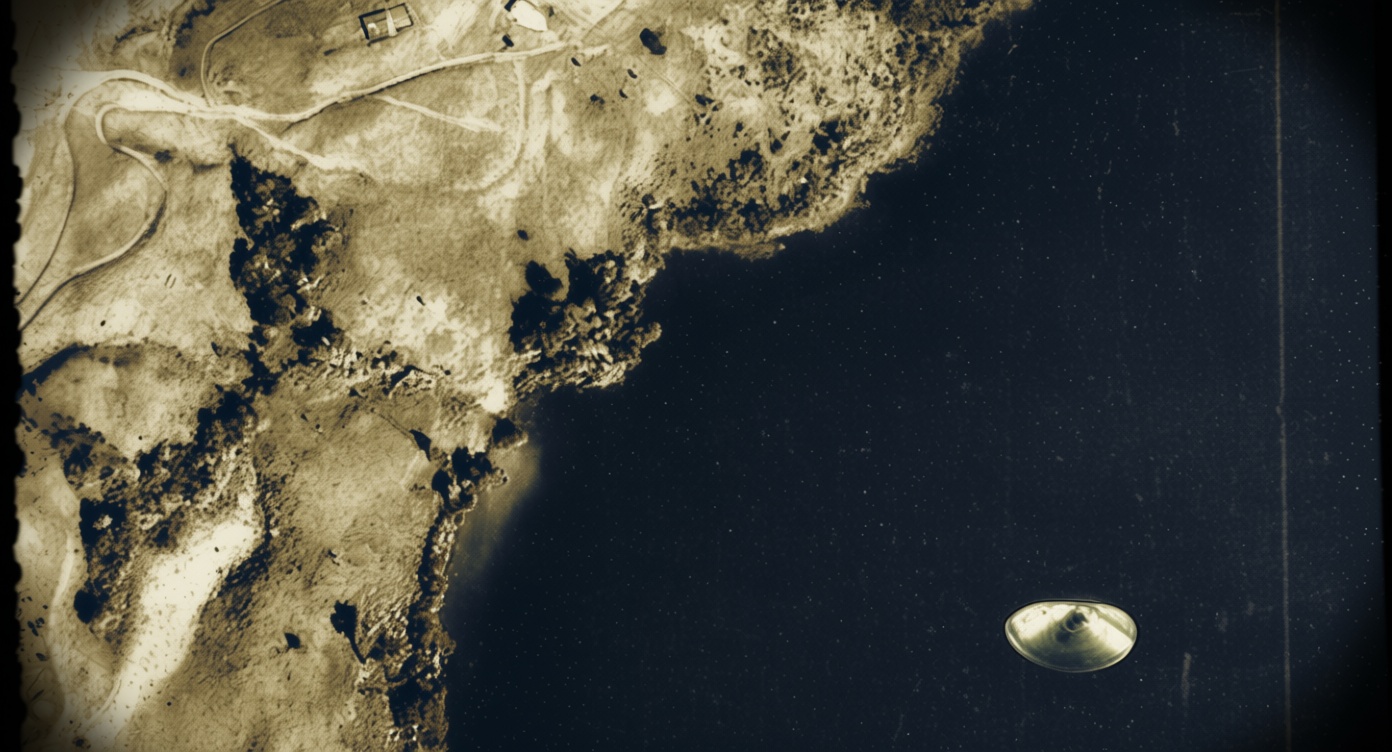
Episode 6 of That Human Said What?, recorded at the Embarcadero Lounge in Palm Springs, examines one of astronomy’s most enduring questions: If intelligent life is likely to exist elsewhere, why has humanity found no confirmed evidence of it? Hosts Michael Ryan, Christine Scott and Al Capicelli explore the Fermi Paradox, a question associated with physicist Enrico Fermi, while also turning to the controversial Cote UFO photograph and the interpretation of a frame identified as Frame 300.
The program places the discussion in the context of the Milky Way’s enormous scale. With potentially hundreds of billions of stars in the galaxy—and billions of planets that may be capable of supporting life—the apparent absence of verified contact has prompted competing scientific and philosophical explanations. The episode stresses that the lack of confirmed signals or artifacts does not necessarily demonstrate that extraterrestrial intelligence is absent.
The Great Filter and the “Great Silence”
One central concept discussed is the Great Filter, a hypothesis associated with economist and physicist Robin Hanson. It proposes that some stage in the development of life presents an almost insurmountable obstacle, preventing civilizations from becoming interstellar. Possible filters include asteroid impacts and other natural disasters, nuclear war, engineered biological threats, or technological advances that create risks a civilization cannot control.
The hosts also consider whether humanity may have already passed the most difficult stage—or whether the major barrier still lies ahead. That uncertainty gives the Fermi Paradox its darker implications. As the episode suggests, civilizations may disappear before developing the ability to communicate across interstellar distances, leaving behind what appears to be a cosmic silence.
Zoo Hypothesis and Advanced Technology
Another major theory is the Zoo Hypothesis, first proposed in modern form by John A. Ball in 1973. Under this scenario, extraterrestrial civilizations may know Earth exists but deliberately avoid direct contact, much as humans observe wildlife without interfering. Ryan identifies the idea as one of the more plausible explanations, while the discussion compares it to a “Prime Directive” designed to prevent cultural disruption.
The program also questions whether SETI’s reliance on radio signals is appropriate when searching for civilizations potentially millions or billions of years more advanced than humanity. Capicelli compares the effort to using a fax machine to communicate with people who have moved on to more sophisticated systems. The hosts speculate—without presenting evidence—that future intelligences might use communication methods humans do not yet understand, including advanced forms of computation, gravitational phenomena or concepts sometimes described as telepathy.
The Cote Photograph and Documentary Interview
The episode’s second major focus is the Cote UFO photograph, including discussion of what Frame 300 may reveal. Rather than treating the image as definitive proof of extraterrestrial activity, the program examines how individual frames can shape interpretations of an unidentified object and the challenges involved in assessing older or disputed photographic evidence.
Filmmaker Adam Pillon appears in an interview about his documentary on the photograph. He discusses the image’s broader impact on the people connected to it and the process of investigating its history. The segment highlights how UFO cases often involve not only questions about the object itself, but also issues of memory, reputation, media attention and the personal consequences of public scrutiny.
Post-Biological Intelligence
The episode concludes by considering whether advanced extraterrestrial intelligence may no longer be biological. The hosts suggest that reported “Small Greys,” if connected to a genuine phenomenon, could theoretically represent robotic probes or artificial-intelligence-controlled systems rather than living visitors. They point to humanity’s own use of rovers, drones and automated spacecraft as an early example of exploration without biological crews.
Overall, the program presents the Fermi Paradox and the Cote photograph as unresolved subjects requiring skepticism and open inquiry. Its central message is that the absence of confirmed contact may reflect technological limits, deliberate non-interference, or the vulnerability of civilizations—not necessarily an absence of life beyond Earth.