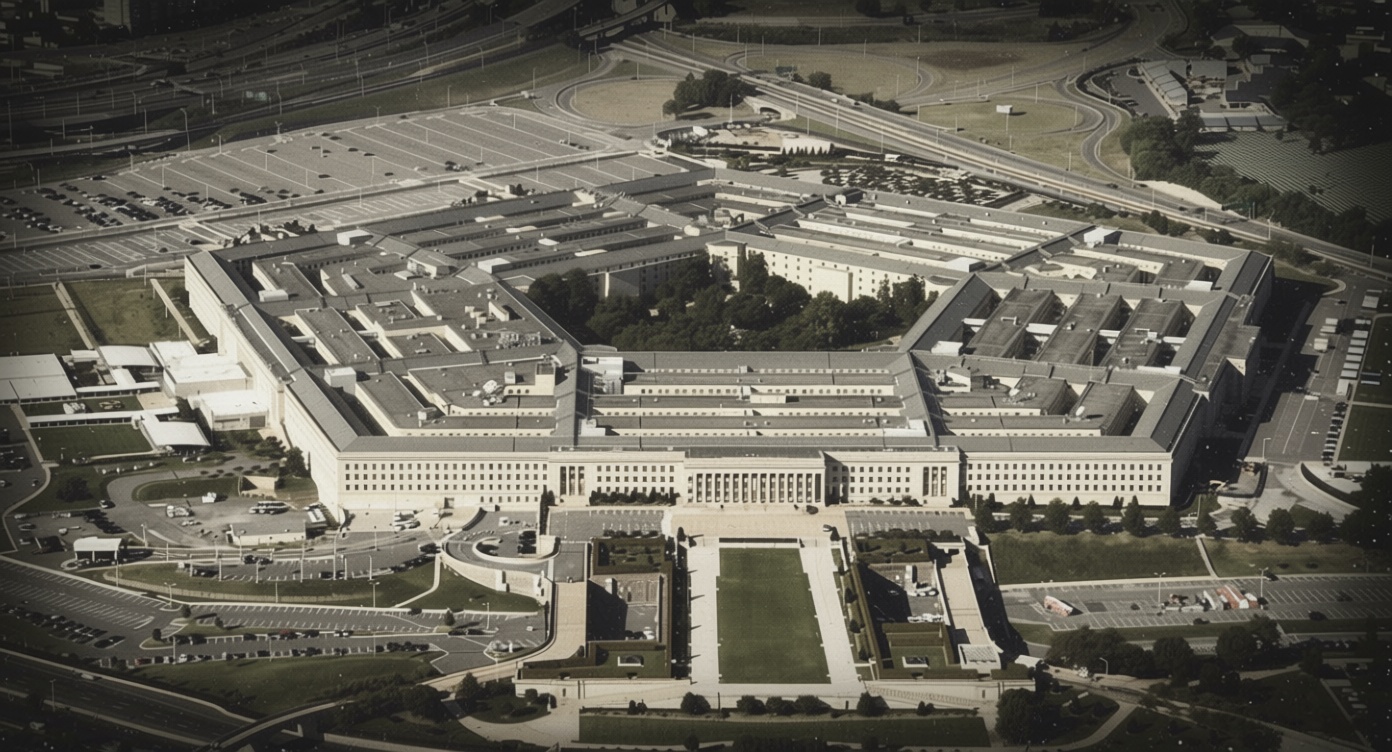
Pentagon Opens Decades of UFO Records
The Pentagon has begun publishing decades of declassified unidentified anomalous phenomena (UAP) records on a new public website, marking the first time complete case files from multiple federal agencies have been made directly accessible online. Officials said the archive spans material from the late 1940s through 2025, and includes videos, photos and original documents previously kept out of public view. The release follows President Donald Trump’s directive earlier this year ordering US agencies to disclose government records tied to UFOs and any files touching on extraterrestrial life.
The new rollout is part of the work of the All-domain Anomaly Resolution Office (AARO), which has spent recent years reviewing historical reports and issuing public summaries. But the latest publication is notable because it puts primary source material in one searchable place, without requiring security clearance. In a statement, the Department of Defence said the database will be updated on a rolling basis as more files are cleared for release, while Defence Secretary Pete Hegseth described the move as “unprecedented transparency,” even though many pages remain heavily redacted.
Unusual Sightings in Military Airspace
The newly released records continue a long pattern in which many sightings cluster around sensitive military activity and major deployment zones. In earlier decades, reports often came from Cold War flashpoints in Europe and the Soviet sphere; in more recent years, they have centered on places such as the Middle East, including the Strait of Hormuz, Iraq and Syria. Officials suggest this is at least partly because military pilots and sensors are able to detect phenomena that would be missed by civilian observers, making unusual objects more likely to be logged in operational environments.
According to the Pentagon, none of the incidents described in the newly released files posed an apparent threat to US forces. In many cases, the unknown objects either broke contact abruptly or disappeared from view just as quickly as they appeared. That limited threat assessment is likely to be important for officials trying to balance transparency with the need to avoid overstating what the records show. The files do not offer confirmation of extraterrestrial origin, but they do underline how frequently unidentified objects continue to enter official reporting channels.
Bronze Metallic Object Adds to the Catalog of Reports
Among the more striking entries cited in the reporting is a 2025 account describing a bronze metallic object materialising in the sky, an example that adds to a long list of unresolved aerial reports. While the file does not appear to reach a firm conclusion about what the object was, its inclusion underscores the breadth of the material now being released, from sensor anomalies to first-hand observations by federal personnel. The reference to a bronze object is notable not because it proves anything extraordinary, but because it reflects the kind of detailed, specific description that has kept UAP cases alive in public debate.
Other recent cases in the cache are similarly unusual. One 2023 incident in the western United States involved federal law enforcement officers independently reporting strange orbs in the sky, with one account describing “orbs launching other orbs.” The Pentagon has reportedly called that episode “among the most compelling” in its holdings. In another 2024 encounter in Iraq, an unidentified craft was said to have crossed the surveillance systems of a US aircraft at high speed during an unrelated strike operation, then vanished without disrupting the mission. Together, these files show why the government’s UAP archive remains a focal point for both skepticism and continued scrutiny.


