The Claim
Former CIA officer Chase Brandon drew renewed attention to the Roswell case in 2012 after saying he had encountered a box marked “Roswell” while visiting CIA headquarters. In an interview reported by The Huffington Post on July 8, 2012, Brandon presented the box as a significant clue in the long-running controversy over the alleged 1947 crash near Roswell, New Mexico.
The claim, however, rests on Brandon’s account of what he says he saw—not on the public release of the box, its contents, or records independently verifying its existence. The distinction is important: observing a container labeled “Roswell” does not, by itself, establish that it held physical debris, biological remains, or official documentation concerning an extraterrestrial incident.
What Brandon Alleged
Brandon reportedly characterized the Roswell event as involving a craft “not of this Earth” and said there had been extraterrestrial bodies associated with the incident. Those statements went beyond the narrower claim that he had seen a labeled box, extending into assertions about the nature of the alleged vehicle and its occupants.
No physical evidence was presented publicly alongside the account, and the source material does not identify the box’s location within the CIA, its chain of custody, or the identity of personnel who could corroborate Brandon’s description. Nor does it establish that the box was an official case file, an archival container, or an item connected to the 1947 military recovery operation.
Roswell in Historical Context
The Roswell controversy began in July 1947, when the U.S. Army Air Forces announced that personnel had recovered a flying disc near Roswell before quickly describing the material as related to a weather balloon. Decades later, competing accounts connected the incident to extraterrestrial technology and alleged recovered bodies.
The U.S. government has subsequently offered explanations involving classified balloon research, including Project Mogul, a program designed to detect Soviet nuclear tests. Air Force reviews published in the 1990s concluded that reports of bodies likely reflected later misidentifications of test dummies and other military activities. UFO researchers have disputed those conclusions, arguing that they do not resolve all witness testimony and inconsistencies in the historical record.
The Novel Connection
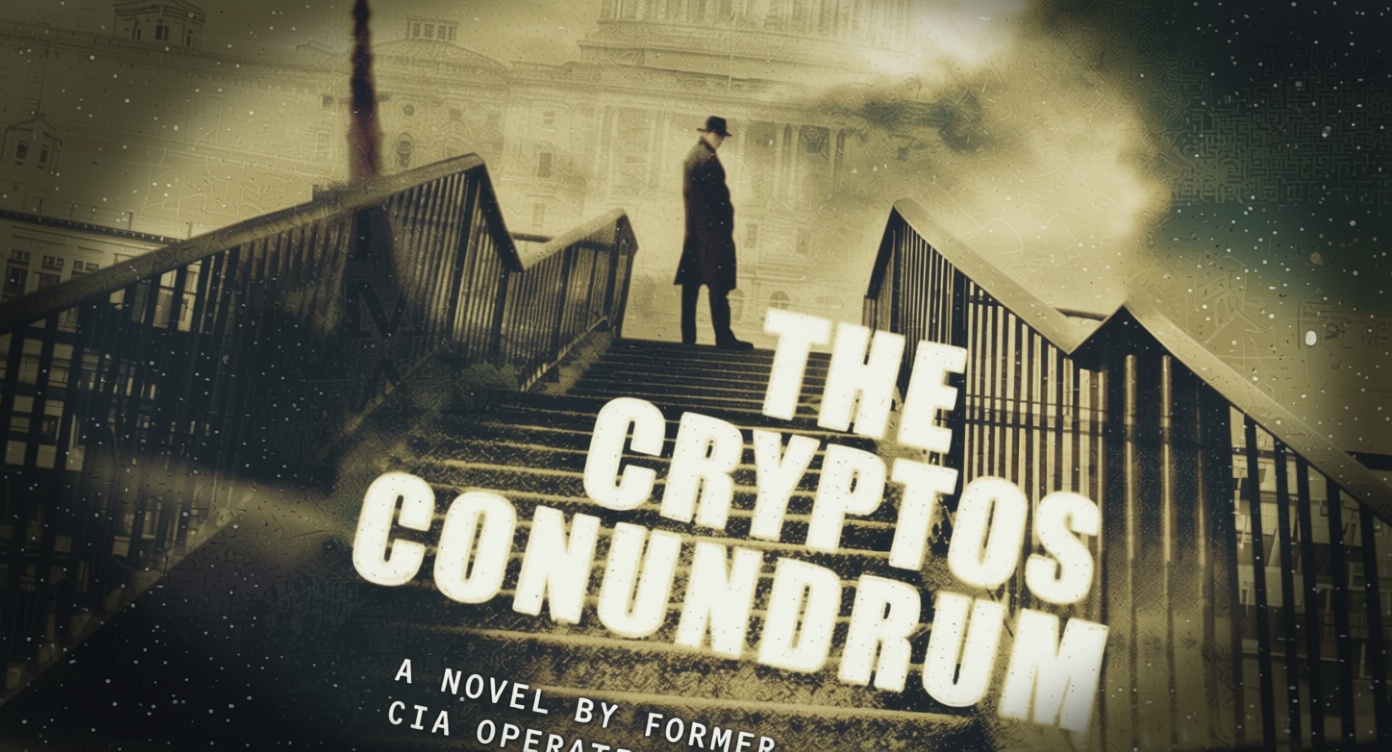
Brandon later published The Cryptos Conundrum, a work of fiction that incorporates Roswell-related concepts into a much broader cosmology. The novel treats ideas about hidden technologies, nonhuman intelligence, secret government knowledge, and humanity’s place in the universe as elements of an expansive narrative rather than as a documentary presentation of evidence.
That distinction is central to evaluating the book. A fictional novel can reflect an author’s beliefs, interests, or interpretation of reported events, but it cannot independently confirm those events. Concepts appearing in The Cryptos Conundrum should therefore be read as storytelling and speculation, not as authenticated details from CIA files or proof of extraterrestrial visitation.
Evidence and Uncertainty
Brandon’s background gave his statements additional public visibility, but former employment at an intelligence agency is not equivalent to firsthand participation in the Roswell investigation or independent verification of its alleged evidence. The available account establishes that he said he saw a box labeled “Roswell” and made extraordinary claims about its possible significance; it does not establish what the box contained.
The episode illustrates why Roswell remains difficult to assess. Decades of retellings have blended military records, witness memories, conspiracy theories and popular fiction. Until verifiable documents, authenticated physical material or corroborated testimony becomes available, Brandon’s account remains an unverified allegation, while The Cryptos Conundrum remains a fictional exploration of Roswell-inspired ideas.