Overview
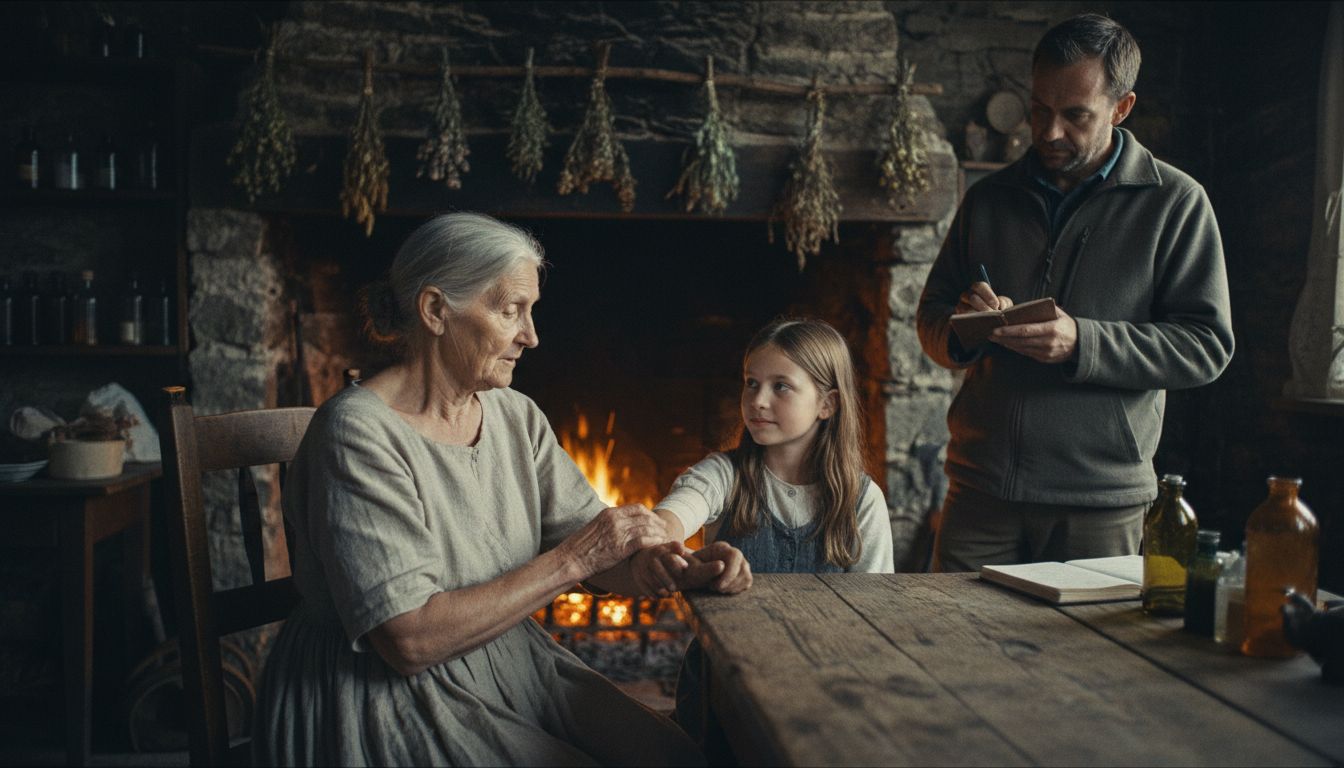
In France, a longstanding tradition of so-called “Fire-Tamers”—healers said to ease pain, burns, inflammation and other ailments through touch-based rituals—continues to draw a surprising level of public confidence. Aeon’s essay on the subject argues that these practitioners, often dismissed by outsiders as folkloric, are still consulted by a large share of the French population. The piece follows writer and essayist Susanna Crossman, who approached the subject with skepticism but also with a personal stake: after her daughter’s hand growths improved following a healer’s treatment, Crossman began a rational, searching inquiry into what might explain such experiences.
A tradition that persists
The article presents Fire-Tamers as part of a wider landscape of unconventional healing that remains deeply embedded in French culture. While their methods are not framed as a substitute for medicine, they occupy a gray zone between folk belief, religious practice and informal care. What makes the tradition notable, according to the essay, is not simply that it survives, but that it does so despite France’s modern, highly professionalized medical system. The persistence of these healers suggests that many people continue to look for relief where standard medicine may be slow, incomplete, or emotionally unsatisfying.
Crossman’s account is especially compelling because she does not abandon reason in the face of a seemingly inexplicable result. Instead, she treats the healer’s intervention as a phenomenon worth examining rather than dismissing. That stance gives the story its central tension: how should one respond when an outcome appears real, yet the mechanism remains unclear? In that sense, the article is less about proving or disproving miraculous healing than about investigating why such practices continue to resonate so strongly with patients and families.
Personal experience meets scientific curiosity
Crossman’s daughter’s improvement after a touch-based treatment becomes the emotional anchor for the piece. The story does not claim a simple cause-and-effect explanation, but it does underscore how powerful these moments can be for parents seeking help. The healer’s intervention, at minimum, provided a sense of attention and care; at most, it appeared to coincide with tangible improvement. That ambiguity is part of what makes unconventional healing so difficult to assess and so enduring in popular imagination.
Aeon connects this human story to a more surprising scientific thread: the possibility that human beings may retain latent regenerative abilities that are not yet fully understood. Research in this area has fueled interest in whether the body can be prompted to heal in ways that conventional medicine has not traditionally exploited. The article notes that some related medical applications are already advanced enough to have FDA approval, a reminder that the boundary between fringe-sounding ideas and mainstream medicine is not always as fixed as it seems.
A broader debate
Taken together, the essay suggests that the appeal of Fire-Tamers lies not only in cultural habit, but in a deeper human hope: that healing may involve more than drugs, surgery or diagnosis alone. For some patients, the value of these practitioners may rest in ritual, trust, and the feeling of being actively helped. For scientists, the challenge is to separate symbolism from biology while remaining open to mechanisms that may not yet be fully mapped.
The result is a nuanced portrait of modern France’s unusual healers—one that resists both credulity and ridicule. By placing a family’s experience alongside emerging regenerative research, the article invites readers to consider a difficult but important possibility: that some forms of healing may be stranger, and perhaps more layered, than our current models can easily explain.