Overview
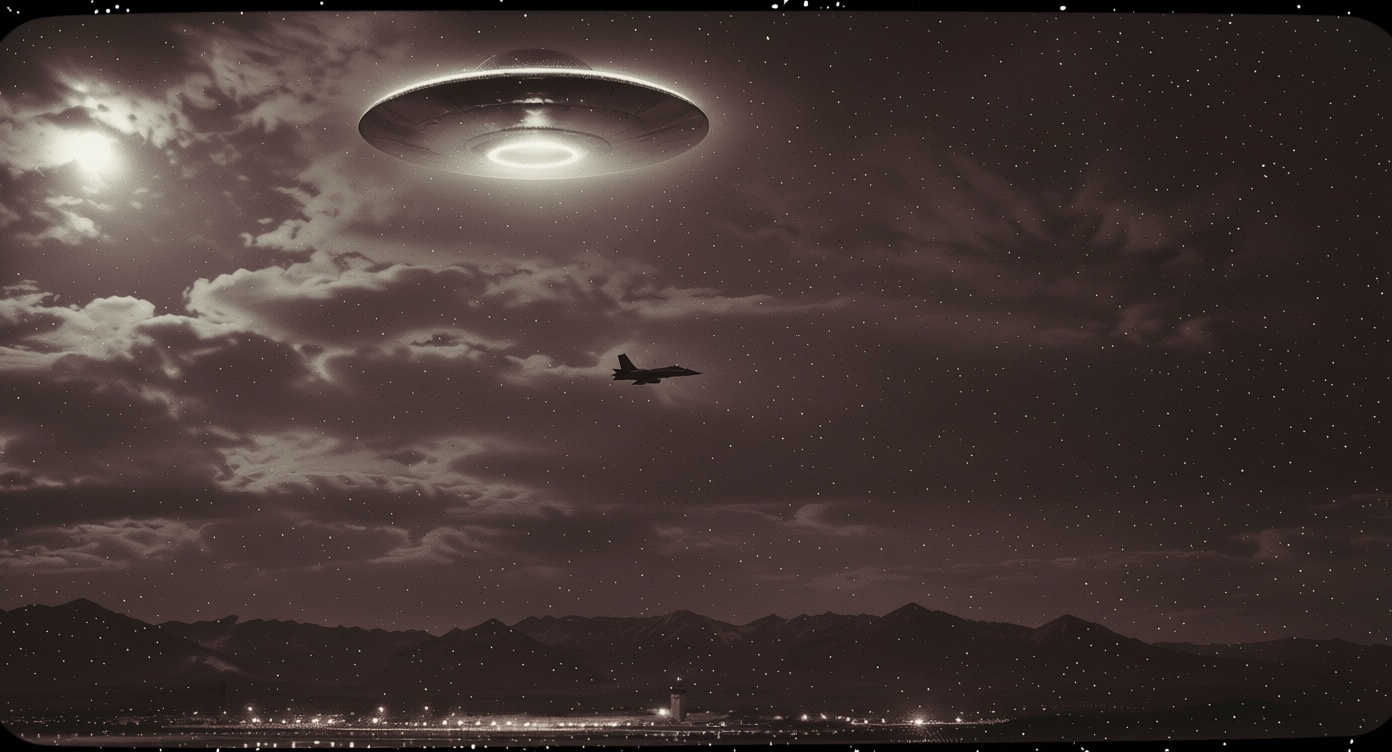
A little-known French defense report from 1999 is drawing renewed attention for making one of the most striking official arguments ever published on unidentified aerial phenomena: that, for a small but significant set of unexplained cases, the extraterrestrial hypothesis was “by far the best” explanation. The report, known as COMETA, was compiled by a panel of retired French military officers, scientists, and intelligence officials who spent three years reviewing hundreds of documented sightings before reaching their conclusion.
What makes the document notable is not that it claims to prove alien visitation, but that it methodically ruled out a series of alternative explanations first. According to the report, possibilities such as secret military technology, disinformation, optical projections, and unknown natural phenomena did not satisfactorily account for all of the cases it examined. That left the authors with what they described as the best scientific hypothesis for a limited number of incidents: that some UAP may reflect technology not of human origin.
Key Findings
The COMETA group’s findings were especially significant because the panel was not made up of fringe researchers. Its work reportedly involved cooperation from French institutions including the gendarmerie, the air force, and France’s space agency, CNES. That background gave the report a level of credibility unusual in the often polarizing UAP debate. The authors did not argue that every unexplained sighting pointed to extraterrestrial craft. Instead, they emphasized that the evidence pointed in different directions across different cases, and that only a small percentage remained especially difficult to explain.
The report’s language was cautious but direct. Rather than using UFOs as a cultural or speculative topic, it treated them as a matter of national defense and scientific inquiry. In doing so, COMETA anticipated a broader conversation now unfolding in multiple countries: whether UAP should be studied not as an embarrassment or curiosity, but as a legitimate security and intelligence issue. That framing has become more common in recent years, but the French report was unusually frank for its time.
Why It Matters
Perhaps equally important, COMETA urged the French government to end its silence on the subject. The authors recommended that France establish permanent structures to investigate UAP and engage more openly with both the public and the defense community. They warned that continued government secrecy — particularly in the United States — could have real political, religious, and military consequences, especially if unknown aerial technologies are operating in restricted airspace.
The report’s enduring relevance lies in that tension between caution and openness. It does not claim final proof of extraterrestrial visitation, but it does insist that some sightings deserve serious attention and that governments should not ignore them. More than two decades later, the COMETA report remains a reminder that the UAP question has long extended beyond sensational headlines. For defense analysts, it is also a warning: if a small number of cases truly evade all conventional explanations, then the stakes are not just scientific — they are strategic.