Overview
A new draft paper coauthored by Harvard astronomer Abraham “Avi” Loeb and Sean M. Kirkpatrick, then director of the Pentagon’s All-domain Anomaly Resolution Office (AARO), sets out a physics-based framework for evaluating unidentified aerial phenomena (UAP). Marked “DRAFT, UNDER REVIEW” and dated March 7, 2023, the paper argues that if some UAP are truly “highly maneuverable” objects moving through air or water at extraordinary speeds, they should leave behind unmistakable physical traces — including bright optical fireballs, ionized trails, and radio emissions.
The collaboration is notable not only because it links a leading academic figure in UAP research with the head of the U.S. government’s anomaly office, but also because it echoes an earlier era of official inquiry, when the Air Force’s Project Blue Book attempted to catalog and assess unexplained aerial sightings. In that sense, the paper has been read as part of a broader effort to turn UAP from a matter of speculation into one of measurement, modeling, and testable constraints.
Key Physical Claims
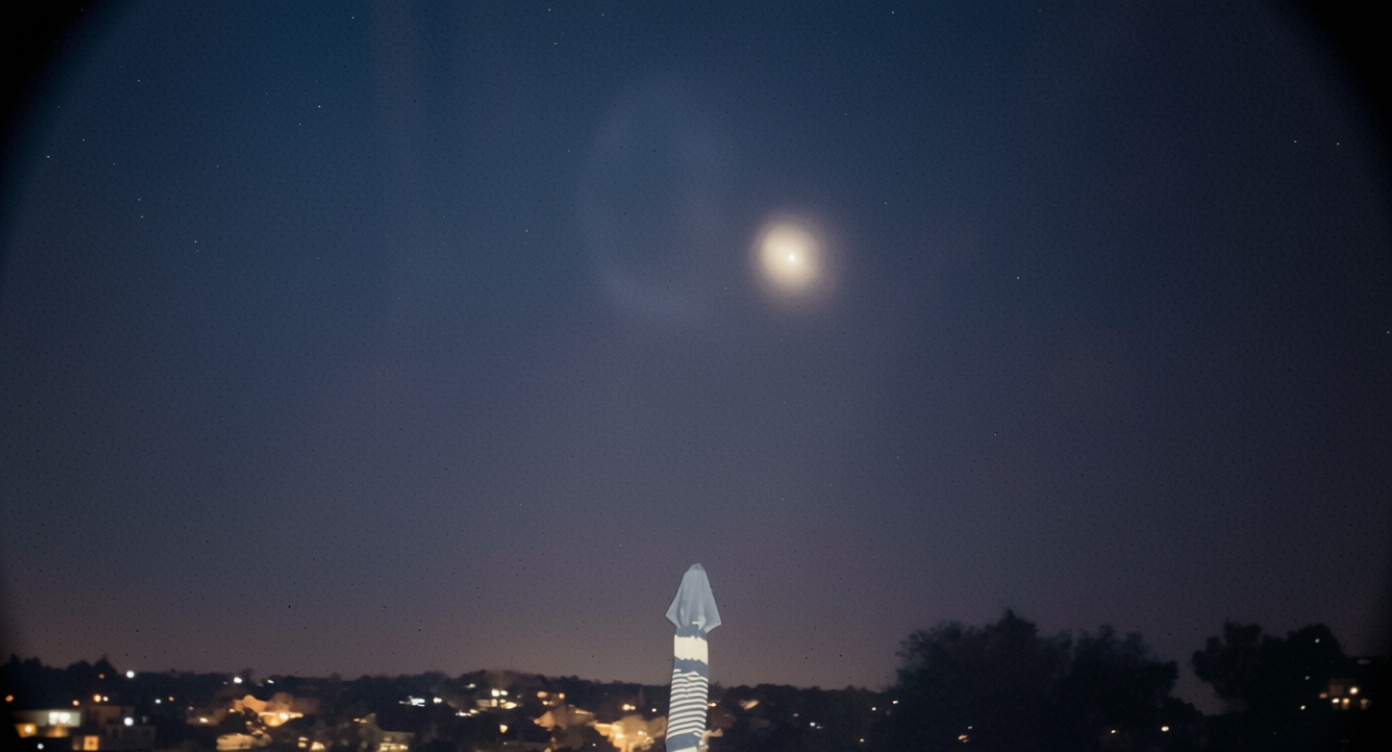
The paper’s central argument is straightforward: known physics should impose detectable side effects on any object accelerating violently through the atmosphere or ocean. The authors write that friction with surrounding air or water would be expected to produce a bright optical fireball, along with an ionization shell and tail. Those effects, in turn, would likely generate radio signatures. The paper also notes that radar cross-section should scale in ways similar to meteor “head echoes,” depending on the size of the surrounding sphere of ionized material and the tail behind it.
A key point in the draft is that the brightness of the fireball scales with the inferred distance to the fifth power, meaning that even modest errors in estimating range can dramatically distort conclusions about velocity and energy. The authors suggest that if such signatures are absent, one possibility is that single-site sensors without range-gating capability may be mismeasuring distance, and therefore overstating speed. In other words, what appears to be extreme performance could sometimes be a measurement artifact rather than a genuine violation of physical limits.
Context From Interstellar Objects
Loeb uses the paper to place UAP within a wider astronomical context that includes his past work on unusual interstellar visitors such as ‘Oumuamua and the meteoroid IM2. In the introduction, he recalls that ‘Oumuamua showed unexpected behavior when it passed through the solar system, including non-gravitational acceleration without an obvious cometary tail. He also references IM2, which he and collaborators identified as an interstellar meteor with orbital similarities to ‘Oumuamua, though not enough to indicate any direct relationship.
The draft extends that line of reasoning into a speculative but structured possibility: if an interstellar parent craft existed, it might release smaller probes — described in the paper as “dandelion seeds” — that could spread through the solar system. The authors argue that such probes might be difficult to detect because they would reflect too little sunlight for current survey instruments. The idea is presented as a hypothetical design scenario, not as evidence that such craft exist.
Why It Matters
The significance of the paper lies less in its speculation than in its method. By focusing on observable signatures, it tries to define what a real anomalous object should look like under ordinary physics. That approach aligns with the broader mission of UAP research groups, including the Galileo Project, which Loeb heads, and AARO’s mandate to sort sensor data from genuinely unexplained events.
Still, the draft underscores a persistent challenge in the field: the absence of data can be ambiguous. A lack of fireball, radar return, or radio emission might mean the object was not as extreme as reported — or it may reflect the limits of the sensors used. In that sense, the paper does not claim to solve the UAP problem. Instead, it offers a scientific filter, one that could help determine which cases deserve deeper scrutiny and which likely arise from incomplete measurement.