Survey Identifies Potential Subsurface Cavities
A geophysical survey at Italy’s Grotta delle Veneri, or “Cave of Venuses,” has detected several underground anomalies that could correspond to previously undocumented chambers within or near the prehistoric cave system. The findings, reported in a 2026 study by researchers from the University of Malta and Italy’s Institute of Heritage Studies, are preliminary. Archaeologists must carry out further investigations to determine whether the features are natural cavities, human-made spaces, or geological variations in the surrounding limestone.
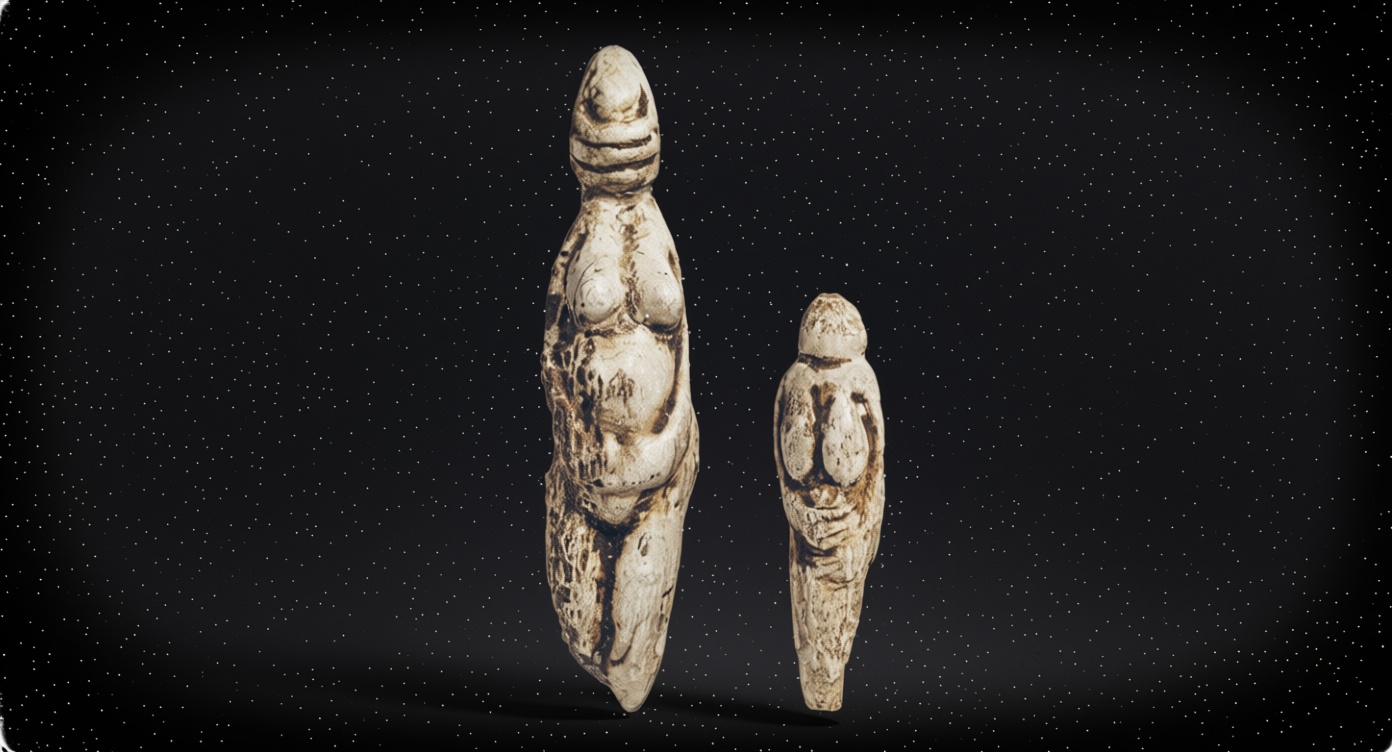
The cave is located near Parabita in Italy’s southern Puglia region and is regarded as an important Palaeolithic site. Earlier excavations have produced evidence of occupation by both Neanderthals and anatomically modern humans, suggesting that the location may preserve a long and complex record of prehistoric activity. The site takes its name from two carved bone figurines discovered inside the cave. Dating to approximately 20,000 years ago, the objects depict stylised female forms with their arms positioned across the breasts and beneath the abdomen—features that some researchers have interpreted as possible references to fertility or pregnancy.
Figurines Link the Site to Wider European Prehistory
The larger figurine measures about nine centimetres in height and has deep grooves across the face. These markings may represent a veil, mask, hairstyle, or another form of facial decoration. The smaller example is slightly more than six centimetres tall and displays comparable features. Their artistic style has been linked to Palaeolithic figurines found elsewhere in Europe.
Researchers have noted similarities between the proportions of the Grotta delle Veneri figures and examples from the Mediterranean, while aspects of their facial detailing have been compared with figurines from the Rhine-Danube region. Their posture also has parallels with examples discovered in Russia. These similarities place the finds within a broader network of prehistoric artistic traditions, although the precise meanings of the figurines remain uncertain.
Non-Invasive Technologies Map the Limestone
To investigate the cave’s hidden structure without disturbing archaeological deposits, the research team used ground-penetrating radar (GPR) and electrical resistivity tomography (ERT). GPR sends electromagnetic pulses into the ground and records changes that may indicate boundaries between different materials or the presence of voids. ERT, meanwhile, measures variations in electrical resistance, helping researchers distinguish between solid rock, sediment, moisture, and possible cavities.
The combined survey identified several anomalies beneath the cave and surrounding limestone. According to the study, some may connect with the known cave system, potentially indicating spaces that have not previously been documented. However, the survey cannot by itself establish the size, age, accessibility, or archaeological significance of the features. There is currently no evidence that the suspected cavities contain artefacts or prehistoric deposits.
Further Archaeological Work Required
The results highlight how geophysical techniques can help researchers locate concealed spaces while reducing the risks associated with excavation. Similar methods have contributed to discoveries at other prehistoric cave sites, including Gibraltar’s Gorham’s Cave Complex. In 2021, investigations there identified a previously unknown chamber extending roughly 13 metres into the cave system. The chamber had remained sealed for around 40,000 years and preserved evidence associated with Neanderthal activity.
That example demonstrates the potential importance of hidden chambers, but it does not establish that the Grotta delle Veneri anomalies contain comparable evidence. Additional fieldwork will be needed to verify the survey results and determine whether any of the detected features are accessible. If confirmed, the spaces could provide new information about the cave’s geological development and its use by prehistoric populations. The study, published in Digital Applications in Archaeology and Cultural Heritage, underscores the value of combining GPR and ERT as a cautious first step before undertaking targeted archaeological investigation.