Overview
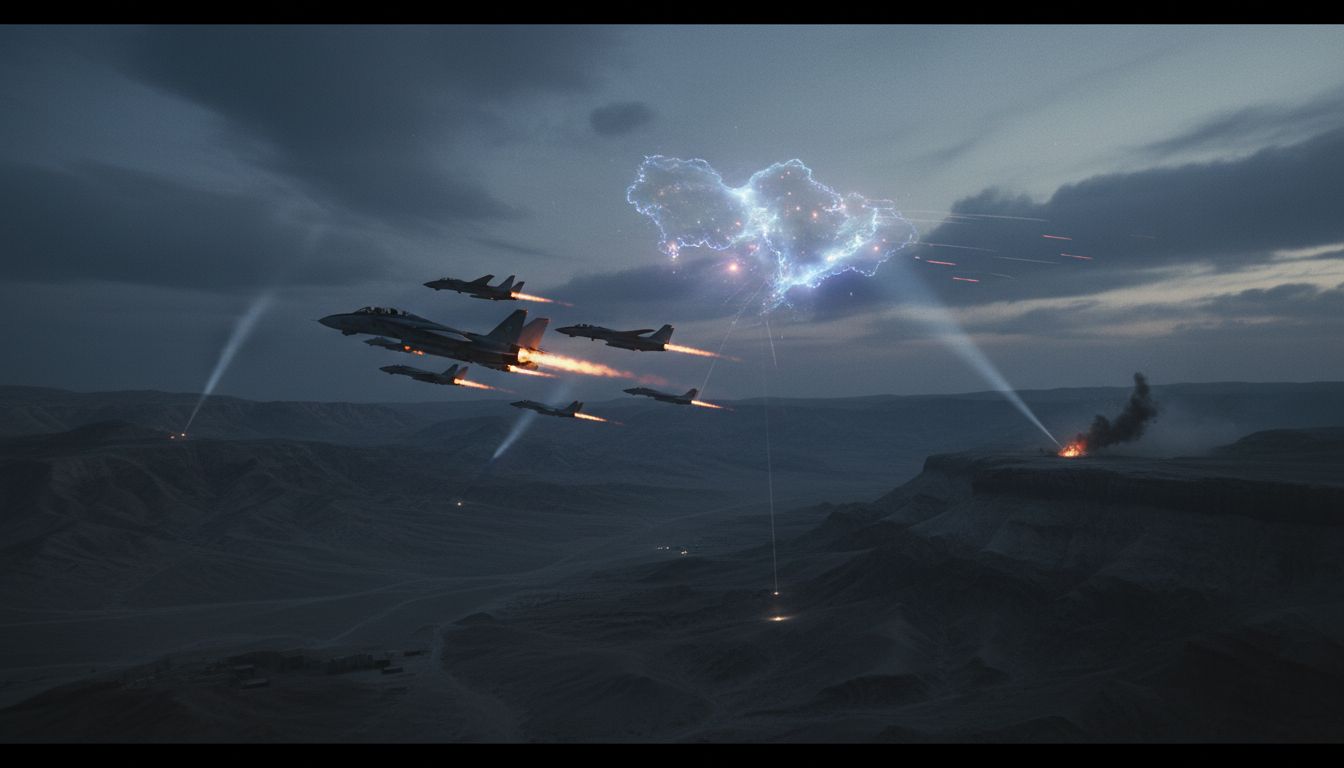
Iranian air defense units reportedly opened fire on an unidentified aerial phenomenon (UAP) that had been captured on video over Iranian sovereign airspace on March 20, 2026. The object, which has been informally dubbed the “Ghost in the Skies,” disappeared from the footage shortly after the exchange, prompting a flurry of speculation among defense analysts, scientists, and UFO researchers. The incident has revived longstanding debates about how militaries should classify, track, and, if necessary, engage objects that cannot be readily identified.
Incident Details
According to a statement released by Iran’s Islamic Revolutionary Guard Corps (IRGC) on their official website, radar operators detected an anomalous aerial target at approximately 18,000 feet near the city of Ahvaz at 14:37 local time. The object exhibited erratic flight patterns and rapid changes in velocity that did not correspond to any known aircraft in the region. After several warning attempts, IRGC surface‑to‑air missile batteries fired a single R-27E missile, which the IRGC claims “made contact” with the target before it vanished from radar.
The encounter was simultaneously recorded by a civilian dash‑cam mounted on a highway convoy traveling near the site. The video, posted to social media platforms within minutes, shows a faint, glowing disc‑shaped object hovering briefly before a bright flash and a sudden loss of the visual. The clip has been verified by independent analysts at the U.S. Department of Defense’s All‑Domain Anomaly Resolution Office (AARO), which confirmed that the footage is authentic and matches radar data supplied by Iranian authorities.
Military and Diplomatic Response
U.S. Central Command (CENTCOM) issued a brief acknowledgment that an American F‑35 operating in the vicinity of the incident “experienced a transient sensor anomaly” and performed an emergency landing at a forward operating base in Qatar. A spokesperson for CENTCOM declined to comment on whether the aircraft was directly targeted, noting that “the safety of our aircrew remains the top priority.”
In Tehran, IRGC commander Brig. Gen. Ali Fadavi emphasized that the rules of engagement were applied “in accordance with national defense protocols” and warned that “any unauthorized intrusion will be met with decisive action.” Meanwhile, Iran’s foreign ministry lodged a formal protest with the United Nations, requesting an investigation into the “unexplained aerial activity” that they argue could threaten regional stability.
Broader Context
The “Ghost in the Skies” episode arrives at a moment when governments worldwide are grappling with an uptick in UAP reports. In 2023, the U.S. Congress mandated the creation of the UAP Task Force, which released a preliminary report acknowledging that a small percentage of sightings could represent “potentially advanced foreign technology” or “novel atmospheric phenomena.” European and Asian air forces have similarly updated their detection guidelines, stressing the need for transparent data sharing and standardized classification to avoid accidental escalations.
Experts caution against jumping to conclusions. Dr. Megan Liu, a senior researcher at the National Center for Atmospheric Research, noted that “many UAPs are later identified as sensor glitches, commercial drones, or rare meteorological events.” Nonetheless, the fact that an active missile system was employed underscores the seriousness with which at least one nation views unidentified incursions.
Outlook and Next Steps
Both the IRGC and the U.S. Department of Defense have pledged to exchange technical data related to the March 20 encounter through established military liaison channels. A joint investigative panel, comprising representatives from AARO, Iran’s Aerospace Force, and independent scientific observers, is slated to convene in Geneva later this year to assess the radar signatures, visual evidence, and any potential weapon system involvement.
Until definitive findings emerge, policymakers are likely to revisit engagement rules for unidentified objects, balancing national security imperatives against the risk of inadvertent conflict. As the “Ghost in the Skies” fades from the headlines, the incident serves as a reminder that transparent, evidence‑based dialogue remains essential in navigating the increasingly complex domain of aerial anomalies.


