Overview
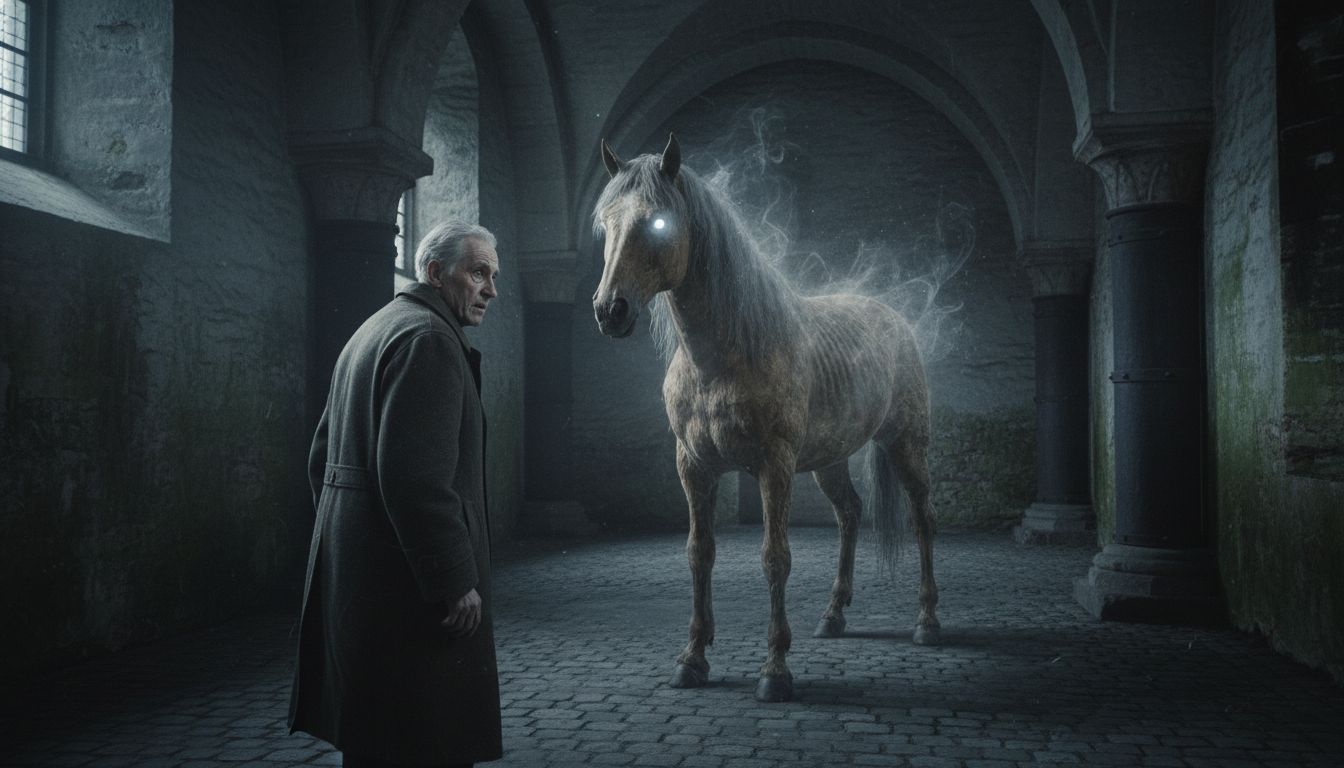
A longstanding Danish legend claims that a horse was buried at Roskilde Cathedral before the site became a resting place for human dead. According to the folklore, the animal’s spirit survives as the helhest, or “horse of Hel”—a spectral, three-legged creature associated with death and misfortune.
The story was highlighted in an October 31, 2026, article by Moon Mausoleum, which describes the supposed grave as one of the cathedral’s lesser-known mysteries. There is no verified archaeological or historical evidence confirming that a horse was buried beneath the cathedral, nor that a ghostly animal has appeared there. The account remains part of Denmark’s broader tradition of supernatural stories connected to churches, cemeteries and ancient burial sites.
The Alleged Grave
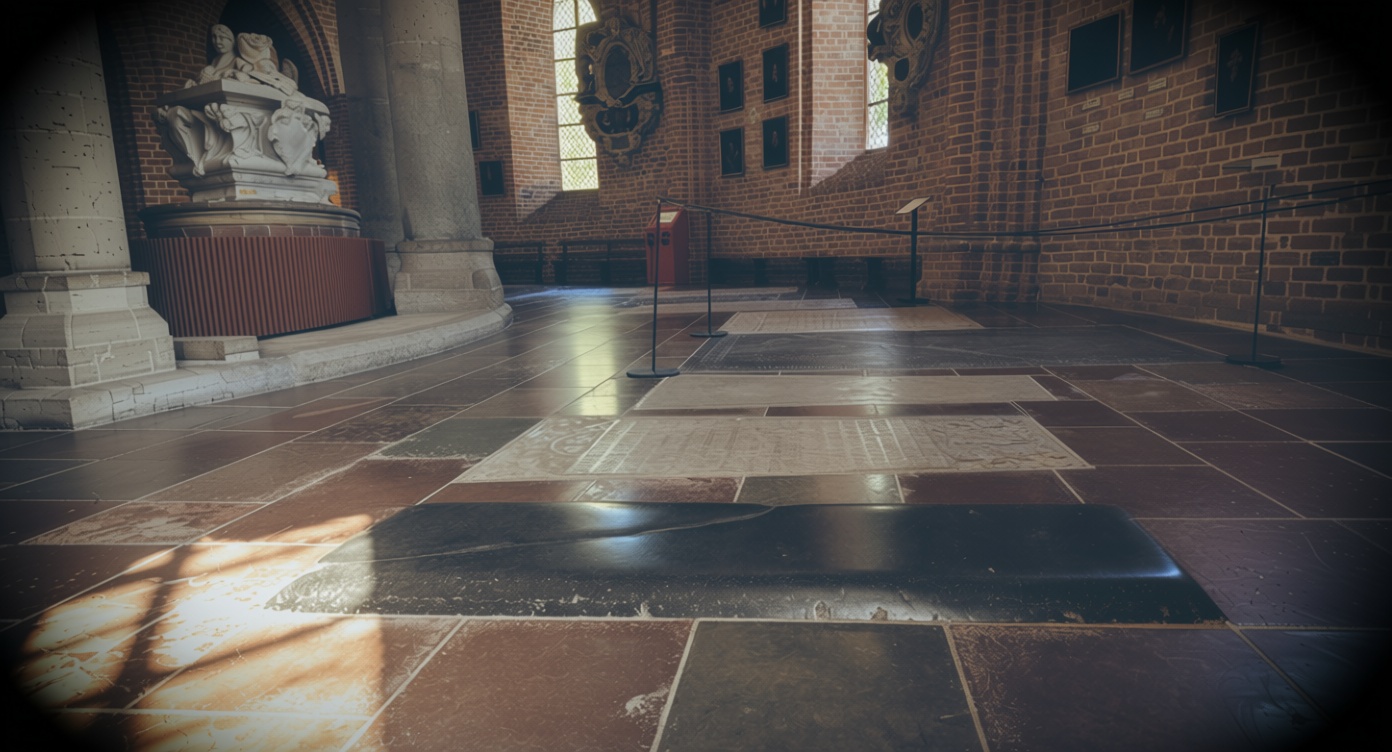
Inside Roskilde Cathedral, the supposed helhest grave is described as a black, unmarked flat gravestone made from Scanian or Bornholm limestone. Folklore identifies it as the resting place of the creature—or perhaps the horse that later became associated with the apparition.
The legend states that the animal was buried before human burials began at the location. In some versions of the tradition, people spat on the stone as they passed it, a protective gesture intended to ward off the creature’s influence. Seeing the helhest walking near a churchyard or cemetery was considered a warning that death was approaching, either for the observer or for someone nearby.
The image of the animal varies within Scandinavian folklore, but the three-legged horse is the most familiar Danish form. Its missing leg is sometimes interpreted symbolically, suggesting a creature that belongs partly to the world of the living and partly to the realm of the dead.
A Figure From Death Folklore
The name helhest refers to a horse associated with Hel, the Norse ruler of the dead. In mythology, Hel governs a realm inhabited by many of those who do not die in battle. Later Danish folk belief transformed the helhest into a more localized ghost story, often placing it around old burial grounds and churches.
The creature was not generally portrayed as a benevolent supernatural figure. Its appearance served as an omen: encountering the horse was believed to indicate that a death would soon occur. Such traditions reflect a broader European pattern in which unexplained sounds, animal sightings and unusual grave markers became linked to warnings about disease, mortality and the unknown.
Moon Mausoleum also references Norwegian artist Gunnar Utsond’s sculpture Helfærd, originally created in 1890. The work depicts Nanna and Balder traveling toward Hel on the back of the Hel horse, illustrating how the figure has been represented in Nordic art as well as folklore.
Roskilde’s Historical Setting
Roskilde Cathedral provides a particularly striking setting for the tale. Located near Copenhagen, the cathedral is a UNESCO World Heritage Site and Denmark’s official royal burial church. More than 40 Danish kings and queens are associated with the building and its burial chapels.
The present red-brick Gothic cathedral was constructed around 1200, replacing earlier religious structures. Tradition also connects the site with Harald Bluetooth, who is said to have established a small stave church there after Roskilde became an important Danish center. Viking Age rulers Harald Bluetooth, Sweyn Forkbeard and Sweyn Estridsen are traditionally identified among those buried at the site.
Against that royal and religious background, the alleged horse grave has endured as a contrasting piece of local folklore. Its significance lies less in proof of a supernatural event than in the way stories attach meaning to historic places. For visitors, the unmarked stone may invite speculation, but the helhest remains a legend—not a documented apparition or confirmed burial.